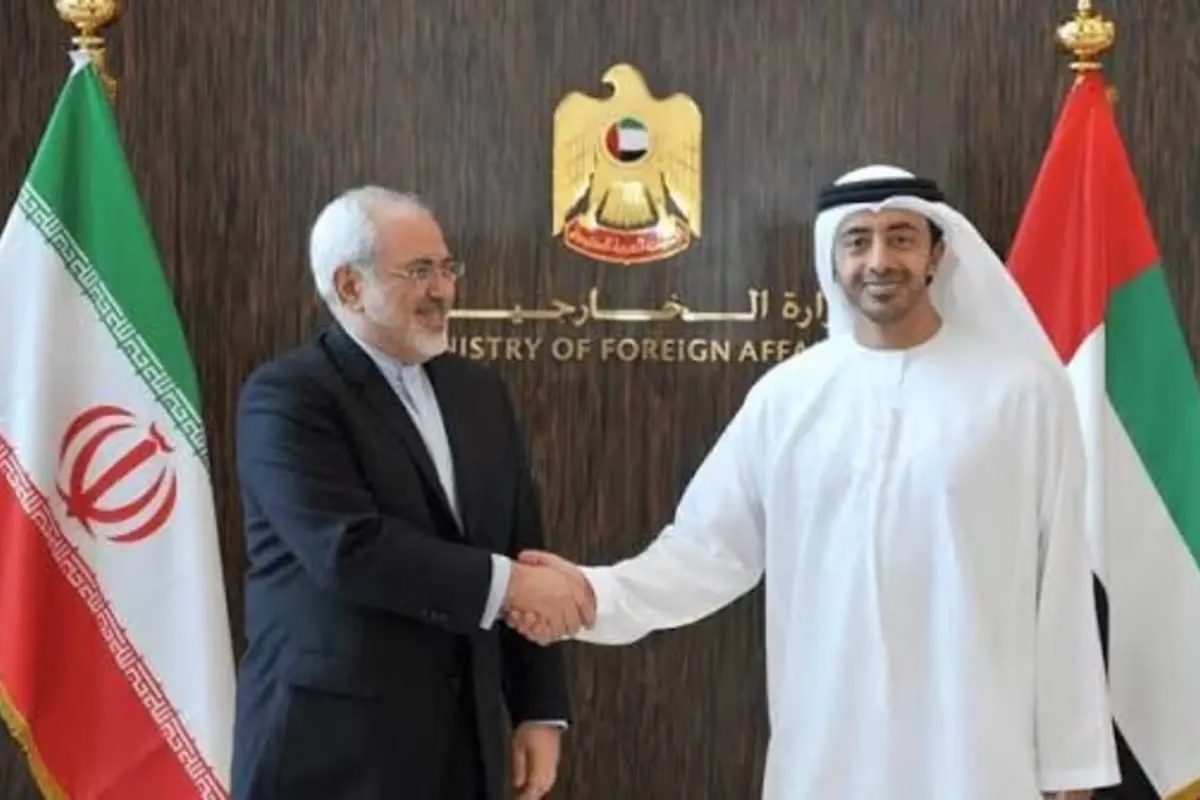
The Iran UAE Funds Deal has become a major topic of discussion as reports emerge about the possible release of billions of dollars linked to Iran amid ongoing diplomatic efforts between Tehran and Washington. The development comes at a critical time when negotiations aimed at easing regional tensions and ending conflict in the Middle East appear to be gaining momentum.
Recent reports suggested that the United Arab Emirates had agreed to facilitate the release of substantial Iranian funds that have remained inaccessible for years due to sanctions and financial restrictions. The reports quickly attracted international attention because of their potential impact on regional politics, economic stability, and the broader relationship between Iran and Western powers.
However, the situation remains far from clear. UAE authorities have strongly denied claims that any frozen Iranian assets have been released or transferred through the country. In an official statement, the UAE rejected the allegations and emphasized that no such financial transactions had taken place.
Despite the denial, the discussion surrounding the Iran UAE Funds Deal continues to generate interest among political analysts and global observers.
Why the Issue Matters
The question of Iranian funds has long been a sensitive topic in international diplomacy. Over the years, billions of dollars belonging to Iran have been frozen in various countries due to sanctions imposed over concerns related to its nuclear program and regional activities.
For Iran, access to these funds would provide significant economic relief. The country has faced years of financial pressure, inflation, and restrictions on international trade. Any agreement that improves access to financial resources could help stabilize parts of its economy and support domestic development projects.
For regional stakeholders, the potential release of funds raises questions about how such resources might influence political and security dynamics across the Middle East.
This is why the reported Iran UAE Funds Deal has attracted attention far beyond the two countries directly involved.
Connection to US-Iran Negotiations
The reports emerged as diplomatic efforts between the United States and Iran continue to advance. Officials from both sides have indicated that negotiations aimed at reducing tensions have made significant progress in recent months.
According to statements from various sources, discussions have focused on economic incentives, regional security, and confidence-building measures that could lead to a broader agreement.
One of the key points under discussion is how and when Iran could gain access to financial resources if a formal agreement is reached.
US Vice President JD Vance recently clarified that economic benefits would only become available if Iran fulfills its commitments under any future agreement. This position reflects Washington’s desire to ensure that incentives remain linked to compliance and measurable actions.
As a result, the Iran UAE Funds Deal is being viewed by many observers as part of a larger diplomatic framework rather than an isolated financial arrangement.
UAE Responds to Speculation
The UAE moved quickly to address the growing speculation. Officials stressed that reports suggesting the immediate release of Iranian funds were inaccurate and unsupported by evidence.
The government reiterated that no frozen assets had been released, transferred, or facilitated through UAE institutions.
This response highlights the sensitivity surrounding the issue. Gulf countries are carefully balancing their diplomatic relationships with Iran, the United States, and other international partners. Any misunderstanding regarding financial transfers could have significant diplomatic consequences.
The UAE’s clarification was therefore seen as an effort to maintain transparency while avoiding unnecessary tensions.
Potential Economic Impact
If a future agreement eventually allows Iran to access frozen assets, the economic consequences could be substantial. Analysts estimate that billions of dollars could become available, potentially supporting infrastructure projects, industrial development, and trade activities.
Improved financial liquidity could also help Iran strengthen its currency and address some of the economic challenges facing businesses and consumers.
At the same time, international markets would closely monitor how such funds are utilized and whether they contribute to greater regional stability.
The debate surrounding the Iran UAE Funds Deal reflects these broader concerns about economic recovery, accountability, and geopolitical balance.
The coming weeks may prove decisive for negotiations involving Iran, the United States, and regional partners. While reports about the release of funds have generated significant headlines, official statements indicate that no final financial arrangements have yet been implemented.
What remains clear is that diplomacy continues to play a central role in shaping the future of the region. Whether discussions ultimately lead to sanctions relief, economic cooperation, or broader peace agreements will depend on the willingness of all parties to reach common ground.
The Iran UAE Funds Deal remains a subject of intense interest, symbolizing both the opportunities and complexities that accompany high-level international negotiations. As developments continue to unfold, governments, investors, and citizens across the region will be watching closely for the next chapter in this evolving diplomatic story.