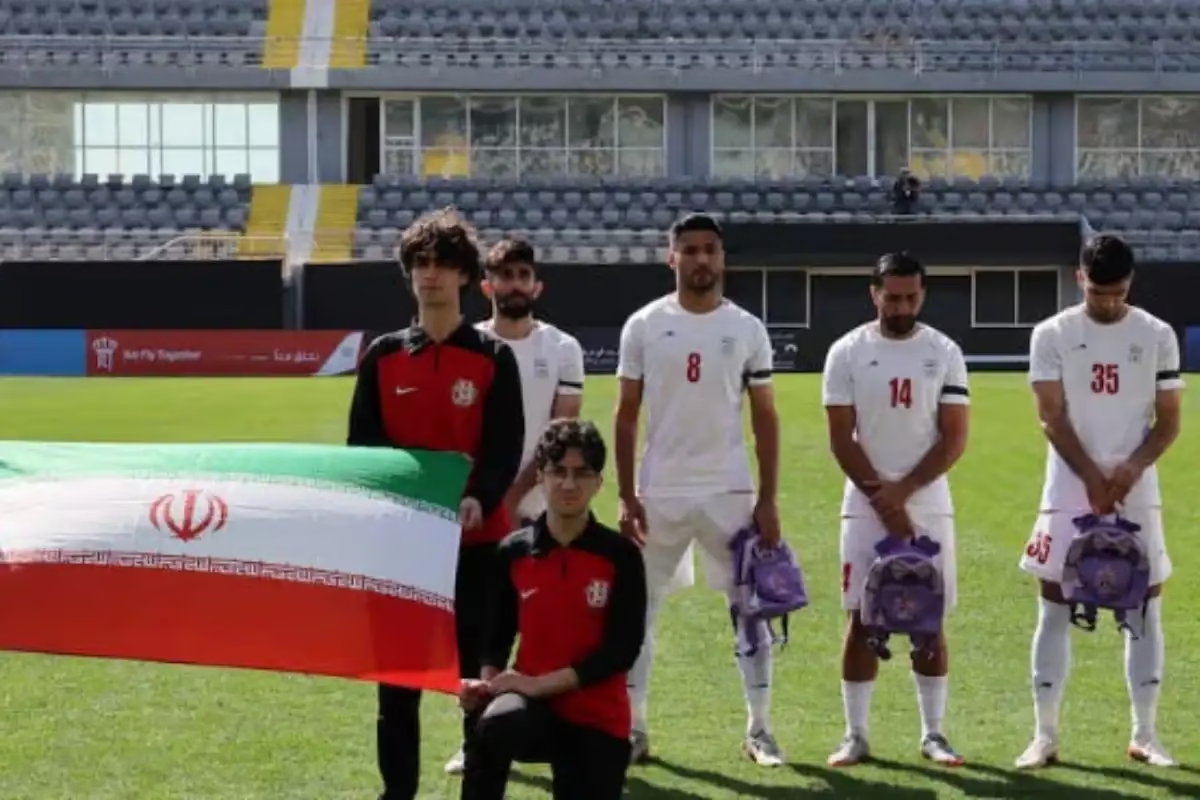
The approval of Iran World Cup visas by the United States has become a major international talking point, especially at a time when tensions between Washington and Tehran remain extremely high. Despite ongoing conflict and strained diplomatic relations, the US government has confirmed that Iran’s national football team will be allowed to enter the country to participate in the FIFA World Cup.
This decision highlights how sports can sometimes rise above politics and conflict. Even though the United States and Iran are currently dealing with serious geopolitical tensions, both sides appear willing to separate football from the battlefield, at least during the tournament.
US Ambassador to Turkey Tom Barrack confirmed that the visa applications for Iran’s football team had been successfully processed. He praised the embassy staff involved in handling the applications and emphasized that sports have the power to connect people across borders. His statement quickly gained global attention because of the unusual timing of the announcement.
The issue of Iran World Cup visas became particularly sensitive due to the ongoing conflict that began earlier this year. Since February, tensions in the Middle East have escalated following military strikes involving the United States, Israel, and Iran. Although a fragile truce currently exists, political relations between the countries remain deeply strained.
Despite these tensions, FIFA regulations and international sporting traditions place importance on allowing qualified teams to compete. Iran successfully secured its place in the World Cup, making visa approval an important step for the tournament organizers and football authorities.
A senior US State Department official also confirmed the decision but added that strict security measures would remain in place. According to the official, the United States would not allow anyone to misuse the visa system under false pretenses. This statement reflected ongoing security concerns while still supporting Iran’s participation in the competition.
The approval of Iran World Cup visas has sparked discussions around the role of sports diplomacy in global politics. Throughout history, sporting events have often created opportunities for dialogue and reduced tensions between rival nations. Major tournaments like the Olympics and FIFA World Cup have repeatedly shown that competition on the field can sometimes encourage understanding away from it.
Iran’s national team is expected to travel first to Spain before moving to Mexico, which will serve as its training base during the tournament. Originally, the team had planned to stay in the United States, but security concerns and political uncertainty reportedly led to the decision to shift operations to Mexico instead.
Even though the team will be based in Mexico, all three of Iran’s group-stage matches are scheduled to take place in the United States. Iran will open its campaign against New Zealand in Los Angeles on June 16. The team will then face Belgium in another match in Los Angeles before traveling to Seattle to play against Egypt.
For football fans, the approval of Iran World Cup visas ensures that one of Asia’s strongest football teams will participate fully in the tournament. Iran has consistently been one of the top-performing teams in Asian football and enjoys strong support from fans around the world.
The situation also places additional attention on security arrangements during the tournament. Hosting matches involving politically sensitive countries often requires close coordination between security agencies, FIFA officials, and local authorities. Given the current geopolitical climate, authorities are expected to implement strict measures to ensure the safety of players, staff, and supporters.
At the same time, many observers believe the decision sends a positive message about keeping sports separate from political conflicts. International sporting competitions are often viewed as neutral platforms where nations can interact peacefully regardless of disagreements elsewhere.
The story of Iran World Cup visas also reflects the growing influence of football as a global cultural force. The FIFA World Cup is one of the largest sporting events in the world, attracting billions of viewers and bringing together people from different backgrounds, cultures, and political systems.
For Iranian players and fans, participating in the tournament carries emotional significance beyond football itself. The national team often represents unity and pride for millions of supporters during difficult political and economic periods. Many fans see international sports as an opportunity to present a positive image of their country to the world.
Meanwhile, American officials appear determined to balance security concerns with their responsibilities as World Cup hosts. By granting visas while maintaining strict oversight, the United States is attempting to demonstrate both openness and caution.
The approval of Iran World Cup visas is a rare example of sports overcoming political barriers during a period of international tension. While conflicts and disagreements continue in the background, the FIFA World Cup offers a moment where competition, unity, and global entertainment take center stage. The tournament will now move forward with Iran included, reminding the world that football often succeeds in bringing people together even during uncertain times.