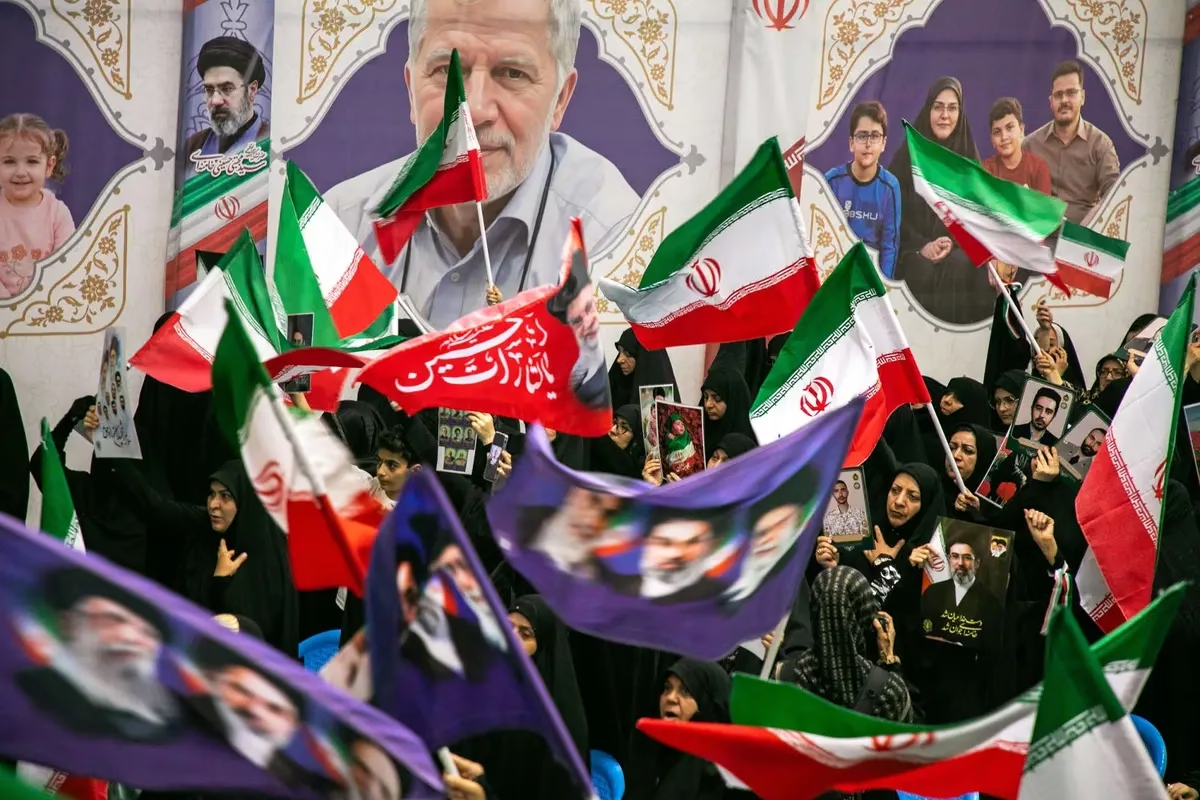
The ongoing US-Iran negotiations have entered a critical phase as Iranian officials demand several confidence-building measures before moving toward any formal agreement with Washington. The latest remarks from senior Iranian lawmaker Ebrahim Azizi show that Tehran is willing to continue dialogue, but only if the United States demonstrates practical steps that rebuild trust after years of political and military tensions.
According to Azizi, who chairs Iran’s Parliament National Security and Foreign Policy Committee, there will be no final agreement unless the US takes five key measures that Iran considers necessary for meaningful progress. His comments came during a televised interview in which he discussed the recent ceasefire efforts and indirect diplomatic talks reportedly facilitated through Pakistani mediation.
The renewed attention on US-Iran negotiations comes at a time when the Middle East remains under intense geopolitical pressure. Global markets, oil prices, and regional security continue to react to every statement issued by either Tehran or Washington.
Iran Demands Confidence-Building Measures
Iranian officials believe trust between the two countries has been severely damaged over the years due to sanctions, military confrontations, and failed diplomatic understandings. Azizi stressed that symbolic statements would not be enough and that practical action is required before any long-term agreement can be achieved.
Although the exact five measures were not fully detailed publicly, Iranian political circles have repeatedly emphasized issues such as sanctions relief, guarantees against future military aggression, respect for Iranian sovereignty, and economic normalization. These demands are now central to the future of US-Iran negotiations.
Tehran appears determined to avoid repeating previous diplomatic experiences where agreements were reached but later collapsed due to political changes in Washington. Iranian lawmakers are therefore pushing for legally and politically stronger assurances before making major commitments.
Pakistan’s Role in Regional Diplomacy
One of the most notable developments in recent weeks has been Pakistan’s increasing involvement in mediation efforts. Iranian officials acknowledged that indirect communication channels were supported through Pakistani diplomatic engagement during heightened tensions in the region.
According to Azizi, the United States sought negotiations and a ceasefire during the second week of conflict after realizing the situation was becoming more difficult than expected. He claimed that the US initially intended to conclude the confrontation within days but later moved toward diplomacy.
Pakistan’s role as a mediator has drawn attention because Islamabad maintains working relations with both Tehran and Washington. Analysts believe Pakistan’s balanced diplomatic approach has helped create space for communication at a time when direct engagement remains politically sensitive.
The evolving US-Iran negotiations have also increased Pakistan’s regional diplomatic visibility, especially as multiple countries seek de-escalation in the Middle East.
Regional Stability Remains a Key Concern
The future of the Middle East remains closely tied to the success or failure of ongoing diplomatic talks. Any escalation between Iran and the United States could affect energy supplies, shipping routes, and global financial markets.
The Strait of Hormuz remains one of the most sensitive strategic locations in the world because a significant portion of global oil trade passes through it. Investors and governments are therefore closely monitoring every development related to US-Iran negotiations.
Recent fluctuations in global oil prices highlight how sensitive international markets remain to regional uncertainty. Whenever signs of diplomacy emerge, oil prices tend to stabilize. However, fears of military escalation quickly push prices upward again.
Security experts argue that sustainable peace will require not only temporary ceasefires but also broader political agreements that address long-standing disputes between the two countries.
Diplomatic Challenges Still Exist
Despite signs of progress, several major obstacles remain unresolved. Iran and the United States continue to disagree on sanctions, military presence in the region, nuclear policies, and maritime security.
Political pressure inside both countries also complicates the negotiation process. Hardline voices in Tehran remain skeptical of American intentions, while political divisions in Washington make long-term commitments difficult.
This is why Iranian officials continue to insist on guarantees and practical actions before accepting any formal agreement. The future of US-Iran negotiations may therefore depend on whether both sides can move beyond public statements and deliver concrete diplomatic compromises.
Experts believe indirect talks and regional mediation could continue for weeks or even months before any major breakthrough becomes possible.
Global Attention on the Outcome
The international community is carefully observing these developments because the consequences extend far beyond the Middle East. A successful diplomatic agreement could reduce regional tensions, stabilize energy markets, and improve economic conditions across several countries.
At the same time, failure in the negotiation process could lead to renewed instability and uncertainty. Governments across Asia, Europe, and the Gulf region are therefore encouraging continued dialogue and restraint from all sides.
The latest statements from Iranian lawmakers show that diplomacy remains possible, but the path forward will require patience, compromise, and trust-building measures from both parties.
As the world watches closely, the coming weeks may determine whether the current phase of US-Iran negotiations leads to a lasting understanding or another period of heightened confrontation in the region.