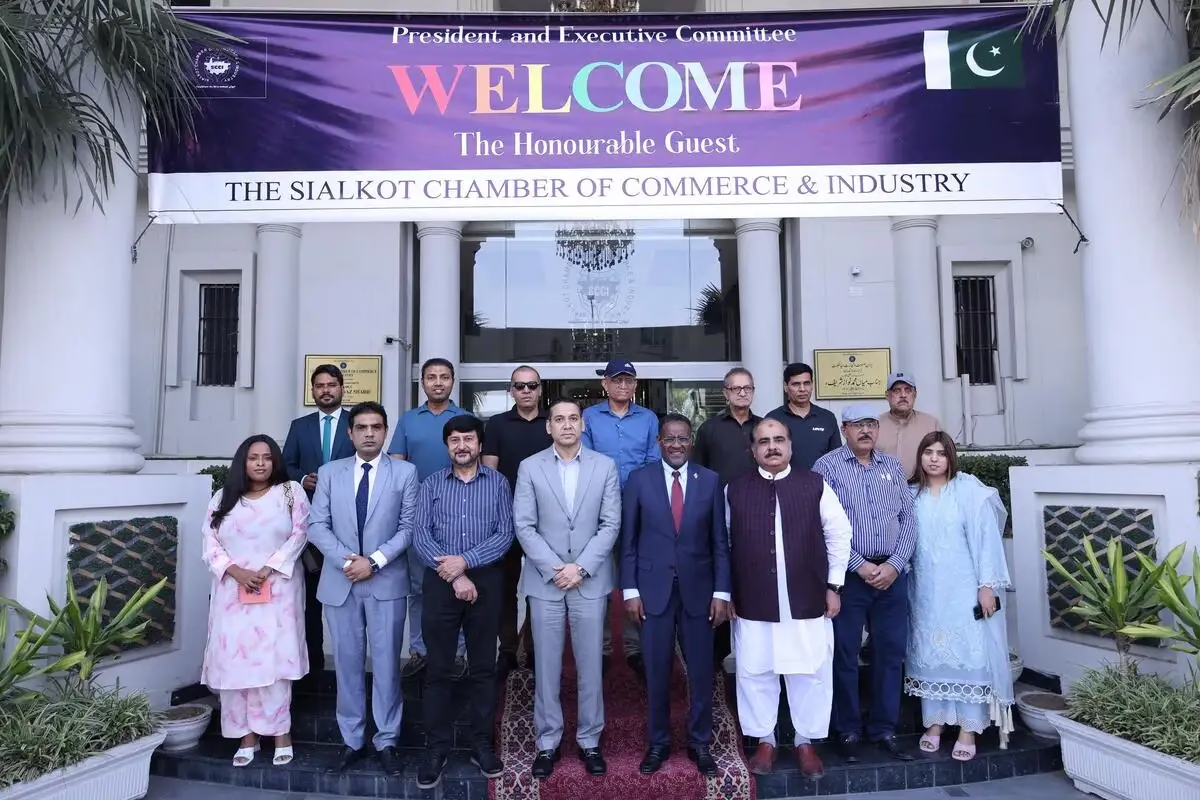
Oumer Hussien Oba visited the Sialkot Chamber of Commerce and Industry to discuss stronger business partnerships and investment opportunities between Pakistan and Ethiopia. The visit highlighted the growing importance of Pakistan Ethiopia trade relations and the potential for deeper economic cooperation between the two countries.
During the official meeting in Sialkot, the Ethiopian ambassador praised the industrial capabilities of the city and encouraged Pakistani businesses to explore investment opportunities in Ethiopia’s expanding economy. The discussions focused on trade development, industrial collaboration, and long-term economic partnerships that could benefit both nations.
The strengthening of Pakistan Ethiopia trade relations comes at a time when both countries are seeking to diversify export markets and attract new investment opportunities. Ethiopia, one of Africa’s fastest-growing economies in recent years, is increasingly positioning itself as a strategic destination for foreign investors from Asia and the Middle East.
Ambassador Oumer Hussien Oba explained that Ethiopia offers several advantages for international businesses, including a large consumer market, a growing skilled workforce, affordable green energy, and improving regional connectivity. He noted that economic reforms introduced by the Ethiopian government have helped stabilize the economy while creating a more business-friendly environment.
The ambassador also emphasized that Pakistan Ethiopia trade relations could expand significantly in sectors such as agriculture, agro-processing, manufacturing, mining, tourism, and information technology. He encouraged members of the Sialkot business community to visit Ethiopia and explore these opportunities directly.
Sialkot itself is one of Pakistan’s most important industrial cities, internationally known for manufacturing sports goods, surgical instruments, leather products, and export-oriented industries. Because of this strong industrial base, Ethiopian officials see Sialkot as an ideal partner for business-to-business cooperation and industrial investment.
During the meeting, SCCI representatives welcomed the ambassador and expressed optimism regarding future collaboration. Business leaders highlighted that stronger Pakistan Ethiopia trade relations could open new markets for Pakistani exporters while also encouraging joint ventures and technology exchange.
The Ethiopian ambassador also discussed his country’s Homegrown Economic Reform program, which aims to improve productivity, create jobs, and encourage foreign investment. According to him, the reforms include tax incentives and investment-friendly policies designed to attract international companies.
Such initiatives are becoming increasingly important as African economies compete for global investment. Ethiopia’s focus on industrialization and infrastructure development has made it an emerging economic hub in East Africa. This creates potential opportunities for Pakistani companies seeking expansion beyond traditional markets.
The growing attention on Pakistan Ethiopia trade relations reflects a broader shift in Pakistan’s trade strategy, where businesses are exploring opportunities in Africa’s rapidly developing markets. African economies offer expanding consumer bases, infrastructure projects, and increasing demand for industrial products, all of which align with Pakistan’s export capabilities.
Experts believe that stronger ties between Pakistan and Ethiopia could benefit multiple sectors. Pakistan’s expertise in textiles, surgical equipment, sports manufacturing, and agriculture could complement Ethiopia’s industrial growth plans and resource availability.
Another important aspect discussed during the meeting was regional connectivity. Ethiopia’s strategic location in East Africa provides access to nearby African markets, which could help Pakistani exporters increase their regional presence. Improved logistics and trade cooperation may also support future commercial partnerships.
The session on Pakistan Ethiopia trade relations concluded with a detailed question-and-answer discussion between the ambassador and members of the Sialkot business community. Participants exchanged views on trade regulations, investment procedures, industrial cooperation, and export opportunities.
Business representatives from Sialkot emphasized the importance of direct engagement between private sectors of both countries. They noted that stronger commercial relationships often develop through continuous dialogue, trade delegations, and joint investment initiatives.
In recent years, Pakistan has shown increasing interest in strengthening diplomatic and economic relations with African countries under its “Engage Africa” policy. Ethiopia, being one of Africa’s key economies and the headquarters of the African Union, holds strategic importance within this broader framework.
The positive discussions during the ambassador’s visit indicate growing interest from both sides in expanding economic cooperation. Improved Pakistan Ethiopia trade relations could contribute to export growth, industrial collaboration, and long-term investment partnerships that benefit businesses in both countries.
Analysts also believe that closer economic ties could create opportunities for technology sharing, workforce development, and industrial modernization. As global trade patterns continue shifting, partnerships between emerging economies are becoming increasingly valuable.
The visit of Ambassador Oumer Hussien Oba to the Sialkot Chamber of Commerce and Industry highlighted the strong potential for future collaboration between Pakistan and Ethiopia. The discussions reflected mutual interest in expanding trade, promoting investment, and building stronger economic connections.
As both countries continue exploring new opportunities, the future of Pakistan Ethiopia trade relations appears increasingly promising. Continued cooperation between governments, chambers of commerce, and private industries may help transform these discussions into long-term economic partnerships that strengthen regional trade and investment growth.