The ongoing Islamabad talks US Iran negotiations mark a significant moment in global diplomacy, as the United States and Iran engage in their highest-level discussions in years. Hosted by Pakistan, these talks aim to transform a fragile two-week ceasefire into a lasting resolution to a conflict that has shaken global energy markets and heightened regional tensions.
The Islamabad talks US Iran process comes after weeks of intense conflict that began on February 28, when coordinated strikes by the United States and Israel targeted Iran’s leadership and infrastructure. The escalation led to severe consequences, including widespread casualties and disruptions across the Middle East. Iran’s response, including the closure of the Strait of Hormuz, sent shockwaves through global trade, as nearly one-fifth of the world’s oil and gas supply passes through this critical route.
The Conflict Behind the Talks
The road to the Islamabad talks US Iran negotiations has been marked by significant violence and instability. The strikes reportedly killed thousands and severely damaged Iran’s military and nuclear facilities. In retaliation, Tehran’s actions disrupted global energy flows, driving up oil prices and affecting economies worldwide.
Recognizing the urgent need for de-escalation, Pakistan stepped in to broker a ceasefire on April 8. This temporary truce created an opportunity for dialogue, setting the stage for the ongoing talks in Islamabad. The ceasefire is expected to last two weeks, with both sides hoping to extend it through meaningful negotiations.
Pakistan’s Role as Mediator
One of the most notable aspects of the Islamabad talks US Iran is Pakistan’s central role as a mediator. Historically, Pakistan has maintained relationships with both Iran and the United States, allowing it to act as a bridge between the two adversaries.
Prime Minister Shehbaz Sharif and Deputy Prime Minister Ishaq Dar have been actively involved in facilitating communication and ensuring that both parties remain engaged in the process. Pakistan’s diplomatic outreach, including coordination with China, has further strengthened its position as a credible intermediary.
The country’s unique geopolitical position, combined with its longstanding ties to multiple global powers, has enabled it to host these critical discussions. This marks a shift in how Pakistan is perceived internationally, highlighting its ability to contribute to global peace efforts.
Key Issues on the Table
Despite the progress made so far, the Islamabad talks US Iran negotiations face significant challenges. The gap between the demands of both sides remains wide. The United States has reportedly presented a comprehensive proposal focusing on Iran’s nuclear program, ballistic missile capabilities, sanctions relief, and the reopening of the Strait of Hormuz.
On the other hand, Iran has put forward its own set of demands, including greater control over the strait, the imposition of transit tolls, the cessation of regional military operations, and the complete lifting of sanctions. These differing positions highlight the complexity of the negotiations and the difficulty of reaching a mutually acceptable agreement.
Another contentious issue is the situation in Lebanon. Continued strikes and disagreements over whether the ceasefire applies to that region have added another layer of tension to the talks.
Who Is Leading the Talks?
The Islamabad talks US Iran involve high-level delegations from both sides. The US team is led by JD Vance, along with key figures such as Steve Witkoff and Jared Kushner. This represents one of the most senior US engagements with Iran in recent years.
On the Iranian side, the delegation includes prominent leaders such as Mohammad Bagher Ghalibaf and Foreign Minister Abbas Araghchi. Their participation underscores the importance Tehran places on these negotiations.
Interestingly, the talks are expected to follow an indirect format, with both delegations sitting in separate rooms while Pakistani officials shuttle proposals between them. This method mirrors earlier diplomatic efforts and helps maintain a controlled environment for sensitive discussions.
Security and Atmosphere in Islamabad
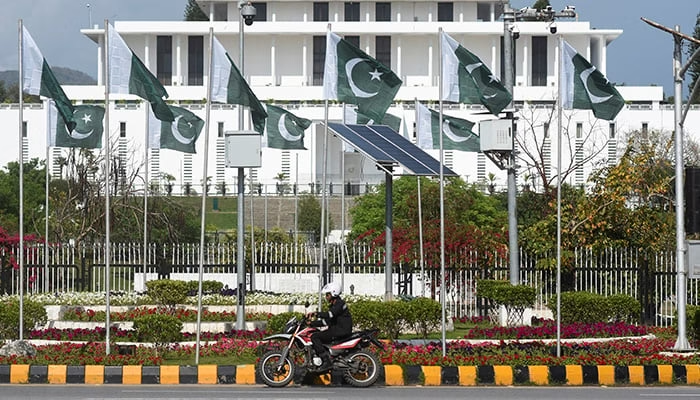
As the host city, Islamabad has implemented strict security measures to ensure the safety of all participants. The capital has seen an increased presence of military personnel, road closures, and heightened surveillance. These measures reflect the high stakes involved in the Islamabad talks US Iran and the need to maintain a secure environment for negotiations.
The usually calm city has become even quieter, with authorities taking extra precautions to avoid any disruptions during this critical period.
Global Implications
The outcome of the Islamabad talks US Iran will have far-reaching implications. A successful agreement could stabilize global energy markets, reduce geopolitical tensions, and prevent further escalation in the Middle East. On the other hand, failure to reach a consensus could reignite conflict, with potentially severe consequences for the global economy.
The Islamabad talks US Iran represent a crucial opportunity to move from conflict to cooperation. While significant challenges remain, the willingness of both sides to engage in dialogue is a positive sign. Pakistan’s role as a mediator highlights the importance of diplomacy in resolving even the most complex disputes.
As the talks continue, the world watches closely, hoping that these negotiations will lead to a lasting peace and a more stable global landscape.