Pakistan has once again demonstrated its role as a key diplomatic player in the region through Pakistan mediation Iran-US talks, aimed at de-escalating rising tensions in the Middle East. In recent weeks, Islamabad emerged as a crucial channel for dialogue between Tehran and Washington, facilitating a temporary ceasefire that has drawn global attention.
The initiative underscores Pakistan’s commitment to promoting stability and peace. Prime Minister Shehbaz Sharif and Chief of Defence Forces Field Marshal Syed Asim Munir have both reaffirmed Pakistan’s dedication to providing all-out support to the US and Iran in achieving a peacefully negotiated settlement. Their leadership has been central to the success of these talks.
Progress in Diplomacy
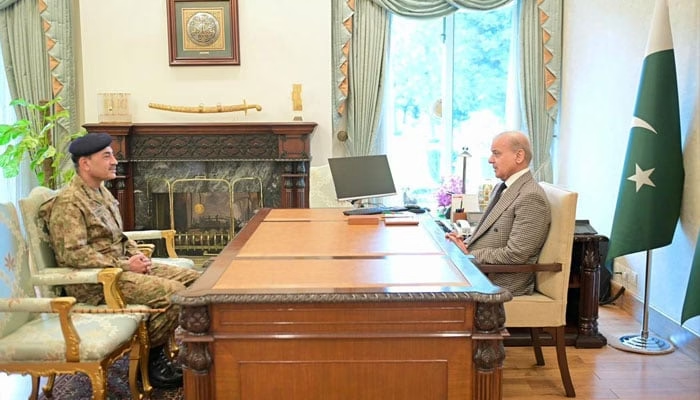
Following a high-level meeting at the Prime Minister’s Office in Islamabad, PM Shehbaz and Field Marshal Munir reviewed the progress of Pakistan mediation Iran-US talks. Both leaders expressed satisfaction with the initial de-escalation achieved and emphasized the importance of maintaining the ceasefire. The meeting highlighted Pakistan’s role as a neutral facilitator committed to creating an environment conducive to sustainable peace.
“The leadership appreciated the restraint demonstrated by all sides and reiterated Pakistan’s commitment to facilitate and provide full support to both parties,” the official statement read. The discussions also involved planning for the arrival of US and Iranian delegations to Islamabad for continued negotiations, demonstrating Pakistan’s readiness to host critical dialogue sessions.
Context of the Conflict
The urgent need for mediation arose after Israel and the United States carried out strikes on Iran, including the assassination of its Supreme Leader, Ayatollah Ali Khamenei, on February 28. These events triggered retaliatory attacks from Tehran, intensifying tensions across the Gulf and creating the potential for broader regional conflict.
Pakistan, maintaining close ties with both Washington and Tehran, leveraged its diplomatic channels to prevent escalation. Through persistent engagement and timely communication, Islamabad successfully brokered a temporary two-week truce just hours before President Donald Trump’s deadline to initiate military action against Iran was set to expire.
Strategic Role of Pakistan
The Pakistan mediation Iran-US talks highlight the country’s strategic influence in regional peace efforts. By providing a neutral venue and acting as a reliable intermediary, Pakistan helped ensure that both sides had the opportunity to communicate directly. This reduced the risk of misunderstandings or unintended escalation and provided the international community with hope for peaceful resolution.
Prime Minister Shehbaz Sharif also held discussions with Lebanese Prime Minister Nawaf Salam to address the rising violence in Lebanon. Pakistan condemned Israel’s aggression and expressed solidarity with Lebanese civilians affected by recent hostilities. This move reinforced Pakistan’s image as a proactive advocate for regional stability, not just limited to the Iran-US context.
Hosting the Delegations
Pakistan is set to host the US and Iranian delegations this weekend, providing a neutral ground for the continuation of peace talks. PM Shehbaz extended assurances of full support and the highest level of hospitality to both sides, reinforcing the country’s commitment to facilitating constructive dialogue. The presence of both diplomatic and military leadership in these talks ensures that Pakistan’s mediation efforts are comprehensive and credible.
Global Implications
The success of Pakistan mediation Iran-US talks has implications far beyond the immediate region. A peaceful resolution between Washington and Tehran reduces the risk of broader conflict, stabilizes energy markets, and prevents potential economic and humanitarian crises. It also demonstrates the importance of smaller nations in playing pivotal roles in global diplomacy.
By acting as a neutral intermediary, Pakistan has strengthened its international standing. These talks highlight how carefully coordinated diplomacy, backed by credible leadership, can prevent conflicts from spiraling out of control.
Future Prospects
While the temporary truce is an important step, sustained peace will require ongoing engagement. Pakistan’s commitment to facilitating dialogue, providing logistical support, and encouraging constructive communication sets a model for future mediation efforts. Maintaining momentum and ensuring that all parties remain committed to negotiations will be critical in converting this temporary pause into lasting stability.
The Pakistan mediation Iran-US talks reflect the country’s growing influence in international diplomacy and its dedication to promoting peace in volatile regions. Through careful planning, active facilitation, and strong leadership, Islamabad has played a vital role in averting potential conflict between two global powers.
As the delegations convene in Pakistan, the world watches closely, hopeful that sustained dialogue will continue to prevent escalation. Pakistan’s proactive engagement demonstrates that timely, credible, and neutral mediation can make a tangible difference, strengthening both regional security and global confidence in diplomacy.