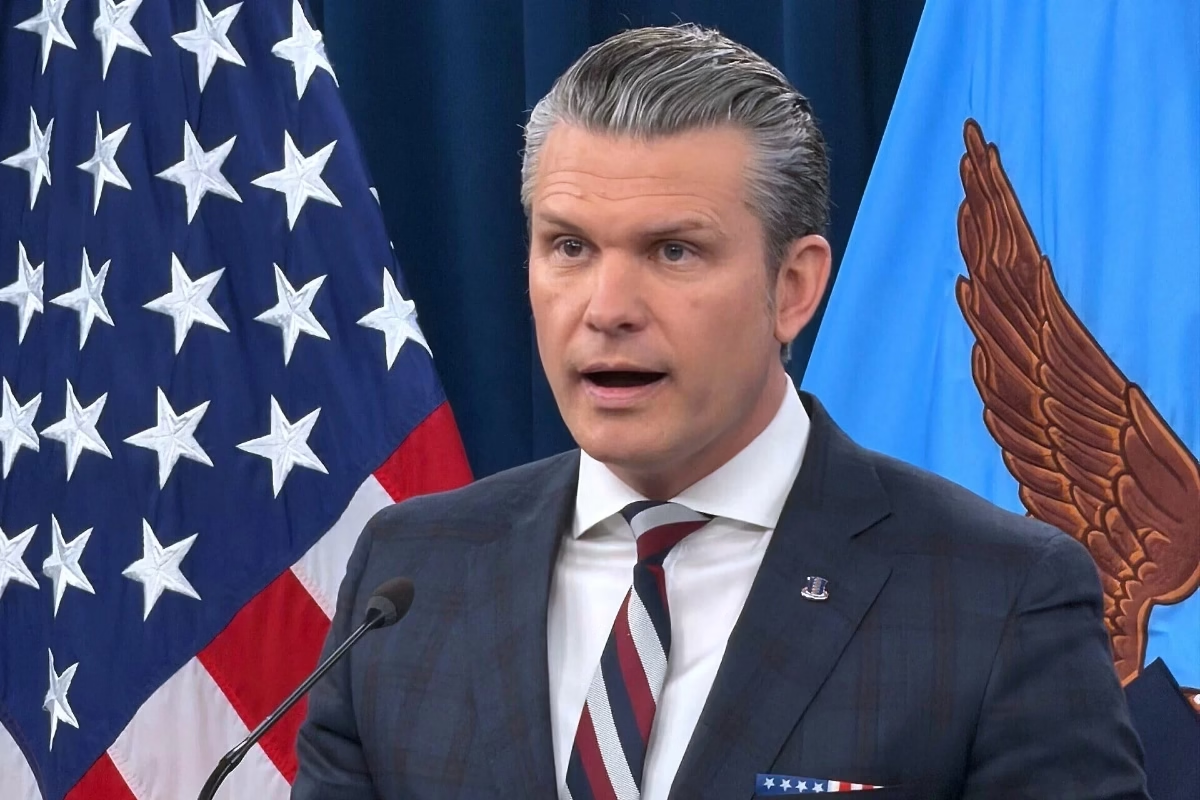
The recent developments in the US Iran military conflict 2026 have captured global attention, following a major announcement by US Secretary of Defense Pete Hegseth. During a press conference, he claimed that the United States had achieved a decisive military victory over Iran, marking what he described as a historic shift in global security dynamics.
According to Hegseth, the operation was highly strategic and targeted, focusing on dismantling Iran’s military capabilities. He credited Donald Trump for leading a bold and transformative approach to national security. The strikes reportedly targeted over 800 locations across Iran, including key military installations, missile systems, and high-ranking officials. This масштаб operation, if accurate, represents one of the most extensive military campaigns in recent history.
The US Iran military conflict 2026 reportedly resulted in the destruction of Iran’s air force and a significant portion of its missile infrastructure. These capabilities have long been central to Iran’s defense strategy, particularly in maintaining regional influence and deterrence. By neutralizing these assets, the United States appears to have significantly altered the military balance in the region.
Hegseth further stated that Iran’s remaining military strength is now limited to underground bunker systems. These facilities, often designed to withstand heavy bombardment, may still provide Iran with some defensive capabilities. However, the loss of air superiority and missile systems would severely restrict its ability to project power beyond its borders. This shift could have long-term implications for regional security, particularly in the Middle East.
One of the most notable aspects of the US Iran military conflict 2026 is the reported agreement by Iranian leadership to a ceasefire. While details of the ceasefire remain limited, such a move suggests that the scale and intensity of the strikes may have forced Iran to reconsider its position. Ceasefires in conflicts of this magnitude often signal a pause for negotiations, though they do not necessarily indicate a permanent resolution.
The announcement has sparked a wide range of reactions globally. Supporters of the US administration view this as a demonstration of strength and decisive leadership, while critics have raised concerns about the potential consequences of such a large-scale military operation. Questions remain about civilian impact, regional stability, and the long-term geopolitical effects of the conflict.
The US Iran military conflict 2026 also raises important questions about modern warfare. The use of precision strikes to target specific assets and individuals highlights the increasing reliance on advanced technology and intelligence in military operations. Such strategies aim to minimize collateral damage while achieving maximum impact, though their effectiveness and ethical implications continue to be debated.
From a geopolitical perspective, this conflict could reshape alliances and power dynamics in the region. Countries neighboring Iran may reassess their security strategies, while global powers may adjust their diplomatic and military approaches in response to the evolving situation. The Middle East has long been a region of strategic importance, and any significant shift in its balance of power can have far-reaching consequences.
Another critical aspect of the US Iran military conflict 2026 is its potential economic impact. Military conflicts often influence global markets, particularly oil prices, given the region’s importance in energy production. Any disruption in supply chains or escalation of tensions could lead to volatility in international markets, affecting economies worldwide.
While the announcement paints a picture of a decisive victory, it is important to approach such claims with caution. In complex conflicts, information can be influenced by strategic messaging and political narratives. Independent verification and analysis are essential to fully understand the scope and impact of the situation.
The US Iran military conflict 2026 represents a significant moment in contemporary geopolitics. The reported destruction of key military assets, the scale of the operation, and the agreement to a ceasefire all point to a major shift in the regional and global security landscape. However, the long-term consequences of these actions remain uncertain. As the situation continues to develop, the world will be watching closely to see how this conflict shapes the future of international relations and stability.