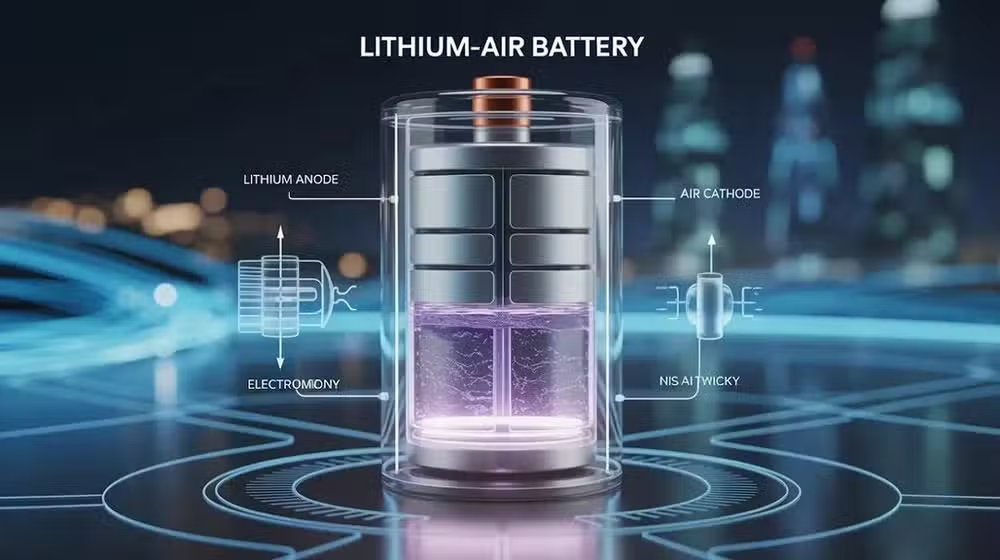
The lithium-air battery catalyst breakthrough is opening new possibilities for the future of energy storage. Scientists have developed an advanced catalyst technology that significantly improves the performance, efficiency, and lifespan of lithium-air batteries an innovation that could reshape how we power devices, vehicles, and large-scale systems.
As the demand for high-capacity and long-lasting batteries grows, this development offers a promising alternative to current technologies, especially Lithium-ion battery systems that dominate today’s market.
Why Lithium-Air Batteries Matter
The lithium-air battery catalyst breakthrough is particularly important because lithium-air batteries have long been considered the future of energy storage. These batteries have the potential to deliver energy densities up to ten times higher than traditional lithium-ion batteries.
In simple terms, this means they could power electric vehicles for much longer distances or enable smartphones to last days without charging. However, despite their potential, lithium-air batteries have faced major technical challenges.
Slow reaction rates and limited lifespan have been the biggest obstacles. These issues mainly arise from inefficient chemical reactions involving oxygen, which are crucial during the battery’s charging and discharging cycles.
The Role of Advanced Materials
At the heart of the lithium-air battery catalyst breakthrough is a material known as Tungsten diselenide (WSe₂). This two-dimensional material has unique properties, but until now, its effectiveness was limited because only its edges could participate in chemical reactions.
Researchers found a way to unlock the full potential of this material. By modifying its structure, they turned almost the entire surface into an active area for chemical reactions. This dramatically increases the efficiency of the battery.
The innovation involved adding platinum atoms and creating tiny vacancies where selenium atoms are missing. These changes create more active sites, allowing oxygen molecules to interact more effectively with the material.
How the Breakthrough Works
The lithium-air battery catalyst breakthrough focuses on improving two critical processes: oxygen reduction and oxygen evolution. These processes are essential for storing and releasing energy in lithium-air batteries.
By increasing the number of active reaction sites, the new catalyst allows these processes to happen faster and more efficiently. This leads to improved charge and discharge performance.
Another key advantage is that the material maintains good electrical conductivity. This ensures that energy flows smoothly through the battery, which is crucial for real-world applications.
Improved Performance and Lifespan
One of the most impressive outcomes of the lithium-air battery catalyst breakthrough is the significant improvement in battery lifespan. Tests have shown that batteries using this new catalyst can operate for more than 550 charge-discharge cycles while maintaining stable performance.
This is a major improvement compared to earlier lithium-air systems, which often degraded quickly. The new technology also performs well under different charging speeds, making it more practical for everyday use.
In comparison to traditional catalysts like platinum on carbon and Ruthenium oxide, the new system demonstrates better durability and consistency.
Broader Impact on Energy Technology
The lithium-air battery catalyst breakthrough is not limited to just one application. It could influence a wide range of energy technologies. For example, it may improve systems like Water electrolysis and Fuel cells, both of which rely heavily on efficient catalysts.
This means the innovation could play a role in clean energy production, hydrogen fuel development, and sustainable power solutions. As the world moves toward greener energy, such advancements become increasingly valuable.
Future Potential and Commercialization
Experts believe that the lithium-air battery catalyst breakthrough could eventually lead to commercial applications. With further research and development, these batteries may become a viable option for electric vehicles, portable electronics, and even large-scale energy storage systems.
The ability to store more energy in a smaller space could transform industries and reduce reliance on fossil fuels. However, challenges such as cost, scalability, and mass production still need to be addressed before widespread adoption.
The lithium-air battery catalyst breakthrough represents a major step forward in energy storage technology. By solving key limitations related to efficiency and lifespan, researchers have brought lithium-air batteries closer to real-world use.
With higher energy density, improved durability, and broader applications, this innovation has the potential to reshape the future of power systems. As research continues, the lithium-air battery catalyst breakthrough could become a cornerstone of next-generation energy solutions, helping to meet the growing global demand for efficient and sustainable power.