The PTI Rawalpindi rally April 9 has become a major political development, as Pakistan Tehreek-e-Insaf announced plans to hold a public gathering at Liaquat Bagh. The party has emphasized its right to peaceful protest and warned of legal action if authorities deny permission for the event.
This planned rally is not just a routine political gathering; it carries symbolic importance as it marks the anniversary of the no-confidence motion that removed Imran Khan from office in 2022.
Political Significance of April 9
The PTI Rawalpindi rally April 9 holds deep political meaning for party supporters. The date represents a turning point in Pakistan’s recent political history, when the PTI government was ousted through a parliamentary vote.
For many within the party, this day symbolizes what they describe as a political struggle. By organizing the rally on this date, PTI aims to reinforce its narrative and reconnect with supporters across the country.
The event is expected to draw attention not only from party workers but also from political observers closely watching Pakistan’s evolving political landscape.
Leadership’s Strong Message
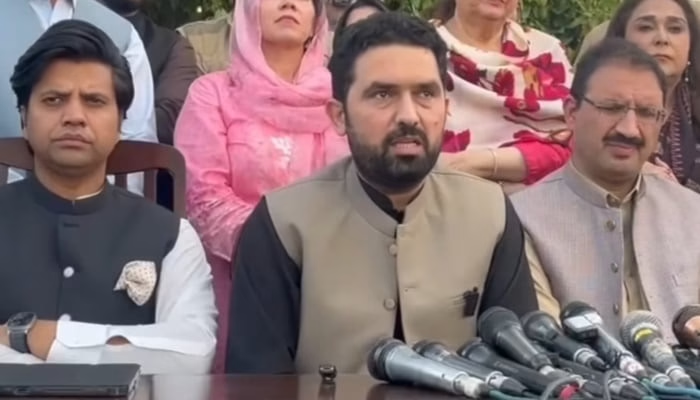
During a press conference in Islamabad, party leaders made it clear that the PTI Rawalpindi rally April 9 would go ahead as planned. Junaid Akbar emphasized the party’s commitment to peaceful protest, stating that PTI workers are a political force, not a disruptive group.
Similarly, Sohail Afridi highlighted that the rally is intended to demonstrate democratic values and public engagement. He urged the government to grant the required no-objection certificate (NOC) to ensure the event proceeds smoothly.
These statements reflect PTI’s effort to position the rally as a lawful and peaceful exercise of political rights.
Legal Concerns and Government Response
A key issue surrounding the PTI Rawalpindi rally April 9 is whether authorities will grant permission for the gathering. PTI leaders have warned that they will approach the courts if their request is denied.
Barrister Gohar reiterated that legal options remain open, signaling the party’s readiness to challenge any restrictions. This adds a legal dimension to the situation, making it more than just a political event.
The government’s response will likely play a crucial role in shaping how the situation unfolds in the coming days.
Broader Political Strategy
The announcement of the PTI Rawalpindi rally April 9 comes after a meeting of opposition leaders in the National Assembly. Discussions reportedly included protest strategies and upcoming political plans.
Key figures such as Salman Akram Raja and Mahmood Khan Achakzai participated in these discussions, highlighting coordination among opposition groups.
The rally is seen as part of a broader effort to mobilize public support and strengthen the party’s position in the political arena.
Public and Economic Context
The PTI Rawalpindi rally April 9 is also taking place against the backdrop of economic challenges in the country. Party leaders have criticized the current government over rising inflation and poverty levels.
According to statements made during the press conference, a significant portion of the population is facing financial difficulties. By addressing these issues, PTI aims to connect its political message with the everyday concerns of citizens.
This approach could influence public turnout and the overall impact of the rally.
Commitment to Peaceful Protest
One of the central themes of the PTI Rawalpindi rally April 9 is the emphasis on peaceful protest. PTI leaders have repeatedly stated that the event will be conducted in an orderly manner.
They have also assured that the party will manage all arrangements, aiming to avoid any disruptions. This focus on discipline and organization is intended to counter concerns about large political gatherings.
By highlighting peaceful intentions, PTI is محاولة to strengthen its image as a responsible political force.
Potential Impact on Politics
The PTI Rawalpindi rally April 9 could have significant implications for Pakistan’s political landscape. Large public gatherings often serve as a measure of a party’s popularity and influence.
If the rally attracts a strong turnout, it may boost PTI’s momentum and send a message to both supporters and opponents. On the other hand, any restrictions or controversies surrounding the event could lead to further political tensions.
In either case, the rally is expected to be a closely watched event.
The PTI Rawalpindi rally April 9 represents more than just a political gathering; it is a moment of reflection, protest, and strategic positioning for the party. With its symbolic timing, strong messaging, and potential legal implications, the event has captured national attention.
As the date approaches, all eyes will be on how the situation develops, including the government’s response and public participation. Ultimately, the PTI Rawalpindi rally April 9 will play a key role in shaping the next phase of political discourse in Pakistan.