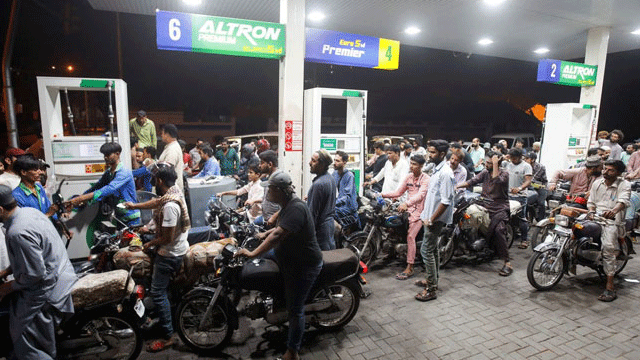
The government has introduced a petrol subsidy for motorcycle owners to provide relief after the recent surge in fuel prices. With petrol prices reaching record levels, this initiative aims to support low-income riders who depend heavily on motorcycles for daily commuting and earning their livelihood.
Announced by Muhammad Aurangzeb, the subsidy offers Rs100 per litre on petrol for eligible motorcycle users. This move is expected to ease financial pressure on millions of citizens across the country.
Key Features of the Subsidy
The petrol subsidy for motorcycle owners comes with clear limits and conditions to ensure targeted relief. Eligible motorcycle users can receive the subsidy on up to 20 litres of petrol per month. This means a significant reduction in monthly fuel expenses for those who qualify.
The subsidy will remain in effect for three months initially. During this period, the government will monitor its impact and decide whether to extend or revise the program.
In addition, intercity and public transport services will also benefit from similar support, although for a shorter duration of one month. This indicates a broader effort to stabilize transportation costs.
Additional Relief Measures
Alongside the petrol subsidy for motorcycle owners, the government has announced several other financial relief initiatives. These measures are aimed at supporting different sectors affected by rising fuel prices.
Small-scale farmers will receive a monthly diesel subsidy of Rs1,500 as a one-time relief. Goods transport operators are also included, with subsidies of Rs70,000 per month for trucks and Rs80,000 for larger vehicles.
Public service buses will receive up to Rs100,000 per month, helping reduce the burden on public transport systems. These combined efforts highlight the government’s attempt to manage inflation and support key sectors of the economy.
Eligibility Criteria
To ensure fairness, the petrol subsidy for motorcycle owners is limited to specific categories of users. Only motorcycles with an engine capacity of up to 70cc are eligible for the subsidy.
Additionally, the motorcycle must be registered in the name of the person applying for the subsidy. This requirement helps prevent misuse and ensures that the benefit reaches genuine users.
Owners of heavy motorcycles are not included in the program, as the focus is on low-income individuals who rely on basic transportation. The government may also use data from Benazir Income Support Programme to identify the most deserving beneficiaries.
How the Subsidy Will Work
The process for accessing the petrol subsidy for motorcycle owners will be technology-driven. A dedicated mobile app will be introduced to allow users to check their eligibility and register for the program.
Petrol pumps will also be equipped with smartphones to verify users and apply the subsidy at the point of purchase. This digital approach aims to improve transparency and reduce the chances of fraud.
However, officials have clarified that the detailed procedure for claiming the subsidy is still being finalized. For now, riders are required to pay the full petrol price until the system becomes operational.
Impact on Daily Life
The petrol subsidy for motorcycle owners is expected to have a direct impact on daily expenses. Motorcycles are one of the most common modes of transport in Pakistan, especially for workers, students, and delivery riders.
By reducing fuel costs, the subsidy can help individuals manage their budgets more effectively. It may also indirectly lower transportation costs for goods and services, benefiting the wider economy.
For many families, even a small reduction in monthly expenses can make a significant difference. This initiative could provide much-needed relief during a time of economic uncertainty.
Challenges and Concerns
While the petrol subsidy for motorcycle owners is a positive step, there are some challenges to consider. The success of the program largely depends on its implementation.
Delays in launching the mobile app or technical issues at petrol pumps could create inconvenience for users. Ensuring accurate verification and preventing misuse will also be critical.
Another concern is the limited duration of the subsidy. Since it is currently planned for only three months, many people are wondering whether it will be extended based on economic conditions.
A Step Toward Relief
Despite these challenges, the petrol subsidy for motorcycle owners reflects the government’s effort to address public concerns about rising fuel prices. By focusing on low-income groups, the initiative aims to provide targeted and meaningful support.
It also shows a shift toward using digital solutions for delivering subsidies, which could pave the way for more efficient programs in the future.
The petrol subsidy for motorcycle owners offers timely relief to millions of riders struggling with high fuel costs. With clear eligibility criteria and a technology-based distribution system, the initiative has the potential to make a real difference.
As the program rolls out, its effectiveness will depend on smooth implementation and proper management. If successful, it could serve as a model for future welfare initiatives aimed at supporting vulnerable segments of society.