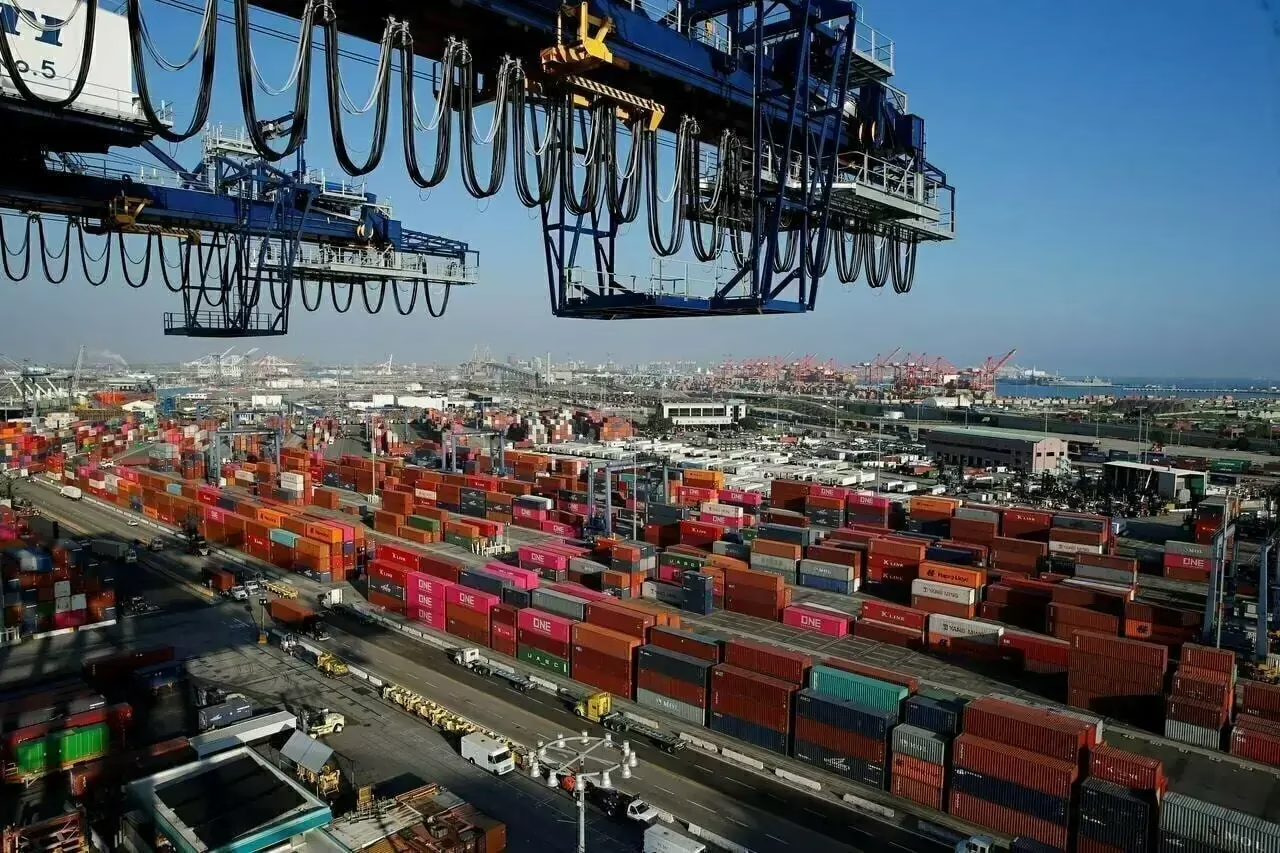
The newly announced Pakistan port congestion plan is set to transform port operations by addressing long-standing issues related to stuck containers and surplus cargo. The initiative, led by Muhammad Junaid Anwar Chaudhry, focuses on clearing congestion within 30 days to improve efficiency and support smooth trade operations.
Pakistan’s ports play a vital role in the country’s economy, acting as key gateways for imports and exports. However, congestion caused by delayed container clearance and excess materials has often slowed down operations. The Pakistan port congestion plan aims to resolve these issues through a structured and time-bound strategy.
A 30-Day Action Framework
At the core of the Pakistan port congestion plan is a comprehensive 30-day timeline. Authorities have been directed to shift stuck-up containers and surplus materials from on-dock areas to designated off-dock facilities.
This move is expected to free up valuable space at port terminals, allowing for smoother handling of incoming and outgoing cargo. By reducing clutter and improving organization, ports can operate more efficiently and handle higher volumes of trade.
The plan also includes auctioning and disposing of abandoned or unused materials. This step ensures that unnecessary items do not continue to occupy space that could otherwise be used for active shipments.
Role of Key Institutions
Several institutions are playing a crucial role in implementing the Pakistan port congestion plan. The Karachi Port Trust has been tasked with coordinating with terminal operators to develop detailed shifting plans. These plans must be shared with relevant authorities within a short timeframe to ensure swift action.
The Federal Board of Revenue is also involved, particularly in facilitating the auction and disposal process. It will allow shipping companies to remove and destroy abandoned containers in accordance with regulations.
This coordinated approach highlights the importance of collaboration between different departments to achieve the desired results.
Managing Transhipment Cargo
Another important aspect of the Pakistan port congestion plan is the management of transhipment cargo. With increasing regional trade and improved port performance, the volume of such cargo has grown significantly.
To address this, authorities have been instructed to develop a clear mechanism for shifting transhipment cargo to off-dock terminals. This will be done on defined commercial terms, ensuring both efficiency and transparency.
Maintaining updated records of cargo and off-dock facilities is also a key requirement. Accurate data will help streamline operations and prevent future congestion.
Use of Off-Dock Facilities
The Pakistan port congestion plan relies heavily on the effective use of off-dock facilities. Locations such as Sky Media Terminal, Al-Hamd Terminal, and areas along the Northern Bypass have been identified for relocating containers and surplus materials.
By moving goods away from the main port area, these facilities help reduce pressure on terminals and improve overall workflow. This decentralized approach ensures that ports remain focused on handling active shipments rather than dealing with backlogs.
Boosting Trade and Logistics
One of the main objectives of the Pakistan port congestion plan is to support trade and enhance logistics efficiency. Congested ports can lead to delays, increased costs, and disruptions in supply chains.
By clearing stuck containers and optimizing space, the plan aims to ensure that goods move smoothly through the system. This will benefit businesses, exporters, and importers by reducing waiting times and improving reliability.
Efficient ports also make Pakistan more competitive in regional and global trade. As logistics improve, the country can attract more business and strengthen its economic position.
Auction and Disposal Process
The Pakistan port congestion plan includes a streamlined auction process for stuck-up containers. Customs authorities have been directed to complete auctions within one month, ensuring that unused cargo is cleared quickly.
Terminal operators are also responsible for disposing of surplus items such as wooden pallets and unused equipment within the same timeframe. Setting rational reserve prices for mixed lots is expected to speed up the auction process.
This approach not only clears space but also generates revenue from items that would otherwise remain unused.
A Forward-Looking Strategy
The Pakistan port congestion plan reflects a forward-looking approach to managing port operations. By addressing current challenges and preparing for future growth, the government aims to create a more efficient and sustainable system.
The emphasis on planning, coordination, and timely execution shows a commitment to long-term improvement. As trade volumes continue to rise, such initiatives will be essential for maintaining smooth operations.
The Pakistan port congestion plan represents a significant step toward improving the efficiency of the country’s maritime sector. With a clear 30-day framework, strong coordination among institutions, and a focus on practical solutions, the initiative has the potential to bring lasting change.
By reducing congestion, supporting trade, and enhancing logistics, this plan can strengthen Pakistan’s economic foundation. If implemented effectively, it will not only solve current challenges but also pave the way for a more efficient and competitive port system in the future.