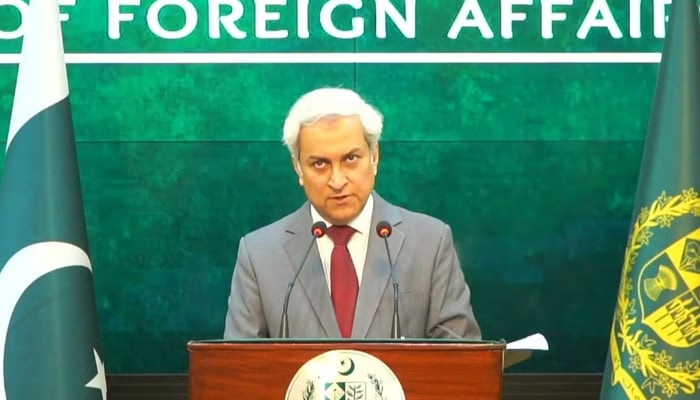
The ongoing Pakistan diplomatic efforts for peace are gaining global attention as the country continues to engage with international stakeholders to reduce tensions in the Middle East. According to Pakistan’s Foreign Office, the country remains in close contact with the leadership of the United States and is actively involved in diplomatic consultations aimed at creating a path toward meaningful negotiations.
As regional instability continues following the conflict involving Iran, Israel, and the United States, Pakistan has stepped forward as a mediator. The Pakistan diplomatic efforts for peace focus on facilitating dialogue, building trust among conflicting parties, and promoting long-term stability in the region.
Continuous Engagement with Global Powers
A key aspect of the Pakistan diplomatic efforts for peace is the country’s consistent communication with major global and regional players. Pakistan has maintained dialogue not only with the United States but also with countries like China and key Middle Eastern nations.
These diplomatic engagements are aimed at encouraging all parties to move toward negotiations instead of prolonged conflict. Officials have emphasized that the next phase of these efforts will focus on meaningful discussions that involve all relevant stakeholders.
Pakistan has also offered to host peace talks, demonstrating its willingness to play a central role in resolving the crisis. This proactive approach highlights the country’s commitment to diplomacy over confrontation.
Regional Collaboration for Stability
The Pakistan diplomatic efforts for peace extend beyond bilateral talks. Pakistan has hosted high-level meetings with representatives from Saudi Arabia, Turkey, and Egypt. These discussions have focused on coordinating strategies to de-escalate tensions and promote peace.
Such collaboration reflects the importance of regional unity in addressing complex geopolitical challenges. By bringing multiple countries together, Pakistan is helping to create a collective voice for peace in the Middle East.
Economic Impact Driving Urgency
One of the major reasons behind the Pakistan diplomatic efforts for peace is the economic impact of the ongoing conflict. The disruption of oil and gas shipments through the Strait of Hormuz has created challenges not only for Pakistan but for the global economy as well.
As a country that relies on energy imports, Pakistan has been directly affected by rising costs and supply uncertainties. This has increased the urgency of diplomatic initiatives aimed at restoring stability and ensuring the smooth flow of trade.
Recognition of Pakistan’s Role
The Pakistan diplomatic efforts for peace have received positive recognition from both regional and international actors. According to officials, both Iran and the United States have expressed confidence in Pakistan’s role as a facilitator.
Additionally, global leaders, including those from European countries and Malaysia, have acknowledged and supported Pakistan’s diplomatic outreach. This growing recognition strengthens Pakistan’s position as a credible mediator in international conflicts.
The involvement of organizations like the Organization of Islamic Cooperation (OIC) and Gulf Cooperation Council (GCC) further highlights the broad support for these efforts.
A Structured Approach to Peace
Another important element of the Pakistan diplomatic efforts for peace is the development of structured proposals for conflict resolution. Pakistan, in collaboration with China, has introduced a five-point peace plan aimed at achieving a ceasefire and initiating dialogue.
This plan has been shared with all relevant stakeholders, including Iran and the United States. It aligns with broader regional discussions and emphasizes the need for cooperation, mutual respect, and sustainable solutions.
Officials have clarified that these consultations are not about forming alliances but about enhancing coordination and promoting shared interests. This balanced approach ensures that Pakistan remains neutral while supporting peace initiatives.
Balancing Diplomacy and Security
While focusing on the Pakistan diplomatic efforts for peace, the country continues to address its own security challenges. Officials have confirmed that ongoing operations against terrorism remain unaffected by diplomatic engagements.
This dual approach highlights Pakistan’s commitment to maintaining internal stability while contributing to global peace. It also demonstrates that diplomacy and security can go hand in hand when managed effectively.
The future of the Pakistan diplomatic efforts for peace depends on continued engagement and cooperation among all parties involved. While challenges remain, the ongoing consultations and proposals offer hope for a peaceful resolution.
Pakistan’s willingness to facilitate dialogue and host negotiations positions it as a key player in shaping the outcome of the conflict. The country’s efforts reflect a broader vision of promoting stability, not just regionally but globally.
The Pakistan diplomatic efforts for peace represent a proactive and responsible approach to international relations. By engaging with global powers, fostering regional collaboration, and proposing structured solutions, Pakistan is playing a vital role in addressing one of the most pressing conflicts of our time.
As the situation evolves, these efforts will continue to be crucial in promoting dialogue, reducing tensions, and working toward a sustainable and lasting peace.