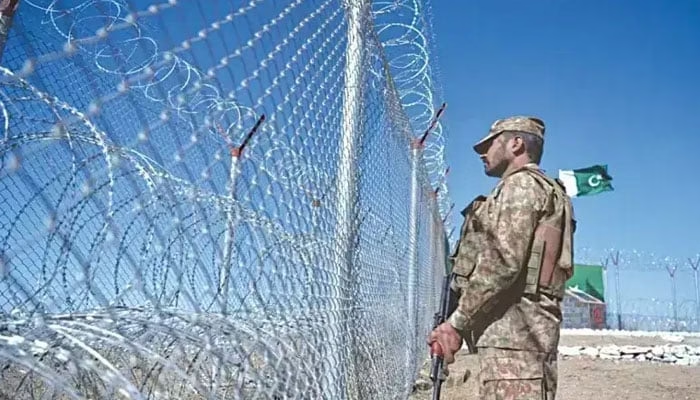
The Pak-Afghan border fake news controversy has gained attention after Pakistan’s Ministry of Information and Broadcasting firmly rejected claims about the removal of barbed wire along the border. Officials described these reports as completely fabricated and lacking any factual basis, emphasizing that the situation on the ground remains unchanged and fully under control.
The ministry’s statement came in response to circulating social media content, which allegedly showed sections of the border fence being removed. Authorities strongly denied these claims, stating that such narratives are part of a broader misinformation campaign aimed at creating confusion and undermining security efforts.
Government Responds to Misinformation
The rise of Pak-Afghan border fake news highlights the growing challenge of misinformation in sensitive geopolitical regions. According to officials, the claims were propagated by sources linked to the Afghan Taliban regime and external intelligence networks. The ministry condemned these efforts, calling them deliberate attempts to distort reality and mislead the public.
Authorities clarified that the border fence remains intact and is actively monitored by Pakistan’s security forces. Any attempts to breach or damage the fence are met with immediate and strong responses. This reassurance aims to counter the false narratives being spread online.
Strategic Importance of the Border
The Pakistan-Afghanistan border stretches over 2,600 kilometers and passes through difficult and rugged terrain. Managing such a vast and complex boundary is a significant challenge, requiring continuous surveillance and coordination by security agencies.
The Pak-Afghan border fake news issue also draws attention to the importance of maintaining border integrity. The fence plays a crucial role in preventing illegal crossings, controlling smuggling activities, and reducing the risk of militant infiltration. Officials have repeatedly stated that securing the border is a top national priority.
Security Concerns and Infiltration Risks
Pakistan has long expressed concerns about cross-border infiltration by militant groups and criminal networks. According to the government, these threats make it essential to maintain strict control over border areas.
In this context, the spread of Pak-Afghan border fake news can have serious implications. False information about weakened border security could embolden hostile elements or create unnecessary panic among the public. Authorities have warned that misinformation campaigns often serve strategic purposes, particularly during periods of heightened tension.
Security officials have previously highlighted how certain groups attempt to exploit gaps or create the perception of vulnerabilities. By countering false claims, the government aims to maintain public confidence and deter potential threats.
Role of Official Communication
To address the Pak-Afghan border fake news, the Ministry of Information and Broadcasting has emphasized the importance of relying on verified sources. Official statements and briefings from security agencies provide accurate updates about the situation, helping to counter misleading narratives.
The ministry also referenced past briefings by military spokespersons, who have detailed the challenges and measures taken to secure the border. These communications are part of a broader effort to ensure transparency and keep the public informed.
In recent years, governments worldwide have faced increasing challenges from misinformation, particularly on social media platforms. The rapid spread of unverified content makes it crucial for authorities to respond quickly and effectively.
Propaganda and Information Warfare
The Pak-Afghan border fake news situation reflects a larger trend of information warfare, where false narratives are used to influence public opinion and create instability. Officials argue that such tactics are not new and have been used repeatedly in the region.
By labeling the claims as propaganda, the ministry aims to expose the intent behind these narratives. According to the statement, some of the circulated videos and images are outdated or staged, designed to misrepresent the current situation.
Understanding this context is important for audiences, as it highlights the need to critically evaluate the information they encounter online. Not all content reflects reality, especially in conflict-prone areas where narratives can be manipulated for strategic purposes.
Public Awareness and Responsibility
Combating Pak-Afghan border fake news is not just the responsibility of the government; it also requires public awareness. Individuals play a key role in preventing the spread of misinformation by verifying sources before sharing content.
Simple steps such as checking official statements, cross-referencing news reports, and avoiding unverified social media posts can significantly reduce the impact of false information. In today’s digital age, responsible information sharing is essential for maintaining social stability.
The Pak-Afghan border fake news controversy underscores the challenges of managing both physical security and information integrity. While authorities have confirmed that the border fence remains intact, the spread of false claims highlights the ongoing battle against misinformation.
By addressing these narratives and reinforcing accurate information, Pakistan aims to maintain confidence in its security measures and ensure stability along its borders. As misinformation continues to evolve, both governments and individuals must remain vigilant in distinguishing fact from fiction.