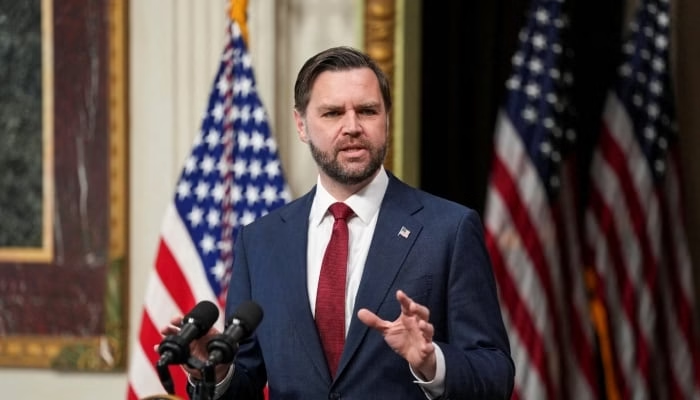
The US Iran ceasefire talks Pakistan have emerged as a critical development in efforts to end the ongoing Middle East conflict. As tensions continue between the United States, Israel, and Iran, Pakistan has stepped into a key diplomatic role, acting as an intermediary to facilitate communication and push for a peaceful resolution. Recent reports indicate that US Vice President JD Vance has been actively engaging with Pakistani intermediaries to explore the possibility of a ceasefire.
This growing diplomatic activity reflects the urgency of the situation. The war, which began on February 28, has escalated into a prolonged conflict, disrupting global stability and increasing pressure on all parties involved. Through the US Iran ceasefire talks Pakistan, backchannel communication is being used to reduce tensions and find common ground.
Pakistan’s Role as a Mediator
Pakistan’s involvement in the US Iran ceasefire talks Pakistan highlights its strategic importance in regional diplomacy. By maintaining relationships with both Western powers and neighboring countries, Pakistan is uniquely positioned to act as a bridge between conflicting sides.
Reports suggest that Pakistani officials have been relaying messages between Washington and Tehran, helping to keep diplomatic channels open even as military actions continue. This role has become increasingly important as direct communication between the United States and Iran remains limited.
In addition to backchannel discussions, Pakistan has also hosted meetings with regional leaders from countries like Saudi Arabia, Turkey, and Egypt. These efforts aim to build a broader consensus for peace and encourage all parties to move toward negotiations.
US Signals Willingness for Ceasefire
A significant aspect of the US Iran ceasefire talks Pakistan is the signal from US leadership that a ceasefire is possible under certain conditions. Acting under the direction of Donald Trump, Vice President Vance reportedly conveyed that the United States is open to ending hostilities if its demands are met.
However, the message was not without pressure. According to sources, Vance also delivered a stern warning that the US could escalate its actions if Iran does not agree to a deal. This includes the possibility of targeting Iranian infrastructure, a move that has been temporarily delayed to allow room for negotiations.
This combination of diplomacy and pressure reflects a common strategy in international conflicts—encouraging dialogue while maintaining leverage.
Ongoing Conflict and Regional Impact
The conflict has had far-reaching consequences beyond the battlefield. Iran’s decision to block the Strait of Hormuz has disrupted global shipping routes, affecting energy supplies and trade worldwide. Additionally, retaliatory strikes on US bases and Israeli targets have heightened fears of a wider regional war.
In this context, the US Iran ceasefire talks Pakistan are not just about ending hostilities but also about stabilizing the broader Middle East. Prolonged conflict could have severe economic and political consequences, making diplomatic solutions increasingly urgent.
China and Pakistan Push for Peace
Another important dimension of the US Iran ceasefire talks Pakistan is the involvement of China. During a recent meeting in Beijing, Pakistan’s Deputy Prime Minister and Foreign Minister Ishaq Dar met with Wang Yi to discuss ways to de-escalate the conflict.
Both countries jointly called for an immediate ceasefire and the start of peace talks. Their proposal included several key points, such as protecting non-military targets, ensuring the safety of shipping lanes, and adhering to international law under the United Nations Charter.
This coordinated effort shows that multiple global players are now invested in resolving the crisis, adding momentum to ongoing diplomatic initiatives.
Key Players in Negotiations
The US Iran ceasefire talks Pakistan involve a number of influential figures from the United States. Alongside Vice President Vance, key participants include Marco Rubio and senior envoys such as Steve Witkoff and Jared Kushner.
These individuals are working together to shape the US approach to the conflict, balancing diplomatic efforts with strategic considerations. Vance, in particular, has taken a cautious stance, reflecting his skepticism about prolonged military involvement overseas. His growing role in negotiations also positions him as a significant figure in future US foreign policy.
The coming days will be crucial for the US Iran ceasefire talks Pakistan. With the US reportedly delaying potential strikes on Iranian infrastructure until early April, there is a narrow window for diplomacy to succeed. If a deal is reached, it could prevent further escalation and pave the way for long-term stability in the region.
However, if negotiations fail, the conflict could intensify, leading to greater economic disruption and geopolitical uncertainty. The stakes are high, and the outcome will likely shape the future of the Middle East for years to come.
The US Iran ceasefire talks Pakistan represent a vital effort to bring an end to a dangerous and escalating conflict. Pakistan’s role as a mediator, combined with international support from countries like China, highlights the importance of diplomacy in resolving global crises. While challenges remain, ongoing negotiations offer a glimmer of hope for peace in an otherwise volatile region.