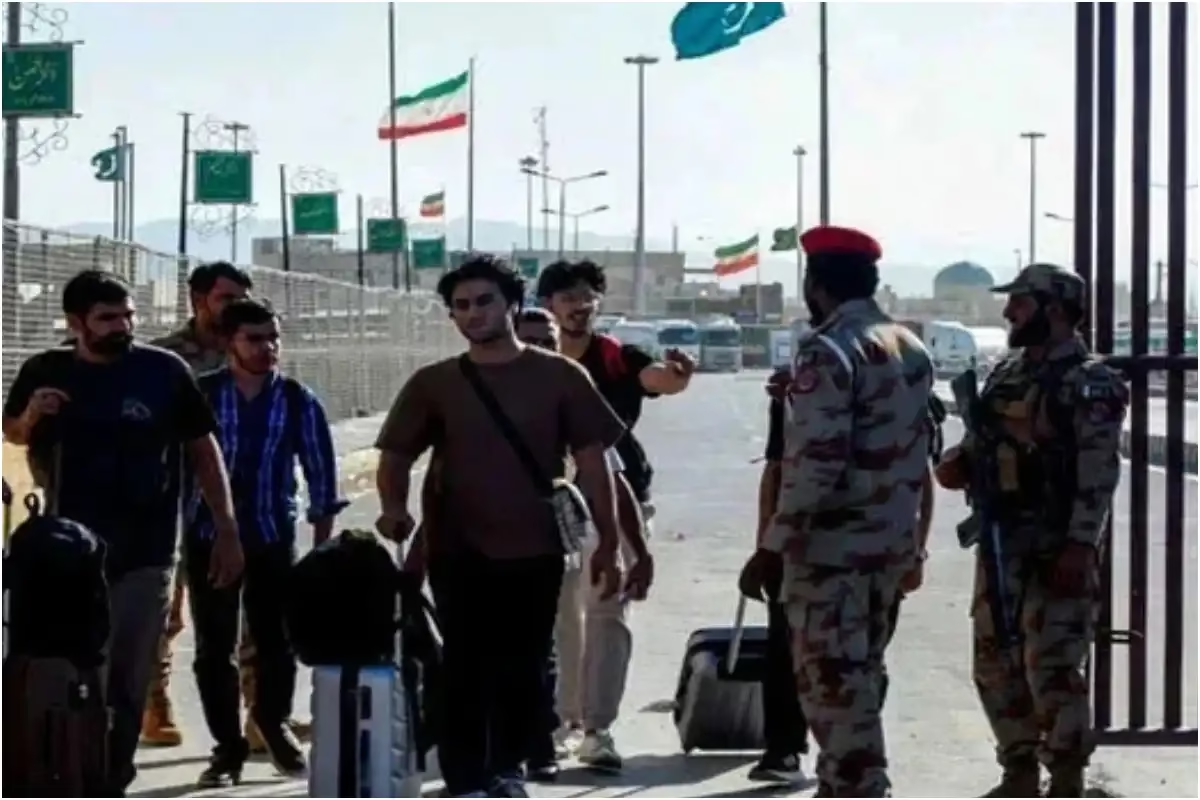
The Chaghi border closure Iran decision marks a significant shift in cross-border travel policies between Pakistan and Iran. Authorities in Balochistan have officially shut down the Chaghi transit point following a government directive, ending the long-standing informal travel system. This move now requires all travelers to carry valid passports and visas, signaling a stricter and more regulated border control approach amid rising regional tensions.
The announcement came from the district administration, which confirmed that the order took effect on April 1. Previously, many locals relied on traditional transit arrangements that allowed relatively flexible movement across the border. However, with the Chaghi border closure Iran policy now in place, these informal routes have been completely discontinued. Travelers must now go through proper legal channels before entering Iran.
Why the Border Closure Happened
The timing of the Chaghi border closure Iran is closely linked to escalating geopolitical tensions in the region. Since late February, the Middle East has witnessed increased instability, particularly following military actions involving Iran. These developments have raised security concerns not only for neighboring countries but also for border regions like Balochistan.
Authorities have taken this step as a precautionary measure to ensure national security and maintain tighter control over cross-border movement. Unregulated travel routes can pose risks during periods of heightened conflict, making it essential for governments to implement stricter monitoring systems.
End of Informal Transit System
For years, the Chaghi transit point served as a relatively flexible crossing for local communities living near the Pakistan-Iran border. Many residents depended on it for trade, family visits, and small-scale business activities. The Chaghi border closure Iran effectively ends this system, replacing it with formal immigration procedures.
Under the new rules, travelers must present valid identification, including a passport and visa, before being allowed to cross. Authorities have emphasized that no exceptions will be made, and all legal requirements must be fulfilled. This marks a major change for people who were accustomed to easier travel arrangements.
Impact on Local Communities
The Chaghi border closure Iran is expected to have a direct impact on local communities, particularly those who relied on cross-border movement for their livelihoods. Small traders and daily wage workers may face challenges adapting to the new system, as obtaining travel documents can be time-consuming and costly.
Additionally, families with relatives on both sides of the border may find it harder to maintain regular contact. The closure could also disrupt informal trade networks that have existed for decades, potentially affecting local economies in border areas.
However, officials argue that these measures are necessary to ensure safety and stability. By enforcing proper documentation, authorities can better monitor who enters and exits the country, reducing the risk of illegal activities.
Diplomatic Efforts in the Background
While the Chaghi border closure Iran reflects stricter domestic policies, Pakistan is simultaneously engaging in diplomatic efforts to ease regional tensions. The government has been in contact with several key countries, including Turkey, Saudi Arabia, Egypt, and China, to promote dialogue and stability.
Deputy Prime Minister and Foreign Minister Ishaq Dar recently concluded a visit to China, where he briefed officials on Pakistan’s efforts to support peace in the region. These diplomatic initiatives highlight the country’s broader strategy of balancing internal security measures with international cooperation.
The goal is to prevent further escalation and encourage peaceful resolutions, which could eventually lead to a normalization of border activities. Until then, strict controls like the Chaghi closure remain in place.
What Travelers Need to Know
For individuals planning to travel to Iran, the Chaghi border closure Iran means preparing well in advance. Travelers must ensure they have:
- A valid passport
- An approved visa
- Compliance with all immigration requirements
Authorities have made it clear that incomplete documentation will result in denial of entry. It is advisable for travelers to check official guidelines and allow sufficient time for processing their documents.
The Chaghi border closure Iran reflects how regional conflicts can directly impact local policies and everyday life. While the decision may create short-term challenges, it also represents an effort to strengthen border security and maintain order during uncertain times.
If tensions in the region ease, there may be room for revisiting these restrictions in the future. For now, however, the focus remains on ensuring compliance, safety, and controlled movement across international borders.
The enforcement of the Chaghi border closure Iran marks a turning point in Pakistan-Iran border management. By replacing informal transit systems with strict legal requirements, authorities aim to enhance security and respond to evolving regional dynamics. While the move brings challenges for local communities and travelers, it underscores the importance of regulated borders in times of geopolitical uncertainty.