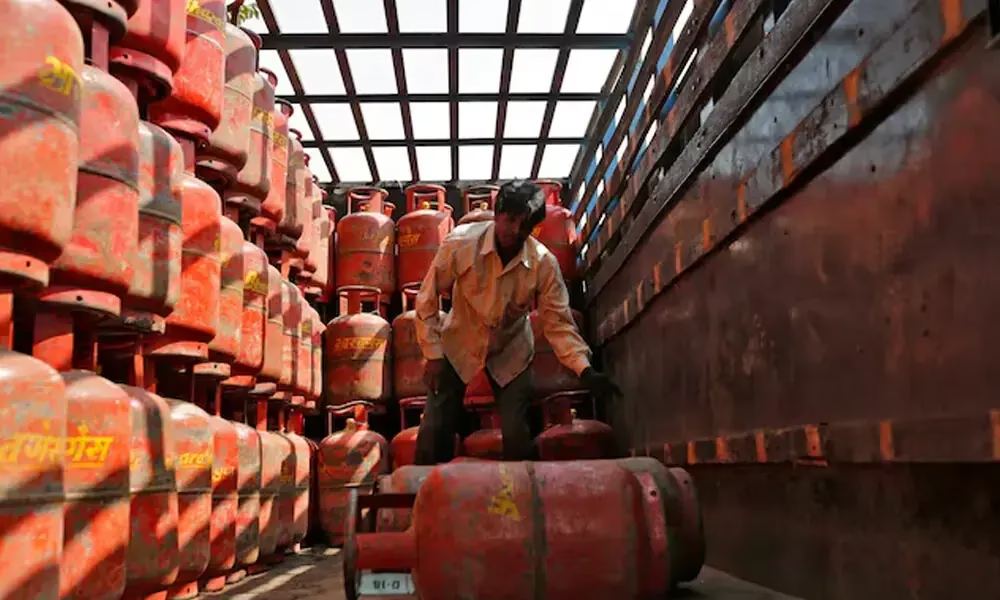
The Asia energy crisis Iran war is escalating as the ongoing conflict in the Middle East disrupts crude oil and gas shipments through the Strait of Hormuz. Asia, heavily dependent on Middle Eastern energy, is experiencing sharp reductions in fuel supplies, leaving governments and consumers grappling with rising costs and limited alternatives. The war, which began with US and Israeli strikes on Iran on February 28, has effectively halted traffic through this critical maritime chokepoint, through which a fifth of the world’s crude and substantial gas shipments usually flow.
Kpler, a global maritime analytics firm, reports that Asia is likely to suffer the most from the conflict. Jean Maynier, Kpler’s president, highlighted that major countries such as China, the Philippines, and Indonesia lack sufficient domestic energy resources to replace the shortfall. This shortage has already prompted emergency measures in the region. For instance, the Philippines declared a national energy emergency, reflecting the urgency of the situation.
The Strait of Hormuz Impact
The closure of the Strait of Hormuz has had an immediate and dramatic effect on shipping patterns. Normally a busy corridor for energy trade, the waterway now sees a fraction of its usual traffic. Kpler data indicates that only 196 commodity vessels crossed the strait this month, a steep decline from pre-war activity. Among these, 120 were oil tankers and gas carriers, mostly traveling eastward out of the strait. This reduction in movement has directly contributed to supply shortages in Asia, pushing prices higher.
Many ships are taking extraordinary precautions, avoiding the strait entirely or delaying shipments due to security risks. Iranian military officials have asserted control over the waterway, targeting vessels from hostile nations. As a result, some operators are forced to reroute their cargoes along longer, costlier paths, further straining the energy supply chain.
Dark Vessels and Shipping Risks
A notable aspect of the Asia energy crisis Iran war is the rise in dark vessels.These ships, often tankers or cargo carriers, disable tracking transponders to avoid detection by public monitoring systems like Kpler’s MarineTraffic. Dark vessel activity usually signals smuggling or attempts to transport sanctioned cargoes. While difficult to track, Kpler leverages satellites, drones, and shore-based sensors to monitor these ships and reconstruct their trajectories. Although exact data is challenging, Maynier notes that over 90% of movements can be detected in real time.
The prevalence of dark vessels complicates supply forecasting and heightens uncertainty in global energy markets. Governments and companies attempting to secure fuel shipments face significant risk, contributing to surging insurance costs and operational delays.
Rising Prices and Depleting Inventories
The supply constraints triggered by the conflict have caused a rapid increase in energy prices across Asia. With inventories being depleted and limited alternative sources available, countries reliant on imported oil and gas are experiencing immediate pressure on both industrial and consumer sectors. Kpler’s analysis suggests that the situation will remain severe if the Strait of Hormuz remains inaccessible or continues to be a high-risk passage for shipping.
This shortage affects not just crude oil but also liquefied natural gas and other critical energy commodities. The lack of domestic reserves in many Asian nations leaves them vulnerable, as the region cannot quickly pivot to alternative suppliers without incurring significant costs or logistical challenges.
Broader Implications
The Asia energy crisis Iran war illustrates the interconnectedness of global energy markets. Disruptions in one critical corridor can quickly reverberate across multiple countries, leading to higher consumer prices, strained national budgets, and potential social impacts from energy shortages. Industries dependent on imported fuels—such as manufacturing, transportation, and utilities face rising operational costs, which could ultimately be passed on to consumers.
The crisis also underscores the strategic importance of the Strait of Hormuz in global energy security. Policymakers and companies are watching developments closely, evaluating alternative routes and contingency measures, but the options remain limited and expensive. Without a resolution to the conflict, the region may continue to face acute energy shortages and price volatility.
The ongoing Asia energy crisis Iran war highlights the vulnerability of Asian countries to geopolitical conflicts affecting global energy supplies. With the Strait of Hormuz effectively disrupted, crude and gas shipments are sharply reduced, inventories are depleting, and prices are rising. Governments, businesses, and consumers must prepare for continued uncertainty, as the conflict’s duration and impact remain unpredictable. Asia’s dependence on Middle Eastern energy makes this one of the most pressing regional energy challenges in recent decades, emphasizing the need for strategic planning and alternative supply solutions.