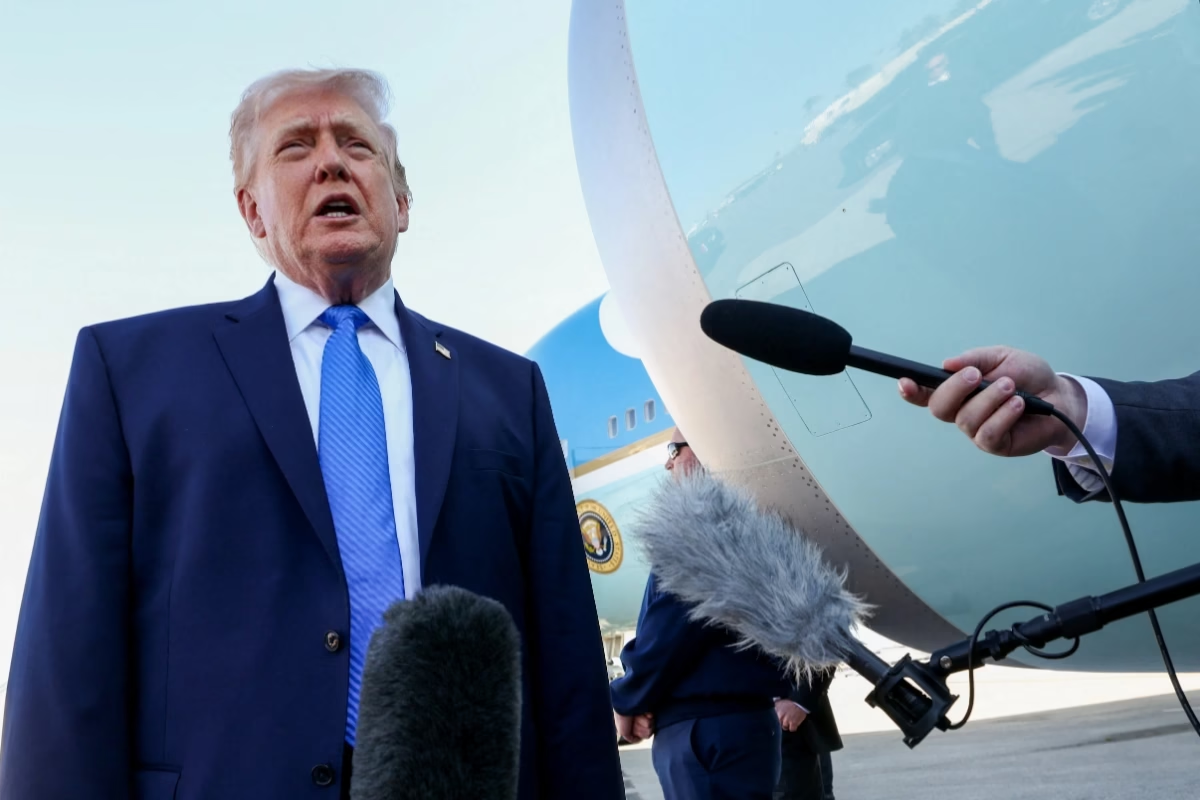
The recent Trump energy security warning has stirred global debate as the United States signals a shift in its approach toward protecting international energy routes. In a series of strong statements, Donald Trump urged countries dependent on the Strait of Hormuz to take greater responsibility for securing their own oil supplies. His remarks highlight a changing dynamic in global energy politics and raise important questions about the future of international cooperation.
The Trump energy security warning came at a time of heightened tensions in the Middle East, where disruptions in oil transport routes have created uncertainty for many nations. Traditionally, the United States has played a central role in ensuring the security of key shipping lanes, particularly in the Gulf region. However, Trump’s latest comments suggest a departure from this long-standing policy.
According to the president, countries that rely heavily on oil shipments through the Strait of Hormuz should consider purchasing energy directly from the United States. This proposal forms a key part of the Trump energy security warning, emphasizing a more transactional approach to international relations. Instead of offering security guarantees unconditionally, the U.S. appears to be linking its support to economic and strategic alignment.
Trump also made it clear that nations unwilling to align with American interests should be prepared to handle their own security challenges. This aspect of the Trump energy security warning underscores a broader shift toward self-reliance among U.S. allies. It signals that traditional alliances may no longer come with automatic protection, especially in high-risk regions.
Another significant element of Trump’s remarks was his assessment of Iran’s current state. He claimed that Iran has been significantly weakened, suggesting that the most intense phase of conflict has already passed. This claim adds context to the Trump energy security warning, as it implies that the U.S. believes the immediate threat to energy routes may be diminishing. However, such statements are often debated, as the situation in the region remains complex and unpredictable.
In addition to addressing energy security, Trump also criticized certain allies. He specifically pointed to France, accusing it of failing to support operations in the region. According to Trump, France did not allow its airspace to be used for missions involving Israel. This criticism further reinforces the tone of the Trump energy security warning, where loyalty and cooperation are being openly questioned.
These remarks highlight a growing emphasis on national interest in U.S. foreign policy. The Trump energy security warning reflects a belief that countries should contribute more actively to shared security responsibilities rather than relying on a single global power. While this approach may encourage greater independence, it also risks creating divisions among long-standing allies.
From an economic perspective, the suggestion to buy oil directly from the United States could have far-reaching implications. It positions the U.S. as not only a security provider but also a key energy supplier. This dual role is central to the Trump energy security warning, as it combines strategic influence with economic opportunity. For some countries, this may offer a more stable alternative to volatile shipping routes.
However, critics argue that this approach could increase global uncertainty. If countries are left to secure their own energy routes, it may lead to increased militarization in already sensitive regions. The Trump energy security warning could therefore have unintended consequences, including heightened competition and reduced cooperation.
At the same time, supporters of Trump’s stance believe it encourages fairness in international relations. They argue that countries benefiting from global security should also share the burden. In this view, the Trump energy security warning is a call for a more balanced system where responsibilities are distributed more evenly.
The global response to these statements has been mixed. Some nations may consider adjusting their energy strategies, while others may seek to strengthen regional alliances. Regardless of the outcome, the Trump energy security warning has clearly sparked a broader conversation about the future of energy security and international partnerships.
The Trump energy security warning represents a significant shift in how the United States approaches global energy and security issues. By urging allies to take greater responsibility and offering alternative solutions, Trump has introduced a new framework for international cooperation. Whether this approach leads to stronger partnerships or increased tensions will depend on how countries respond in the coming months.