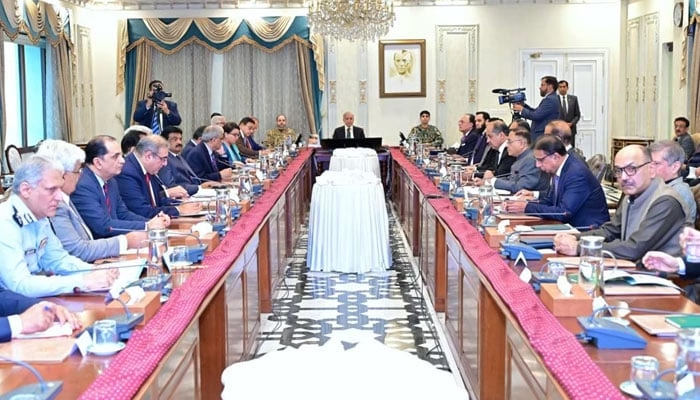
The latest government relief measures in Pakistan highlight the administration’s efforts to support low- and middle-income citizens during a challenging economic period. In a recent meeting chaired by Shehbaz Sharif, the government reviewed strategies to manage fuel prices, ensure adequate supply, and provide direct financial relief to the public. These government relief measures in Pakistan are aimed at reducing the burden on ordinary citizens while maintaining economic stability.
During the meeting, the prime minister emphasized that the government would not abandon the people in difficult times. He reiterated that protecting vulnerable groups remains a top priority. One of the key aspects of the government relief measures in Pakistan is the use of digital systems to deliver assistance directly to individuals. This approach is expected to improve transparency and ensure that aid reaches those who need it most.
A significant step taken under the government relief measures in Pakistan is the implementation of austerity policies within the government itself. Officials revealed that development spending has been reduced, and a large percentage of government vehicles have been taken off the road to cut unnecessary expenses. These internal savings are being redirected toward public welfare initiatives.
Another important decision discussed during the meeting was the repeated rejection of proposals to increase fuel prices. At a time when global energy markets remain volatile, maintaining stable prices has become a critical component of the government relief measures in Pakistan. By avoiding price hikes, the government aims to protect citizens from additional financial pressure.
The meeting also addressed concerns about fuel availability. Authorities confirmed that sufficient fuel stocks are available to meet current demand, and proactive steps are being taken to secure future supplies. This assurance plays a crucial role in the success of the government relief measures in Pakistan, as any disruption in fuel supply could have widespread economic consequences.
In addition to fuel management, the government is focusing on targeted relief initiatives. For instance, coordination with provincial governments is underway to streamline the registration of motorcycles and rickshaws. This effort is designed to ensure that owners of these vehicles, many of whom belong to lower-income groups, can benefit from the government relief measures in Pakistan more efficiently.
The role of key officials, including Ishaq Dar, has also been highlighted in these efforts. Collaborative decision-making among federal ministers and advisors is helping to strengthen the implementation of policies. Such coordination is essential for ensuring that the government relief measures in Pakistan are executed effectively across different sectors.
An Intelligence Bureau audit report presented during the meeting provided insights into the progress of austerity and fuel-saving campaigns. The report indicated that strict implementation is being ensured, reflecting the government’s commitment to accountability. This level of monitoring adds credibility to the government relief measures in Pakistan and helps build public trust.
Another reassuring update from the meeting was the availability of essential resources beyond fuel. Authorities confirmed that there are adequate stocks of medicines to meet national needs. This is an important component of the government relief measures in Pakistan, as access to healthcare resources remains a critical concern during economic uncertainty.
The broader context of these initiatives also includes Pakistan’s diplomatic efforts to stabilize the region. The prime minister informed participants about ongoing engagement with international partners to promote peace. While this may seem separate, regional stability directly impacts economic conditions, making it an integral part of the government relief measures in Pakistan.
Despite these efforts, challenges remain. Rising global prices, economic pressures, and regional tensions continue to test the effectiveness of policy measures. However, the government’s focus on austerity, targeted relief, and resource management demonstrates a comprehensive approach to addressing these issues.
The government relief measures in Pakistan represent a multifaceted strategy aimed at easing the financial burden on citizens while maintaining stability. Through digital solutions, cost-cutting initiatives, and careful resource management, the government is searching to provide meaningful support. While the situation remains complex, these efforts indicate a commitment to protecting the public and navigating the country through challenging times.