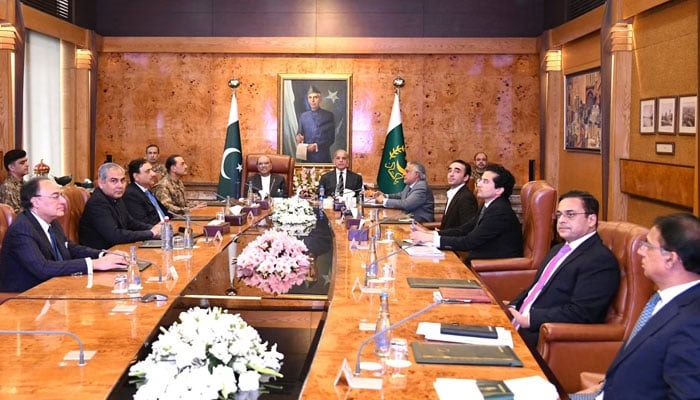
The evolving regional situation has pushed policymakers to take decisive action, and the Pakistan response to Iran war crisis is now centered on unity, coordination, and strategic planning. In a high-level meeting held at Aiwan-e-Sadr, civil and military leadership came together to review the country’s economic, energy, and security challenges arising from the ongoing conflict involving Iran. The discussions highlighted the urgency of adopting a unified national approach to navigate these uncertain times.
Chaired by President Asif Ali Zardari, the meeting brought together key figures including Prime Minister Shehbaz Sharif and Chief of Army Staff Field Marshal Syed Asim Munir. Senior ministers and officials also participated, reflecting the importance of collective decision-making. The Pakistan response to Iran war crisis is being shaped through such institutional coordination, ensuring that all relevant sectors are aligned in their efforts.
One of the primary concerns discussed was the impact of global oil and gas supply disruptions. The conflict has led to fluctuations in fuel prices, which directly affect Pakistan’s economy. Rising petroleum costs have increased inflationary pressures, making it more difficult for ordinary citizens to manage daily expenses. As part of the Pakistan response to Iran war crisis, the government is focusing on stabilizing fuel prices while maintaining fiscal discipline.
Finance and petroleum officials briefed the leadership on measures being taken to control the situation. These include managing fuel imports, reducing unnecessary expenditures, and implementing austerity policies. The goal is to minimize the economic shock while ensuring that essential energy needs are met. The Pakistan response to Iran war crisis emphasizes careful resource management to maintain stability in a volatile environment.
Beyond energy concerns, the meeting also addressed food security. Disruptions in global supply chains can affect the availability and prices of essential commodities. Policymakers acknowledged that food security must remain a top priority, especially for vulnerable populations. The Pakistan response to Iran war crisis therefore includes strategies to safeguard agricultural production and ensure steady supply across the country.
Security implications were another major focus. The possibility of the conflict expanding or having spillover effects poses a serious risk. Pakistan’s leadership stressed the need to remain vigilant and prepared for any developments. The Pakistan response to Iran war crisis involves strengthening national security measures while continuing diplomatic efforts to reduce tensions in the region.
Diplomacy plays a crucial role in this context. Pakistan has been actively engaging with international stakeholders to promote dialogue and prevent further escalation. By positioning itself as a mediator, the country aims to contribute to regional stability. This diplomatic dimension is an important part of the Pakistan response to Iran war crisis, reflecting a balanced approach that combines internal preparedness with external engagement.
Another key outcome of the meeting was the emphasis on public awareness. Citizens are being encouraged to adopt energy-saving practices, such as reducing fuel consumption and using public transportation. Shared ride systems and efficient travel habits can help lower overall demand for fuel. The Pakistan response to Iran war crisis recognizes that public participation is essential for managing the crisis effectively.
Institutional coordination was highlighted as a cornerstone of the strategy. Leaders agreed that economic planning, energy management, and security policies must be closely aligned. This integrated approach ensures that decisions in one area do not negatively impact another.
The broader economic outlook remains challenging. Fuel supply disruptions have already started to affect various sectors, from transportation to manufacturing. Businesses are facing higher costs, which can slow down economic growth. In this situation, the Pakistan response to Iran war crisis aims to strike a balance between controlling inflation and supporting economic activity.
Despite these challenges, there is a clear commitment to protecting public interests. Leaders have stressed that all policy decisions must prioritize the well-being of citizens. This includes maintaining affordable access to essential goods and services while ensuring long-term stability. The Pakistan response to Iran war crisis reflects this people-centered approach, focusing on both immediate relief and sustainable solutions.
The Pakistan response to Iran war crisis demonstrates the importance of unity and strategic planning in times of uncertainty. By bringing together civil and military leadership, the country is working to address economic pressures, secure energy supplies, and maintain national security. Through coordinated efforts and proactive policies, Pakistan aims to navigate the challenges posed by the regional conflict while safeguarding its future stability.