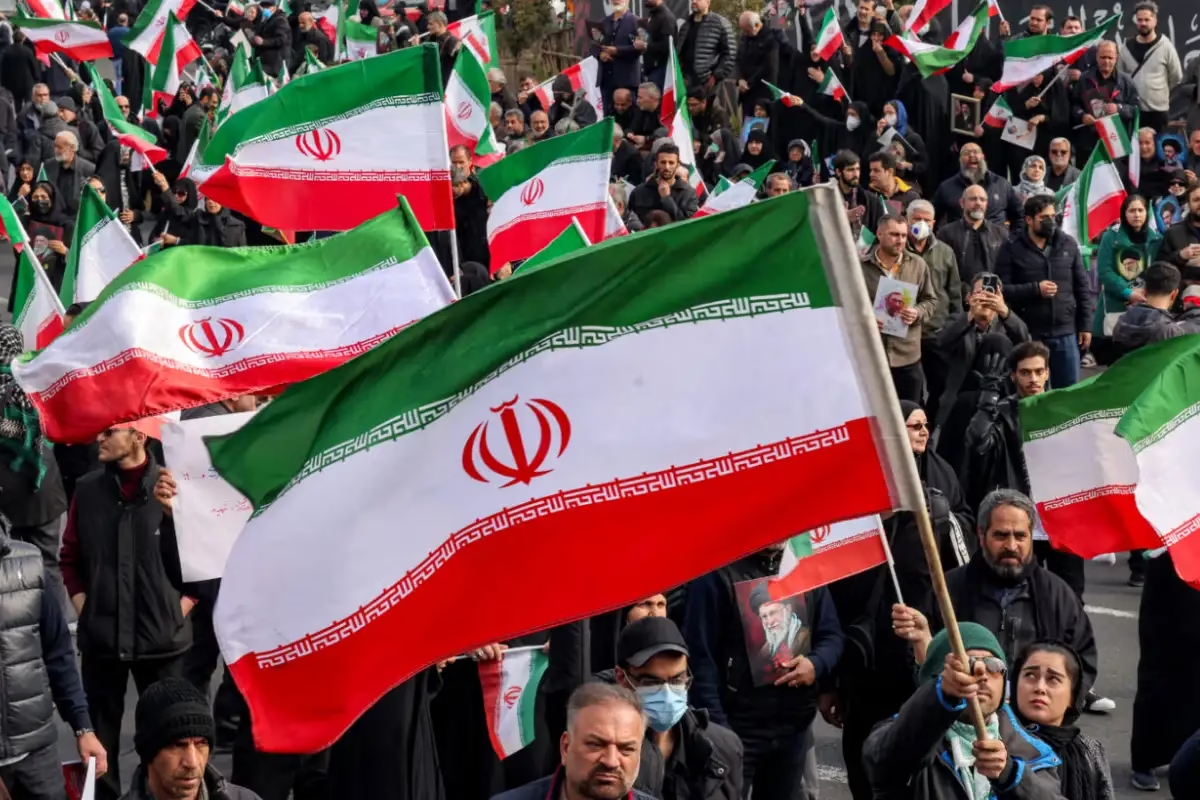
The ongoing Iran US war tensions have intensified after Tehran firmly rejected a recent American proposal aimed at ending the conflict. According to a senior political-security official, Iran has made it clear that the war will only end on its own terms and timeline, signaling a strong stance against external pressure. This development highlights the deep divide between the two nations and raises concerns about further escalation in the region.
Iran’s leadership has emphasized that it will not allow the United States, particularly former President Donald Trump, to dictate the outcome or timing of the conflict. The official stated that Iran is prepared to continue its defensive operations and deliver what it described as heavy blows until all its demands are fulfilled. This uncompromising position reflects the seriousness of the current Iran US war tensions, which have already had significant geopolitical implications.
The rejection of the proposal also stems from a lack of trust in previous negotiations. Iranian officials pointed out that earlier rounds of talks held in 2025 were misleading, as they were followed by military actions instead of genuine diplomatic progress. This history has made Tehran skeptical of any new proposals coming from Washington, further complicating efforts to reduce Iran US war tensions through dialogue.
According to the official, the latest proposal was delivered through a regional intermediary but was perceived as unrealistic and disconnected from the situation on the ground. Iran believes that the United States is attempting to use negotiations as a strategic tool rather than a sincere effort to achieve peace. As a result, Tehran has dismissed the offer and reinforced its position that meaningful discussions cannot take place unless its conditions are fully acknowledged.
Iran has outlined a clear set of conditions for ending the conflict. These include a complete halt to aggression and targeted attacks, guarantees that the war will not be reimposed, and compensation for damages caused during the conflict. Additionally, Iran demands the conclusion of hostilities across all fronts and recognition of its sovereignty over the Strait of Hormuz. These requirements demonstrate the complexity of resolving Iran US war tensions, as they involve both military and political considerations.
Another key factor in the ongoing conflict is the strategic importance of the Strait of Hormuz. This vital waterway is a major route for global oil shipments, making it a focal point of international attention. Iran’s insistence on its sovereignty over the strait adds another layer of tension, as it directly impacts global energy security and trade. The situation underscores how Iran US war tensions extend beyond bilateral relations and affect the wider global economy.
The conflict itself began under highly controversial circumstances, with Iranian officials describing it as an unprovoked attack during a period of indirect nuclear negotiations. The assassination of key leaders and military figures further escalated the situation, prompting Iran to launch a series of retaliatory strikes. Since then, the cycle of action and response has intensified, contributing to the ongoing Iran US war tensions.
Reports indicate that Iranian forces have conducted multiple waves of strikes targeting American and allied military assets in the region. These actions have reportedly caused significant damage, further deepening the conflict. At the same time, the United States has been seeking diplomatic channels to de-escalate the situation, including requests for Iran to halt its retaliatory operations. However, Tehran’s firm stance suggests that a resolution is unlikely in the near future, keeping Iran US war tensions at a critical level.
Regional countries have also been drawn into the situation, acting as intermediaries in an attempt to facilitate dialogue. Despite these efforts, Iran has communicated that no negotiations will take place unless all its conditions are met. This position reflects a broader strategy of leveraging its military and political strength to achieve its objectives, even in the face of international pressure.
The implications of the ongoing conflict are far-reaching. Beyond the immediate military impact, the situation has the potential to disrupt global markets, particularly in the energy sector. Rising uncertainty in the region could lead to fluctuations in oil prices and affect international trade routes. As a result, the world is closely monitoring Iran US war tensions, recognizing their potential to influence global stability.
The current state of Iran US war tensions represents a complex and evolving geopolitical challenge. Iran’s rejection of the US proposal underscores its determination to pursue its own strategic goals, while the lack of trust between the two sides continues to hinder diplomatic efforts. With both nations holding firm positions, the path to resolution remains uncertain. Until a mutually acceptable framework is established, the conflict is likely to persist, keeping the region and the world on edge.