The proposed Sindh smart lockdown plan has emerged as a key strategy to tackle the growing fuel crisis triggered by rising global oil prices. As the ongoing tensions in the Middle East continue to disrupt energy supplies, authorities in Sindh are considering targeted restrictions to conserve fuel and manage resources more efficiently.
Speaking in Sukkur, Provincial Minister Nasir Hussain Shah highlighted the seriousness of the situation. He emphasized that current conditions are far from normal and warned that prolonged conflict could create significant challenges for the public. The Sindh smart lockdown plan, therefore, is being explored as a preventive measure rather than a reactive one.
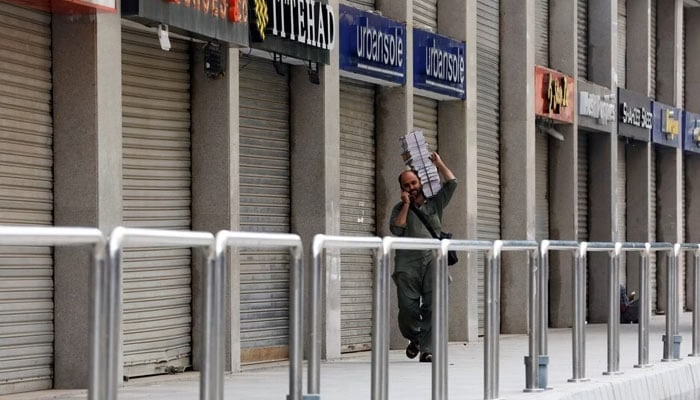
Unlike full-scale lockdowns, smart lockdowns are designed to limit movement in specific areas instead of shutting down entire cities. This approach was first introduced during the COVID-19 pandemic and proved effective in controlling both public movement and resource usage. Under the Sindh smart lockdown plan, restrictions could be applied to selected neighborhoods, streets, or communities where fuel conservation measures are most needed.
One of the main objectives of this plan is to reduce fuel consumption across the province. The government has already taken initial steps, including cutting petrol usage for official vehicles by a significant margin. According to officials, around 60% of fuel usage in government transport has already been reduced. These measures are part of a broader effort aligned with the Sindh smart lockdown plan to ensure that resources are used wisely during uncertain times.
In addition to transportation cuts, authorities are holding daily meetings to monitor the situation and make timely decisions. This proactive approach reflects the government’s commitment to staying ahead of potential challenges. The Sindh smart lockdown plan is not just about restrictions—it is part of a larger strategy to maintain stability and avoid a severe crisis.
If implemented, the smart lockdown system would include specific rules aimed at minimizing unnecessary movement. For example, gatherings would be limited, and only essential travel would be permitted. In certain areas, residents might be required to justify their reasons for leaving their homes. Public events, social gatherings, and celebrations could also be temporarily restricted. These steps under the Sindh smart lockdown plan are intended to reduce fuel usage while maintaining essential activities.
Alongside the lockdown proposal, the Sindh government has already introduced a range of austerity measures. These include work-from-home policies for government offices on certain days, restrictions on official travel, and a ban on purchasing new vehicles or unnecessary items. Such measures complement the Sindh smart lockdown plan by addressing fuel consumption from multiple angles.
Another important step is the reduction in government spending. Ministers have voluntarily decided to forgo their salaries and allowances for a limited period, demonstrating a sense of shared responsibility. Additionally, official events and gatherings have been restricted to reduce unnecessary expenditures. These efforts reinforce the seriousness of the Sindh smart lockdown plan and highlight the government’s intention to lead by example.
The global context also plays a crucial role in shaping these decisions. Ongoing geopolitical tensions have led to increased oil prices, affecting countries that rely heavily on fuel imports. Pakistan, being one of those countries, faces added pressure to manage its energy resources carefully. The Sindh smart lockdown plan is therefore part of a broader response to international developments that directly impact the local economy.
For the general public, these measures may require adjustments in daily routines. However, targeted restrictions are generally less disruptive than complete lockdowns, making them a more balanced solution. By focusing on specific areas and activities, the Sindh smart lockdown plan aims to achieve maximum impact with minimal inconvenience.
The Sindh smart lockdown plan represents a strategic effort to address the challenges posed by rising fuel costs and global uncertainty. Through a combination of targeted restrictions, reduced fuel usage, and austerity measures, the government is working to maintain stability during a difficult period. While the situation continues to evolve, proactive steps like these can help mitigate risks and ensure that resources are managed effectively.