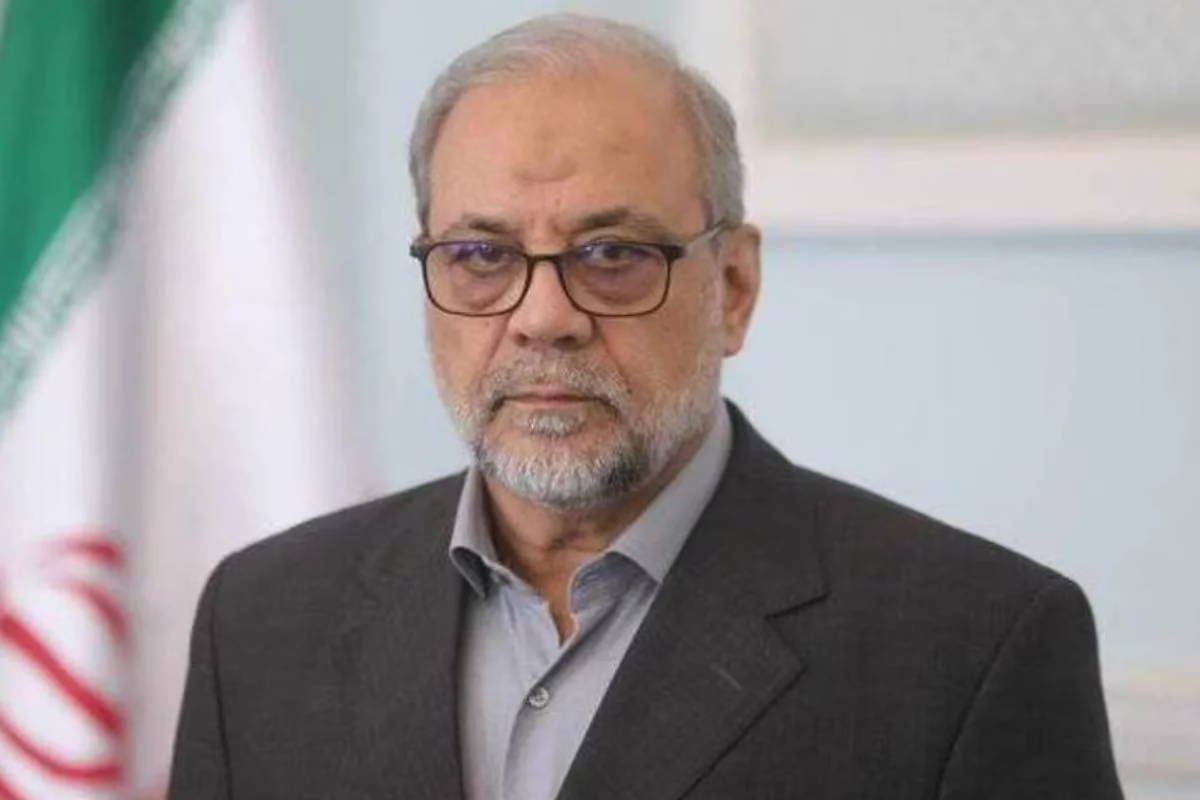
The recent Iran security council appointment of Mohammad Baqer Zolqadr marks a significant development in the country’s political and security landscape. At a time of heightened regional tensions, Iran has chosen an experienced figure to lead its Supreme National Security Council (SNSC), signaling a focus on stability and strategic decision-making.
The announcement of the Iran security council appointment was made through official channels, confirming that Zolqadr has been selected through a presidential decree with approval from the country’s top leadership. He succeeds Ali Larijani, whose sudden death in a recent strike created a leadership vacuum at a critical moment. This transition underscores the urgency behind the Iran security council appointment and the need for continuity in national security affairs.
Mohammad Baqer Zolqadr brings decades of experience in military and administrative roles. A veteran of the Islamic Revolutionary Guard Corps (IRGC), he has held several high-ranking positions throughout his career. His background includes serving as deputy commander-in-chief of the IRGC and heading its Joint Staff during the presidency of Akbar Hashemi Rafsanjani. These roles have equipped him with deep insight into Iran’s defense and strategic operations.
The Iran security council appointment also highlights Zolqadr’s involvement in various state institutions beyond the military. He has served in the judiciary for nearly a decade, contributing to legal and administrative frameworks within the country. Additionally, his role as deputy chief of the General Staff for Basij affairs reflects his experience in managing internal security and mobilization efforts. This diverse background makes him a well-rounded choice for such a critical position.
Education has also played a key role in shaping Zolqadr’s career. He completed his studies at Tehran University, earning degrees in economics and public administration. He later pursued a doctorate in strategic management from the National Defense University. This combination of academic knowledge and practical experience strengthens his ability to handle complex security challenges. The Iran security council appointment thus reflects a balance between expertise and leadership capability.
The Supreme National Security Council is one of Iran’s most important institutions, responsible for shaping defense and foreign policy decisions. It coordinates between military, political, and intelligence bodies to ensure national security. Given the current geopolitical environment, the Iran security council appointment carries significant weight, as the council plays a central role in responding to both internal and external threats.
Zolqadr’s appointment comes at a time when Iran faces multiple challenges, including regional conflicts and international pressure. His leadership will likely focus on maintaining stability while navigating these complexities. The Iran security council appointment suggests a strategic approach aimed at strengthening coordination among key institutions and ensuring effective decision-making during uncertain times.
Observers believe that Zolqadr’s military background will influence his approach to the role. His experience in defense and security operations may lead to a more structured and disciplined strategy in handling national security issues. At the same time, his administrative experience could help in fostering collaboration between different branches of government. The Iran security council appointment therefore represents a blend of military precision and administrative efficiency.
Another important aspect of this development is the continuity of leadership within Iran’s security framework. By appointing a seasoned figure, the government aims to maintain stability and avoid disruptions in policy implementation. The Iran security council appointment ensures that the council remains functional and effective despite recent challenges.
Zolqadr’s tenure will be closely watched both domestically and internationally. His decisions and policies will have a direct impact on Iran’s security strategy and its interactions with other countries. The Iran security council appointment is not just a routine administrative change but a significant step that could shape the country’s future direction.
The Iran security council appointment of Mohammad Baqer Zolqadr reflects the country’s focus on experienced leadership during a critical period. With his extensive background in military, judicial, and administrative roles, he is well-positioned to guide the Supreme National Security Council. As Iran navigates ongoing challenges, this appointment underscores the importance of strong leadership in ensuring national security and stability.