The recent US TotalEnergies fossil fuel investment deal marks a significant shift in the country’s energy strategy, signaling a move away from offshore wind projects toward increased fossil fuel production. On Monday, United States and French energy giant TotalEnergies officially signed an agreement redirecting nearly $1 billion previously allocated for offshore wind farm development into natural gas initiatives.
The announcement was made at the annual CERAWeek conference in Houston by US Interior Secretary Doug Burgum, alongside TotalEnergies CEO Patrick Pouyanne. Burgum emphasized that the deal repurposes funds that had been tied to the prior administration’s subsidies, which promoted expensive, weather-dependent offshore wind projects. According to him, the $928 million investment will now support US natural gas production, including the Rio Grande LNG plant. This development has sparked both praise and criticism as it reflects a broader pivot in US energy policy.
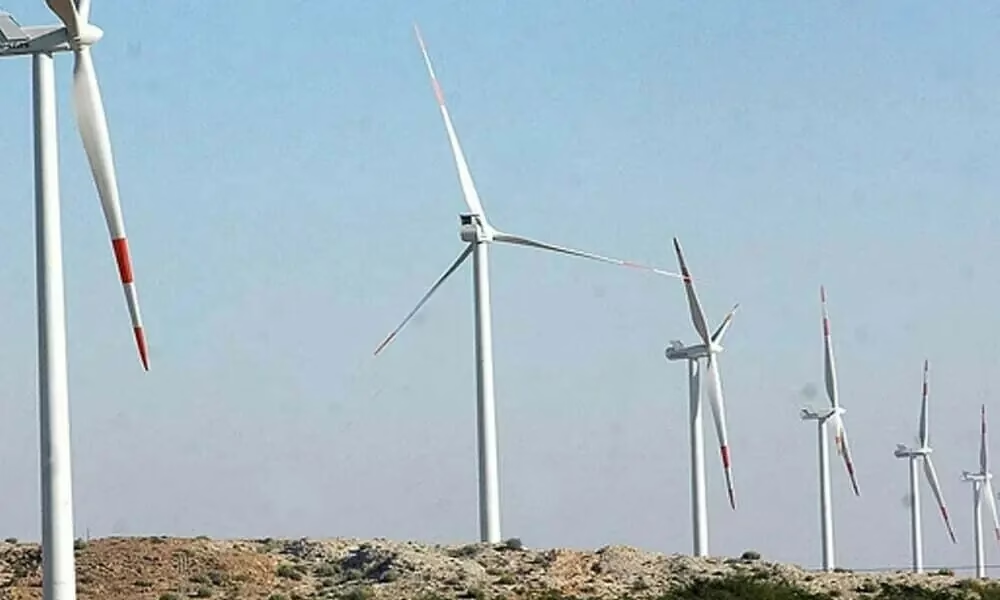
Under the agreement, TotalEnergies has effectively paused its offshore wind projects off the coasts of New York and North Carolina. Originally, the company had four gigawatts (GW) of offshore wind under development, including 3 GW for the New York Bight project and 1 GW in North Carolina. These projects had faced delays due to challenges in obtaining federal licenses, particularly under the Trump administration, which rolled back many of the renewable energy initiatives accelerated under former President Joe Biden.
The US TotalEnergies fossil fuel investment deal is a clear demonstration of the current administration’s preference for fossil fuel energy over wind power. President Trump has repeatedly criticized offshore wind projects, arguing that they produce expensive electricity and negatively impact aesthetics. In December 2024, his administration had put several wind farm projects on hold, citing national security concerns, though some of these rulings were later overturned by federal courts.
Patrick Pouyanne described the decision as a strategic and financially sound move, stating that offshore wind is “not the most affordable way to produce electricity” in the United States. By redirecting investments toward natural gas, TotalEnergies aligns with current US energy policy priorities and enhances returns on investment. The CEO framed the agreement as a “win-win dialogue,” highlighting both the economic and policy benefits of the shift.
Beyond redirecting the offshore wind investment, TotalEnergies has also signed a letter of intent with Glenfarne, the lead developer of the Alaska LNG project, to secure a long-term offtake of 2 million tons per year of liquefied natural gas (LNG) over the next 20 years. This move further strengthens the company’s commitment to fossil fuel production in the United States and underscores the strategic importance of LNG in meeting national energy needs.
The deal also highlights a broader global trend of balancing renewable energy ambitions with practical energy security and economic considerations. While offshore wind represents a key component of climate-friendly energy strategies, the US TotalEnergies fossil fuel investment deal indicates that policymakers and corporations are placing a renewed emphasis on cost efficiency, infrastructure readiness, and immediate energy demands.
Critics argue that this shift could slow progress toward reducing carbon emissions, given that natural gas, while cleaner than coal, still contributes to greenhouse gas output. Proponents, however, assert that redirecting investment toward fossil fuels ensures stable energy supply, supports domestic energy jobs, and strengthens national energy security, especially amid volatile global energy markets.
The US TotalEnergies fossil fuel investment deal is a landmark decision that reflects the current administration’s priorities in energy policy. By redirecting nearly $1 billion from offshore wind to natural gas projects, both the US government and TotalEnergies aim to achieve a more cost-effective and strategically secure energy future. While it may generate debate among environmentalists and renewable energy advocates, the agreement underscores the ongoing balancing act between sustainability, economic interests, and national energy strategy.
This deal will likely continue to shape US energy discussions and investment strategies in the coming years, setting the tone for how future projects are prioritized in a rapidly evolving global energy market.