The recent China brain computer interface breakthrough marks a major step forward in medical technology, offering new hope for people living with paralysis. In a historic move, China has become the first nation to approve a commercial brain–computer interface (BCI) designed specifically for treatment purposes, shifting this innovation from experimental research into real-world application.
At the center of this development is a device called NEO, created by Neuracle Medical Technology. The implant is designed to help patients regain limited movement by translating their thoughts into physical actions. This China brain computer interface is targeted at individuals aged 19 to 60 who suffer from paralysis due to spinal cord or neck injuries, making it a highly specialized yet impactful solution.
The approval came after extensive clinical testing and evaluation by National Medical Products Administration. Over an 18-month period, the device was tested on dozens of patients, with reports indicating no major safety concerns. This milestone underscores the reliability of the China brain computer interface and reflects the country’s commitment to ensuring both innovation and patient safety.
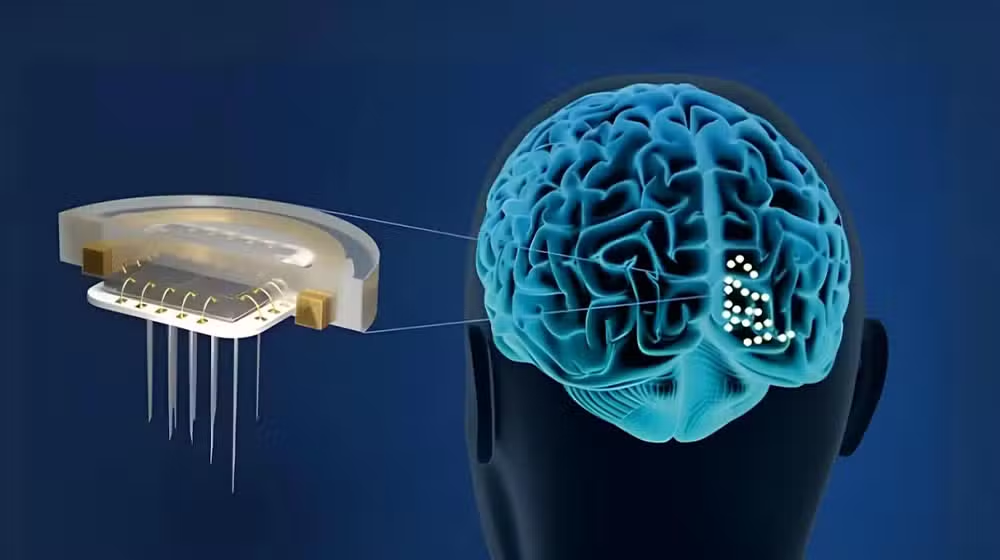
So how does this technology work? The NEO implant is surgically placed in the skull, where electrodes are positioned over the brain’s motor cortex—the region responsible for controlling movement. When a patient imagines performing an action, such as picking up an object, the device captures those brain signals. These signals are then transmitted to an external system, which converts them into commands for assistive tools like robotic gloves. Through this process, the China brain computer interface enables users to carry out simple tasks that would otherwise be impossible.
This advancement is particularly significant because it bridges the gap between intention and action. For people living with paralysis, even small movements—like holding a cup or using utensils—can dramatically improve quality of life. The China brain computer interface is not a complete cure, but it represents a powerful assistive technology that restores a degree of independence and dignity.
Globally, brain–computer interface research has been gaining momentum, with several countries and companies investing heavily in this field. For instance, Neuralink has been developing similar systems aimed at connecting the human brain with computers. However, most of these projects are still in the clinical trial phase and have not yet achieved full commercial approval. This gives China a clear advantage in bringing BCI technology to the market.
The success of the China brain computer interface is also aligned with a broader national strategy. The Chinese government has outlined an ambitious plan to become a global leader in BCI research and development within the next five years. This roadmap includes multiple steps aimed at accelerating innovation, improving healthcare applications, and strengthening the country’s position in the global tech landscape.
Beyond healthcare, the potential applications of brain–computer interfaces are vast. While current efforts focus on treating medical conditions, future developments could extend to areas such as communication, rehabilitation, and even human-computer interaction in everyday life. The China brain computer interface is just the beginning of what could become a transformative technological revolution.
However, as with any emerging technology, there are challenges and ethical considerations to address. Issues related to data privacy, long-term safety, and accessibility will need careful attention as the technology evolves. Ensuring that such innovations are used responsibly and benefit a wide range of people will be crucial for their long-term success.
The approval of the China brain computer interface represents a groundbreaking achievement in both medicine and technology. By successfully moving from research to commercialization, China has set a new benchmark in the field of neurotechnology. For millions of people living with paralysis, this development offers renewed hope and a glimpse into a future where the boundaries between the human brain and machines continue to blur.