The growing importance of Pakistan mediation role in global diplomacy has come into sharp focus as tensions between the United States, Israel, and Iran continue to rise. Recent developments suggest that Pakistan is actively positioning itself as a key mediator, working behind the scenes to prevent further escalation and promote dialogue among the involved parties.
According to multiple reports, Pakistan has taken a proactive approach in facilitating communication between conflicting sides. The involvement of Donald Trump in recent discussions, including his decision to delay potential military action, is being linked to ongoing diplomatic efforts. These developments highlight how the Pakistan mediation role is not limited to statements but extends to real influence on decision-making at the highest level.
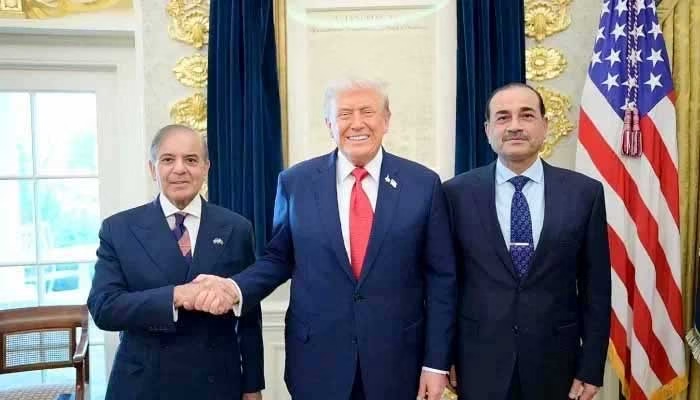
A major factor behind this diplomatic push is the leadership of Shehbaz Sharif and Asim Munir. Both have played significant roles in maintaining communication channels with global and regional leaders. Their coordinated strategy reflects a clear intent to position Pakistan as a responsible and stabilizing force in international affairs. The Pakistan mediation role, in this context, is built on active engagement rather than passive observation.
One of the most notable aspects of this situation is the use of back-channel diplomacy. Pakistani officials have reportedly been involved in relaying messages between Tehran and key US figures, ensuring that communication remains open even during heightened tensions. This quiet but effective diplomacy has allowed both sides to reconsider aggressive actions and explore peaceful alternatives. The Pakistan mediation role is therefore proving crucial in maintaining a fragile balance.
In parallel, Pakistan has also worked closely with regional partners such as Turkey and Egypt. This collaborative approach strengthens its position as a mediator, as it brings multiple stakeholders together with a shared objective: avoiding conflict and promoting stability in the Middle East. By aligning with these nations, the Pakistan mediation role gains both credibility and influence.
Another important development has been the direct engagement between Pakistan and Iran. Prime Minister Shehbaz Sharif’s communication with Iranian President Masoud Pezeshkian emphasized the importance of dialogue and peaceful resolution of disputes. Such interactions underline Pakistan’s commitment to diplomacy and its willingness to act as a bridge between opposing sides. The Pakistan mediation role is particularly effective here, as it leverages strong bilateral relationships to ease tensions.
The decision by President Trump to postpone potential strikes has been widely interpreted as a positive outcome of ongoing diplomatic efforts. While multiple factors may have influenced this move, Pakistan’s involvement in facilitating communication cannot be overlooked. The Pakistan mediation role has contributed to creating space for negotiations, reducing the immediate risk of escalation.
Beyond immediate conflict management, Pakistan’s actions also reflect a broader strategic vision. By actively participating in global diplomacy, the country is enhancing its international standing and demonstrating its capability to handle complex geopolitical challenges. The Pakistan mediation role, therefore, goes beyond the current crisis and signals a long-term commitment to peacebuilding and regional stability.
However, the path forward remains uncertain. The situation in the Middle East is complex, with multiple interests and long-standing conflicts at play. While Pakistan’s efforts have helped ease tensions for now, sustained diplomatic engagement will be necessary to achieve a lasting resolution. The effectiveness of the Pakistan mediation role will ultimately depend on continued cooperation from all parties involved.
Pakistan’s emergence as a key mediator in the US-Iran conflict highlights its growing influence on the global stage. Through strategic leadership, back-channel diplomacy, and regional collaboration, the country is playing a vital role in promoting peace and preventing escalation. As the situation continues to evolve, the Pakistan mediation role will remain critical in shaping the future of regional and international stability.