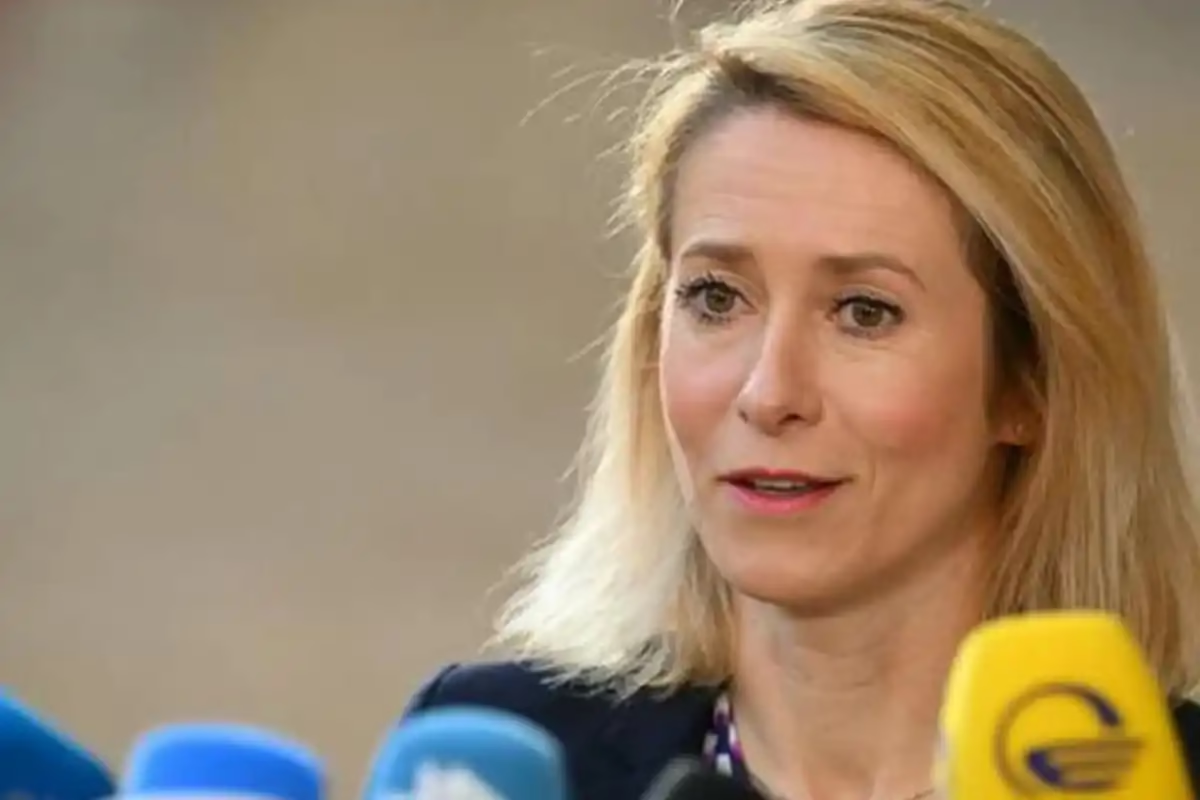
The EU call for Iran war de-escalation has gained global attention as European leaders push for diplomatic solutions to end rising tensions in the Middle East. Kaja Kallas, the European Union’s foreign policy chief, has urged both the United States and Israel to stop military actions and focus on negotiations with Iran. Her remarks highlight the growing concern within Europe over the potential long-term consequences of the conflict.
Speaking in Brussels, Kallas emphasized that the European Union is actively working with regional partners to explore peaceful solutions. The EU call for Iran war de-escalation reflects a broader strategy aimed at preventing further escalation and stabilizing the region through dialogue rather than military intervention.
Europe’s Diplomatic Approach
The EU call for Iran war de-escalation is centered on diplomacy. According to Kallas, the European Union is consulting with countries across the Middle East, including Jordan and Egypt, as well as Gulf states. The goal is to develop a collective plan that allows all parties involved to step back from the conflict without losing political standing.
Kallas pointed out that wars are often easy to start but difficult to end. This observation underlines the urgency behind the EU call for Iran war de-escalation, as prolonged conflict could lead to wider instability across the region.
The EU believes that involving regional stakeholders is essential for any sustainable peace process. By working closely with neighboring countries, European leaders hope to create a framework that encourages negotiation and reduces the risk of further violence.
Strait of Hormuz and Global Impact
One of the key concerns driving the EU call for Iran war de-escalation is the disruption in the Strait of Hormuz. This narrow waterway is one of the most important global energy routes, with a significant portion of the world’s oil and gas supplies passing through it.
Recent tensions have affected shipping in the region, leading to rising energy prices. Europe, like many other parts of the world, is already feeling the economic impact. Kallas noted that restoring safe navigation in the strait is critical for global economic stability.
While the EU is open to supporting efforts to secure the waterway, its involvement is expected to remain diplomatic rather than military. The EU call for Iran war de-escalation clearly prioritizes negotiation over direct intervention.
U.S. and European Differences
The EU call for Iran war de-escalation also highlights differences in approach between the United States and several European nations. Donald Trump had urged allies to participate in a mission to reopen the Strait of Hormuz, but many European countries declined.
Their reluctance is based on concerns about entering a conflict they did not initiate. European leaders have expressed caution about deploying troops, preferring diplomatic engagement instead. This cautious stance aligns with the broader EU call for Iran war de-escalation, which focuses on reducing tensions rather than escalating them.
Kallas made it clear that Europe’s priority is to avoid being drawn into a wider war. Instead, the EU aims to act as a mediator, encouraging dialogue between the involved parties.
Possible Diplomatic Solutions
As part of the EU call for Iran war de-escalation, Kallas suggested exploring solutions similar to past international agreements. One example is the arrangement that allowed safe shipping routes during conflicts in other regions.
She mentioned discussions with Antonio Guterres, the Secretary-General of the United Nations. These talks focus on developing a framework that ensures safe passage of ships through the Strait of Hormuz while reducing military tensions.
Such agreements would require cooperation from all sides, particularly Iran. The success of any diplomatic initiative depends on mutual understanding and willingness to negotiate.
Why De-escalation Matters
The EU call for Iran war de-escalation is not just about ending a single conflict. It is about preventing a larger crisis that could affect global security, trade, and energy supplies.
If tensions continue to rise, the consequences could extend far beyond the Middle East. Disruptions in energy markets can lead to higher fuel prices worldwide, affecting economies and households alike.
By promoting diplomacy, the EU aims to minimize these risks and create conditions for long-term stability. The EU call for Iran war de-escalation reflects the understanding that peaceful solutions are essential for global security.
Europe’s Role Moving Forward
The European Union’s approach positions it as a key diplomatic player in the ongoing crisis. The EU call for Iran war de-escalation demonstrates Europe’s commitment to resolving conflicts through dialogue and cooperation.
Kallas emphasized that any lasting solution will require collaboration between global and regional powers. Europe’s role is to facilitate discussions, build consensus, and support initiatives that lead to peace.
As the situation evolves, the EU is expected to continue engaging with international partners to promote de-escalation and stability.
The EU call for Iran war de-escalation highlights a critical moment in international diplomacy. With rising tensions affecting global markets and regional stability, the need for a peaceful resolution has become more urgent than ever.
By focusing on dialogue, consulting regional partners, and exploring diplomatic solutions, the European Union aims to prevent further escalation and bring the conflict to an end. While challenges remain, the emphasis on negotiation offers a pathway toward stability and long-term peace.