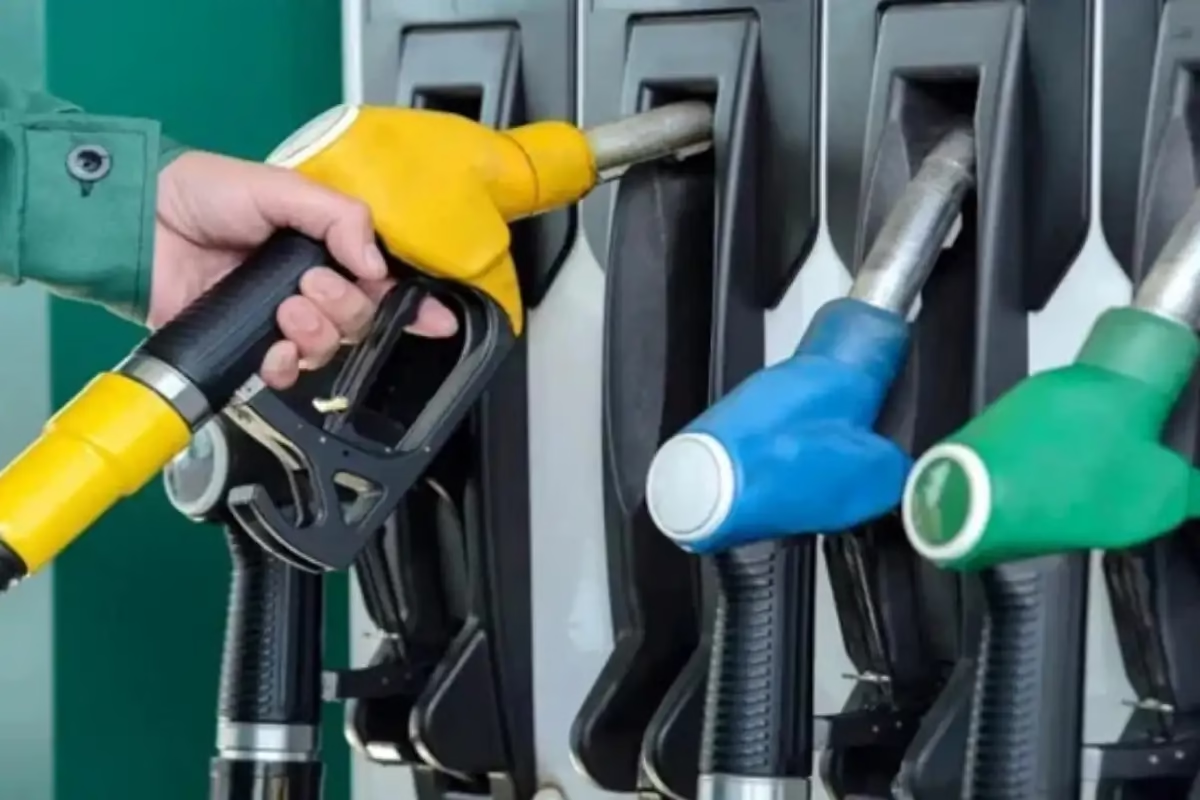
Pakistan’s Pakistan petroleum reserves have recently come under public attention after officials revealed the country’s current fuel stock levels during a parliamentary briefing. According to the Secretary of Petroleum, Pakistan currently maintains limited but carefully monitored reserves of key petroleum products. The announcement comes at a time when global energy markets are facing uncertainty due to geopolitical tensions and disruptions in international oil supply chains.
The government has emphasized that fuel availability is being closely tracked to prevent shortages and ensure stable supply for transportation, industry, and energy production across the country.
Current Petroleum Stock Levels in Pakistan
Recent figures show that Pakistan petroleum reserves are available for a limited number of days depending on the type of fuel. The government provided the following estimates based on current consumption patterns:
- Petrol: 27 days of supply
- Diesel: 21 days of supply
- LPG: 9 days of supply
- JP-1 (Jet Fuel): 14 days of supply
These numbers indicate that while Pakistan has a functioning fuel supply system, reserves are not extensive. Maintaining sufficient reserves is critical, especially during periods of global instability when oil imports may face delays or price volatility.
Authorities stated that monitoring Pakistan petroleum reserves allows policymakers to respond quickly to potential disruptions and adjust import strategies when necessary.
Global Tensions and Energy Concerns
The discussion around Pakistan petroleum reserves comes amid rising concerns about global energy security. Ongoing geopolitical tensions in the Middle East have created uncertainty in international oil markets. Since Pakistan relies heavily on imported fuel, any disruption in global supply chains can directly affect domestic energy availability.
Energy analysts often warn that countries dependent on imported oil must maintain strong strategic reserves to protect against supply shocks. For Pakistan, maintaining adequate petroleum reserves is essential for economic stability, transportation networks, and national security.
Government officials have reassured lawmakers that the situation remains under control and that fuel supplies are being actively managed to prevent shortages.
Current Fuel Prices in Pakistan
Along with updates about Pakistan petroleum reserves, the government also confirmed that fuel prices will remain unchanged despite fluctuations in global oil markets. Earlier this month, Prime Minister Shehbaz Sharif announced that petrol and diesel prices would not increase in order to reduce financial pressure on citizens.
The current fuel prices in Pakistan are:
- Petrol: Rs321.17 per litre
- Diesel: Rs335.86 per litre
Holding fuel prices steady has been viewed as a relief for consumers and businesses, particularly during a time when global inflation and economic uncertainty continue to affect many countries.
However, maintaining stable prices while monitoring Pakistan petroleum reserves requires careful financial planning and efficient supply management.
Importance of Petroleum Reserves
Petroleum reserves play a crucial role in ensuring that essential services continue to function smoothly. Adequate Pakistan petroleum reserves help keep transportation systems running, support electricity generation in certain sectors, and ensure that aviation operations remain uninterrupted.
For example, jet fuel reserves are critical for maintaining airline operations, while diesel is essential for freight transportation, agriculture, and heavy machinery. LPG, on the other hand, is widely used by households for cooking and heating, particularly in areas where natural gas supply is limited.
Because of these diverse uses, maintaining balanced reserves across different petroleum products is essential for national stability.
Government Strategy to Manage Fuel Supply
Officials have stated that monitoring Pakistan petroleum reserves is part of a broader strategy to maintain energy security. Authorities are regularly reviewing supply chains, evaluating import schedules, and coordinating with petroleum companies to ensure that stock levels remain stable.
Financial discipline and austerity measures introduced by the government have also played a role in stabilizing the country’s fuel management strategy. These policies aim to reduce economic pressure while ensuring that essential resources remain available to the public.
Additionally, energy planners are increasingly discussing long-term solutions such as renewable energy investments, energy efficiency improvements, and diversification of fuel sources to reduce dependence on imported oil.
The update on Pakistan petroleum reserves highlights the importance of proactive energy planning in an uncertain global environment. While current fuel supplies appear sufficient for the short term, maintaining energy security will require continuous monitoring and strategic decision-making.
As global oil markets remain unpredictable, Pakistan will need to strengthen its energy policies, expand reserves where possible, and explore alternative energy sources. These steps can help ensure that the country remains prepared for potential disruptions while maintaining stable fuel availability for citizens and industries.
In the coming weeks, authorities are expected to continue reviewing stock levels and monitoring international market conditions to ensure that Pakistan avoids any major fuel shortages.