The tragic news of Pakistani labourers killed in Gulf conflict has sent shockwaves through communities in Pakistan, highlighting the vulnerability of migrant workers amid escalating tensions in the Middle East. Among the victims is 27-year-old Muzaffar Ali from Jamshoro, Sindh, who was killed in Dubai during retaliatory Iranian strikes following US-Israeli attacks on Iran. Ali’s death has left his family devastated, with three young children now facing an uncertain future without their father.
Ali’s uncle, Abdul Malick, expressed deep sorrow, stating, It is a great tragedy for a family whose sole breadwinner was lost. We have nothing to do with this war. It is unfortunate that the poor are being used as fuel for a conflict they have no part in.The tragic incident has sparked calls for greater protection and support for Pakistani labourers working in conflict-prone regions.
The Growing Risks for Pakistani Workers
The case of Pakistani labourers killed in Gulf conflict underscores the growing risks faced by overseas workers in the Gulf countries, particularly in areas affected by regional hostilities. Another victim, 48-year-old Murib Zaman from Bannu, Khyber Pakhtunkhwa, had been working as a driver in the UAE for the last 25 years and was supporting his family back home. His death highlights how ordinary workers, far from political or military arenas, often bear the brunt of conflicts they have no connection with.
In addition to direct casualties, the ongoing Gulf conflict has indirect impacts on Pakistan. Rising oil prices have pushed fuel costs higher domestically, affecting the broader population. Thousands of Pakistanis, including students, have returned from Iran, signaling the growing concern over the regional instability.
Economic Importance of Gulf Remittances
The plight of Pakistani labourers killed in Gulf conflict also brings attention to the vital role of remittances in Pakistan’s economy. According to analysts at Capital Economics, Gulf remittances account for around three to five percent of Pakistan’s GDP. More than 5.5 million Pakistanis work in Gulf countries such as the UAE and Saudi Arabia, sending back money that supports families, funds education, healthcare, and small businesses, and drives domestic consumption.
In February 2026 alone, Pakistan received $3.3 billion in foreign remittances, reflecting a year-on-year increase of 5.2%. However, analysts warn that a prolonged conflict in the Middle East could disrupt Gulf economies and, in turn, reduce remittances, directly affecting households reliant on these funds for survival.
Families Demand Protection and Justice
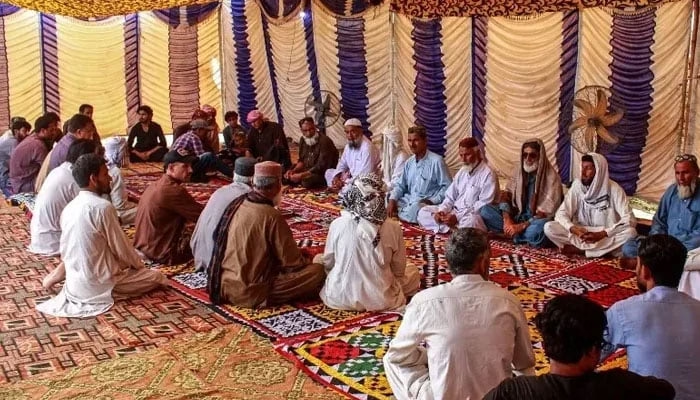
Families of the victims are calling for urgent action in response to the deaths of Pakistani labourers killed in Gulf conflict. In Sindh, Ali’s family expressed disappointment over the lack of financial or logistical support from either the UAE or Pakistani government. It is ironic that when he left Pakistan, we were happy he was going to one of the safest countries in the world, only to later receive his dead body,Malick said.
Similarly, in Bannu, Farmanullah, cousin of Murib Zaman, lamented the loss of a father and breadwinner. He described Zaman’s dream of seeing his hometown develop and thrive, much like Dubai, as unfulfilled due to his untimely death. These personal stories reflect the broader challenges faced by migrant workers, who often leave home seeking better opportunities, only to face unforeseen dangers abroad.
Calls for Government Action
The deaths of Pakistani labourers killed in Gulf conflict have prompted calls for both the Pakistani and UAE governments to implement measures ensuring the safety of civilian workers. Families urge diplomatic interventions, safety protocols, and better protections for labourers, emphasizing that no worker should be treated as collateral in regional conflicts.
Authorities are encouraged to provide immediate support, including financial compensation and assistance in repatriation, while ensuring long-term policies safeguard migrant workers’ rights. Protecting the welfare of overseas labourers is not only a humanitarian necessity but also critical to sustaining remittance flows that bolster Pakistan’s economy.
The tragedy of Pakistani labourers killed in Gulf conflict highlights the intersection of geopolitical instability and human vulnerability. It serves as a stark reminder that wars and regional conflicts often affect ordinary citizens far removed from political decisions. As families mourn their losses, governments must prioritize protection, support, and justice for the labourers whose lives and contributions are essential to their home countries’ economies.
Ensuring the safety of migrant workers, maintaining stable remittance channels, and addressing the indirect effects of global conflicts are critical steps in mitigating the human and economic costs of such tragedies. In doing so, the voices of families like Ali’s and Zaman’s can be heard, and the sacrifices of ordinary workers can be honored rather than overlooked.