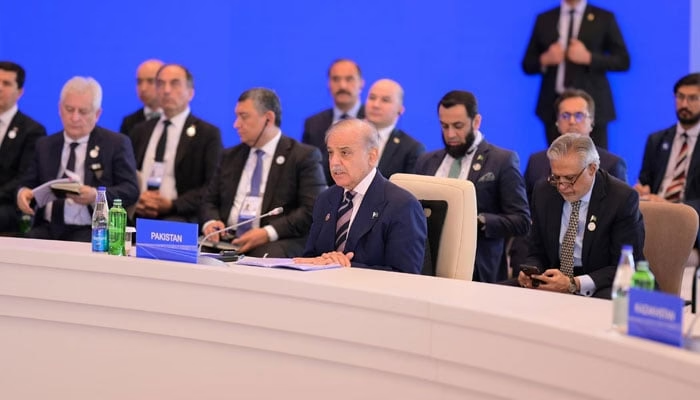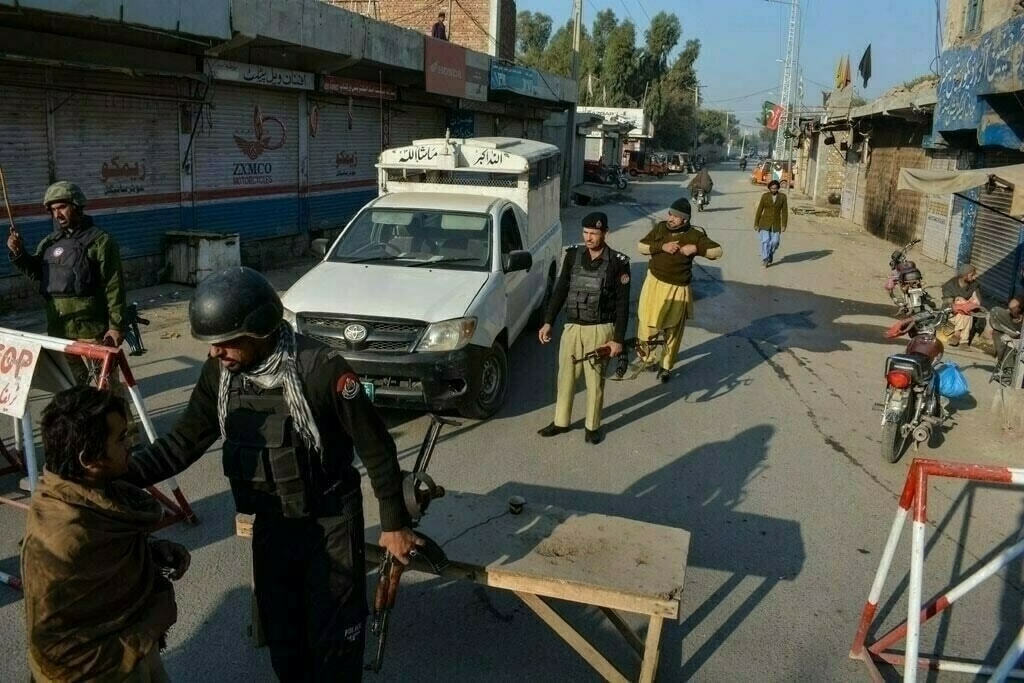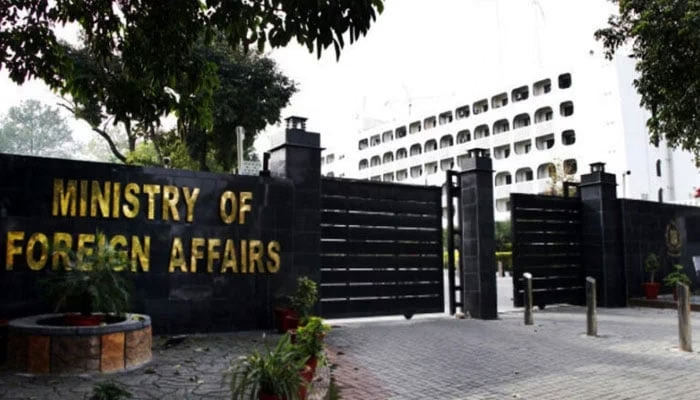
The Jama Masjid Srinagar closure on the last Friday of Ramadan has drawn strong criticism from Pakistan and raised concerns about religious freedom in the region. Pakistan’s Ministry of Foreign Affairs (Pakistan) condemned the continued restrictions, stating that preventing worshippers from offering congregational prayers at one of Kashmir’s most historic mosques is a serious violation of basic human rights.
The issue has once again brought international attention to the situation in Indian Illegally Occupied Jammu and Kashmir, where the mosque has reportedly remained closed on key religious occasions for several years. The Jama Masjid Srinagar closure during such an important time of the Islamic calendar has sparked renewed debate about religious rights and freedoms in the region.
Significance of Jama Masjid in Srinagar
Jama Masjid Srinagar is one of the most important religious landmarks in Kashmir. Located in the heart of Srinagar, the mosque holds deep spiritual and cultural significance for Muslims living in the valley.
For decades, thousands of worshippers have gathered there to offer Friday prayers and participate in religious gatherings, especially during the holy month of Ramadan. The last Friday of Ramadan, often called Jumuat-ul-Wida, is considered one of the most spiritually important days of the month.
Because of this significance, the Jama Masjid Srinagar closure on such a day has become a major concern for many people who see it as a restriction on the right to practice religion freely.
Pakistan’s Response to the Closure
Pakistan strongly condemned the restrictions imposed on the mosque. In its official statement, the Foreign Office said that preventing worshippers from gathering for prayers at the historic mosque represents a clear violation of religious freedom.
According to the statement, the Jama Masjid Srinagar closure has continued for the seventh consecutive year since India’s decision regarding Kashmir on August 5, 2019. Pakistan described those actions as illegal and argued that they have led to greater restrictions on religious and civil rights in the region.
The Foreign Office emphasized that such measures during Ramadan are especially troubling because the month holds deep religious importance for Muslims worldwide. Limiting access to a major mosque during this period, officials said, raises serious concerns about respect for fundamental freedoms.
Call for International Attention
Pakistan has urged the international community to take notice of the situation. In particular, it called on global organizations such as the United Nations and various human rights groups to examine the restrictions placed on religious activities in the region.
According to the statement, the Jama Masjid Srinagar closure should be viewed not only as a local issue but also as a matter related to global human rights standards. Pakistan argues that freedom to practice religion is a universal right that must be protected everywhere.
Human rights advocates often highlight that religious freedom is one of the most important principles recognized by international law. When worshippers are prevented from gathering at religious sites, it can raise questions about whether those rights are being respected.
Religious Freedom and Human Rights
The controversy surrounding the Jama Masjid Srinagar closure has once again brought attention to the broader topic of religious freedom. International human rights frameworks emphasize that individuals should be able to practice their religion without interference.
For many Muslims in Kashmir, congregational prayers at Jama Masjid hold spiritual and cultural importance. These gatherings allow communities to come together, particularly during important occasions such as Ramadan.
When such religious practices are restricted, it often leads to concern not only within the local population but also among observers around the world who monitor human rights conditions.
Broader Context of the Kashmir Issue
The situation surrounding the Jama Masjid Srinagar closure is closely linked to the broader political tensions in Kashmir. The region has long been the subject of dispute and international attention.
Events following the policy changes announced by India in August 2019 have significantly altered the administrative and political landscape of the region. Since then, several measures related to security and governance have been implemented.
Pakistan maintains that these actions have had a negative impact on the rights and freedoms of Kashmiri residents. The closure of religious sites during important occasions is one of the examples cited in these concerns.
Growing Global Awareness
In recent years, issues related to Kashmir have increasingly appeared in international discussions about human rights and regional stability. Governments, journalists, and civil society organizations continue to monitor developments in the region.
The Jama Masjid Srinagar closure has become another focal point in these discussions. Religious leaders and community members believe that access to places of worship should remain open, particularly during significant religious events.
The debate surrounding the Jama Masjid Srinagar closure highlights the complex relationship between politics, security policies, and religious freedoms. As international attention grows, many observers believe that dialogue and transparency will be important for addressing such concerns.
For worshippers in Kashmir, Jama Masjid remains more than just a historic structure. It represents a spiritual center where communities gather for prayer, reflection, and unity. Ensuring access to such religious spaces, especially during important occasions like Ramadan, remains a key issue for many people in the region.
As the discussion continues, calls for protecting religious rights and respecting international human rights principles are likely to remain central to conversations about the future of Kashmir.