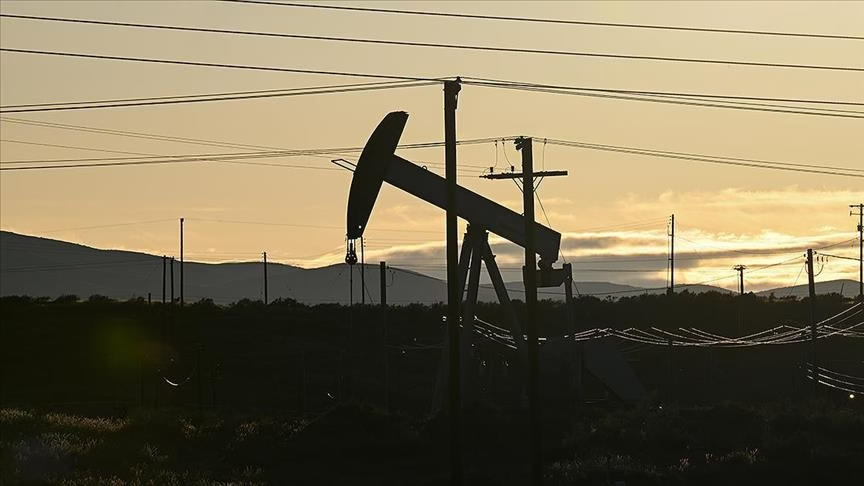
The PSO energy transition is becoming a major focus as Pakistan State Oil moves beyond its traditional role as an oil marketing company. As the global energy landscape evolves, Pakistan’s largest OMC is taking significant steps toward diversification, renewable energy adoption, and sustainable practices. With new initiatives such as electric vehicle charging stations, renewable energy projects, and digital financial services, the PSO energy transition reflects a broader strategy to adapt to future energy demands.
The Legacy of Pakistan State Oil
Founded in 1976 after the merger of Premier Oil Company Limited and State Oil Company Limited, Pakistan State Oil has long been a cornerstone of Pakistan’s energy infrastructure. Headquartered in the iconic PSO House in Karachi—designed by renowned architect Yasmeen Lari the company has played a key role in supplying petroleum products across the country.
Despite decades of dominance in traditional energy markets, the PSO energy transition demonstrates that the company is preparing for a future where sustainability and diversification are essential. Financially, PSO remains strong. The company reported a profit-after-tax of Rs12.1 billion during the first half of fiscal year 2025–26, maintaining a 42.2% market share in the white oil segment and nearly complete dominance in Pakistan’s aviation fuel market.
Moving Toward Electric Mobility
A major part of the PSO energy transition involves supporting the rise of electric mobility in Pakistan. The company plans to install 40 to 50 electric vehicle (EV) charging stations across the country during the year. These stations will provide infrastructure for a market that is gradually exploring alternatives to traditional fuel-powered vehicles.
According to PSO’s Head of ESG, Farrukh Ahmad, the company aims to position itself as an energy provider rather than merely an oil retailer. He emphasized that Pakistan’s geography makes it vulnerable to climate-related challenges, and therefore adopting sustainable energy solutions is becoming increasingly important.
Although EV adoption in Pakistan may initially be slow due to concerns about resale value, battery technology, and limited component availability, conventional vehicles and electric vehicles are expected to coexist for years. This balanced approach is central to the PSO energy transition, which focuses on gradual adaptation rather than sudden change.
Expansion into Renewable Energy
Another significant aspect of the PSO energy transition is the company’s investment in renewable energy projects. Through its subsidiary, PSO Renewable Energy (Private) Limited, the company has already installed over 1 megawatt of renewable energy capacity at several operational sites, including terminals and retail outlets.
These installations are located at facilities such as the Zulfiqarabad Terminal and Machike Terminal. In addition, solar energy systems have been introduced at selected company-operated retail stations. The renewable energy subsidiary plans to add an additional 2.5 megawatts of solar capacity by July 2026 through solarisation projects at multiple locations across Pakistan.
This expansion not only supports sustainability goals but also helps reduce operational costs. In a country where energy costs significantly influence manufacturing and economic competitiveness, renewable solutions can provide long-term financial benefits.
Entering the Digital Financial Sector
The PSO energy transition also extends into the digital financial ecosystem. The company’s subsidiary, Cerisma (Pvt.) Limited, has taken steps toward becoming an Electronic Money Institution (EMI). After receiving approval from State Bank of Pakistan, Cerisma began pilot operations in October 2025.
Since then, the platform has launched consumer applications available on both major mobile platforms and introduced merchant solutions supported by the country’s instant payment system, RAAST. This move reflects PSO’s broader vision of integrating energy services with digital financial solutions.
ESG and Sustainability Goals
Environmental, social, and governance (ESG) principles form a central pillar of the PSO energy transition. The company plans to implement ESG policies across its operations within the next three years. This includes integrating sustainability metrics into business planning, vendor selection, and procurement processes.
One of the main challenges in achieving ESG goals is calculating and reducing carbon emissions across the company’s operations. According to Farrukh Ahmad, managing carbon footprints is complex but essential for modern corporations.
Pakistan has also introduced regulatory measures to encourage sustainable practices. The Securities and Exchange Commission of Pakistan has established ESG reporting guidelines, while the central bank is promoting green banking regulations that encourage financial institutions to support environmentally friendly projects.
Challenges and Future Opportunities
Despite its ambitious plans, the PSO energy transition faces several challenges. One major issue is the shortage of environmental professionals in Pakistan. A large number of trained specialists have moved to Gulf countries where demand for sustainability experts is high, leaving a talent gap in the domestic market.
Nevertheless, PSO continues to explore new energy solutions. The company is examining alternative fuels such as Blue LPG initiatives for northern regions and researching the potential of green hydrogen. While hydrogen technology still faces safety challenges, experts believe it could eventually become a major energy source.
The PSO energy transition represents a significant shift in how Pakistan’s largest oil marketing company approaches the future of energy. By investing in electric mobility, renewable energy, digital finance, and ESG-driven sustainability initiatives, PSO is positioning itself as a diversified energy provider.
As global energy systems evolve, companies that adapt quickly will remain competitive. PSO’s strategy demonstrates that even traditional oil companies can play a meaningful role in building a more sustainable and technologically advanced energy sector in Pakistan.