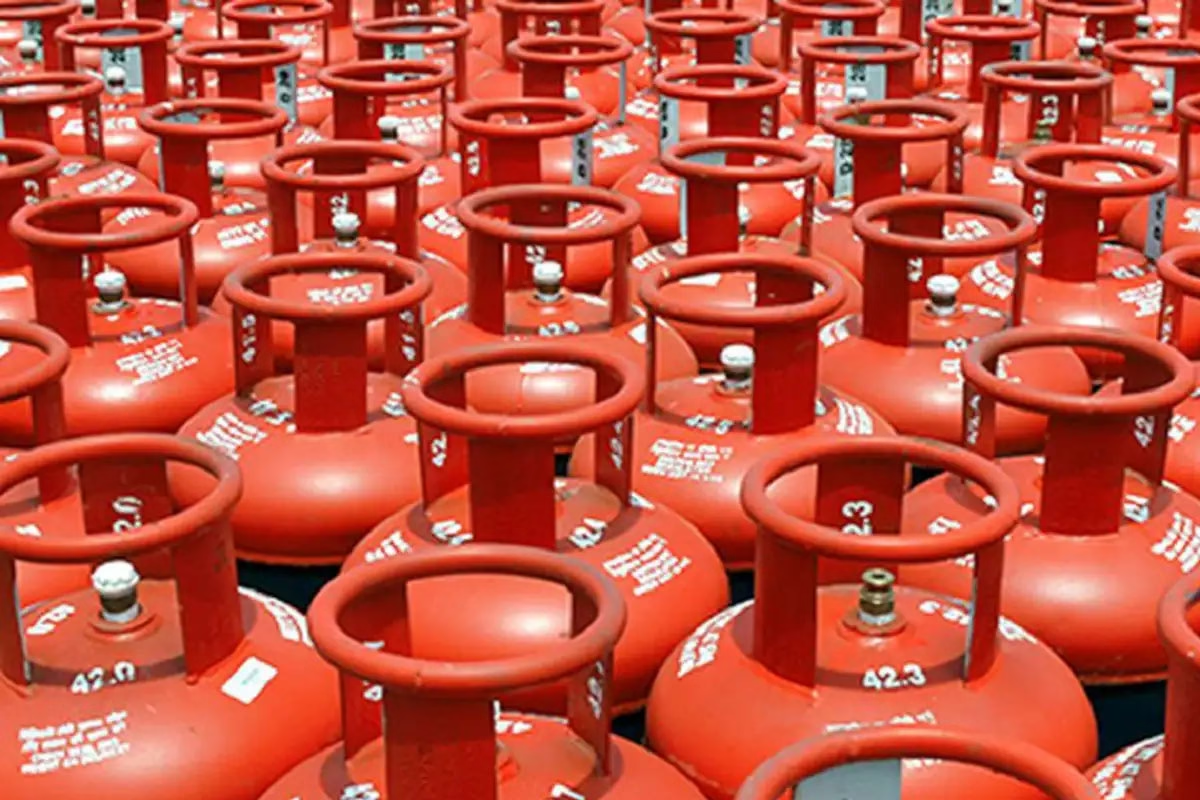
The recent rise in LPG prices in Pakistan has created new challenges for households and businesses across the country. Retail rates of liquefied petroleum gas have increased sharply, climbing from around Rs. 250 per kilogram to between Rs. 320 and Rs. 350 per kilogram. The sudden spike in LPG prices in Pakistan is largely linked to supply disruptions caused by escalating tensions involving Iran and the broader Middle East region.
For millions of Pakistanis who rely on LPG for cooking and heating, this price jump is another burden at a time when energy costs are already rising.
Why LPG Prices Are Rising
The primary reason behind the increase in LPG prices in Pakistan is the disruption of supply chains linked to the ongoing geopolitical conflict involving Iran. Regional instability has affected trade routes and energy shipments, creating uncertainty in the global energy market.
According to the LPG Marketing Association of Pakistan, reduced supply has created shortages in the domestic market, pushing prices upward. Association leader Ali Haider explained that tensions in the region have slowed LPG availability, forcing distributors to raise retail prices.
Pakistan depends heavily on imported energy products, including LPG, which makes the country vulnerable to global market disruptions.
Impact on Household Budgets
The surge in LPG prices in Pakistan has had an immediate impact on everyday consumers. Many households in rural and urban areas rely on LPG cylinders for cooking because natural gas supply is either limited or unavailable.
When LPG prices rise sharply, families must allocate a larger portion of their income to basic energy needs. This situation becomes even more difficult for lower-income households that already face rising costs of food, transportation, and electricity.
Small businesses such as restaurants, street vendors, and tea stalls are also affected by the increase in LPG prices in Pakistan. These businesses depend on LPG for daily operations, and higher fuel costs often lead to increased prices for customers.
Regional Conflict and Energy Supply
The ongoing instability in the Middle East has played a major role in the rising LPG prices in Pakistan. Energy markets are extremely sensitive to geopolitical tensions, especially in regions that produce or transport large quantities of oil and gas.
Iran is an important player in regional energy trade, and any conflict or sanctions affecting the country can disrupt supply chains across neighboring markets.
Shipping delays, logistical challenges, and uncertainty in energy exports can quickly reduce available supply in countries that rely on imports. In Pakistan’s case, these disruptions have contributed directly to the current LPG shortage.
Industry Calls for Alternative Imports
To address the problem, the LPG Marketing Association of Pakistan has urged the government to consider importing LPG from alternative suppliers.
Industry representatives have suggested exploring new sources such as Russia and Oman. These countries are major producers of energy resources and could potentially help Pakistan stabilize its LPG supply.
Diversifying import sources is often considered an effective strategy for reducing dependence on a single region. By securing multiple supply routes, Pakistan could better manage fluctuations in global energy markets.
The Role of Government Policy
Government action will play a critical role in controlling LPG prices in Pakistan. Energy regulators and policymakers must monitor supply levels, market demand, and international pricing trends to prevent excessive price increases.
In some cases, authorities may introduce temporary policy measures to stabilize prices or ensure fair distribution of LPG across different regions.
Another possible approach involves improving domestic storage capacity. By maintaining strategic LPG reserves, the country could reduce the impact of short-term supply disruptions.
Long-Term Energy Challenges
The rise in LPG prices in Pakistan highlights a broader challenge related to energy security. The country relies heavily on imported fuels, including oil, gas, and LPG, which makes it vulnerable to global price volatility.
Developing alternative energy sources could help reduce this dependence in the long run. Investments in renewable energy, improved energy infrastructure, and efficient distribution systems can play an important role in strengthening national energy stability.
At the same time, encouraging energy conservation and efficient usage can help reduce demand pressure during supply shortages.
What Consumers Can Expect
In the short term, LPG prices in Pakistan may remain volatile if regional tensions continue to affect energy supply chains. Market conditions will depend on several factors, including geopolitical developments, global fuel prices, and government policy decisions.
If alternative import routes are secured and supply levels improve, prices may gradually stabilize. However, continued uncertainty in international energy markets means consumers may need to prepare for fluctuations in fuel costs.
The recent surge in LPG prices in Pakistan reflects the country’s vulnerability to global energy disruptions. With supply shortages linked to regional tensions and limited domestic production, LPG prices have increased significantly in recent weeks.
Industry leaders are urging the government to diversify import sources and secure new supply agreements to stabilize the market. While these measures could help in the short term, long-term energy planning will remain essential for protecting Pakistan’s economy and ensuring affordable energy for consumers.
As global markets continue to evolve, the challenge for policymakers will be finding sustainable solutions that balance supply stability, affordability, and energy security.