The newly announced Pakistan austerity measures mark a major step by the government to manage the country’s economic challenges during a rapidly escalating global energy crisis. Prime Minister Shehbaz Sharif unveiled a broad plan aimed at reducing government spending and conserving fuel as geopolitical tensions disrupt global energy supply chains.
These Pakistan austerity measures come at a time when international oil prices are rising sharply due to conflict in the Middle East. The crisis has significantly affected fuel supply routes and forced many countries, including Pakistan, to take urgent steps to manage energy consumption and protect their economies.
Global Conflict and the Energy Crisis
The current crisis is largely linked to escalating tensions involving the United States, Israel, and Iran. Military actions and retaliatory strikes in the region have created instability across the Middle East, affecting global energy markets.
One of the most critical developments has been disruptions in the Strait of Hormuz. This narrow waterway is one of the world’s most important oil transit routes, with a large portion of global fuel supplies passing through it.
With shipping routes affected, oil-producing countries have faced difficulties delivering fuel to international buyers. As a result, global crude oil prices have surged dramatically, jumping from around $60 per barrel to more than $100 per barrel in a short period.
Because Pakistan relies heavily on imported energy from Gulf countries, the situation has placed immediate pressure on the country’s fuel supply and economic stability.
Impact on Fuel Prices in Pakistan
As part of its response to the crisis, the government recently increased petrol and diesel prices by approximately 20%. The decision was described by the prime minister as extremely difficult but necessary given the circumstances.
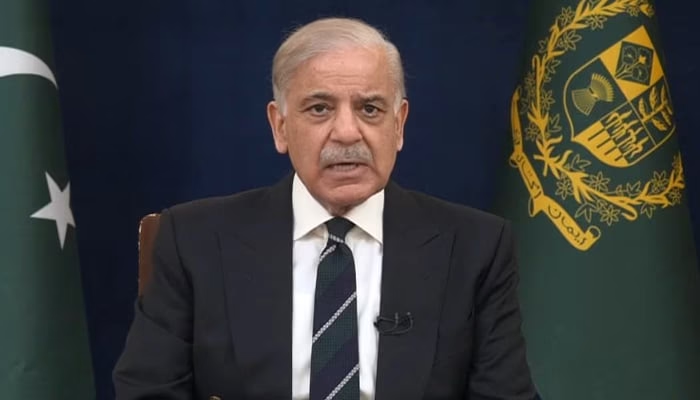
During his address to the nation, Shehbaz Sharif acknowledged the financial burden that higher fuel prices could place on citizens. However, he emphasized that the government had limited options due to the sharp rise in global oil prices.
The introduction of Pakistan austerity measures is intended to reduce fuel consumption, lower government expenditures, and help stabilize the economy during this challenging period.
Key Pakistan Austerity Measures Announced
The government has introduced several major policies as part of the Pakistan austerity measures strategy. These policies are designed to conserve energy and reduce unnecessary spending within government institutions.
One of the most notable steps is a 50% reduction in fuel allocations for vehicles used by government departments for the next two months. In addition, 60% of official government vehicles will remain off the roads during this period to save fuel.
Another significant decision is the suspension of salaries for federal cabinet members, advisers, and special assistants for two months. At the same time, members of parliament will face a 25% salary reduction during the same period.
The Pakistan austerity measures also require all government departments to cut their expenditures by 20%, encouraging greater financial discipline across public institutions.
Restrictions on Government Activities
In addition to spending cuts, the government has introduced strict limitations on official activities that require financial resources.
Foreign visits by ministers, advisers, and government officials have been temporarily banned, except for trips considered essential for national interests. Instead, officials will rely more on online meetings and teleconferencing to conduct international discussions.
The austerity policy also includes a complete ban on official dinners, iftar parties, and large government-hosted events. Seminars and conferences must now be held at government venues rather than hotels or expensive locations.
These measures are intended to demonstrate fiscal responsibility while also encouraging other sectors to adopt similar cost-saving practices.
Work and Education Adjustments
Another major aspect of the Pakistan austerity measures involves changes to work schedules and daily routines in order to conserve energy.
Government offices will operate four days per week, although this rule will not apply to banks. Additionally, around 50% of employees in both public and private sectors will work from home where possible.
Educational institutions will also be affected. Schools across the country will be closed for two weeks starting at the end of the current week as part of the national energy conservation effort.
These temporary adjustments aim to reduce transportation demand, electricity usage, and fuel consumption.
Security and Diplomatic Efforts
While addressing the nation, the prime minister also highlighted Pakistan’s broader security challenges. He noted that the country continues to face threats along its western borders and that the armed forces remain actively engaged in counterterrorism operations.
Pakistan’s military, under the leadership of Asim Munir, continues to address these security concerns while maintaining national stability.
At the same time, the government is pursuing diplomatic efforts to help reduce tensions in the region. Pakistan has been in contact with several friendly nations to discuss the evolving situation and explore ways to support peace and stability.
Public Cooperation and National Unity
The success of the Pakistan austerity measures will depend heavily on cooperation from the public and the business community. The prime minister urged citizens to act responsibly during the crisis and warned traders against hoarding essential goods.
Hoarding, he said, would only worsen the economic situation and place additional pressure on ordinary citizens already dealing with rising living costs.
He also emphasized the importance of unity, reminding the nation that global challenges require collective responsibility and resilience.
The announcement of Pakistan austerity measures reflects the government’s urgent response to a rapidly unfolding global energy crisis. With oil prices surging and fuel supply routes under pressure, Pakistan faces significant economic challenges in the coming months.
Through spending cuts, fuel conservation policies, and administrative reforms, the government hopes to reduce the impact of the crisis on the country’s economy. While these measures may bring short-term inconvenience, they are intended to help stabilize the situation until global energy markets begin to recover.