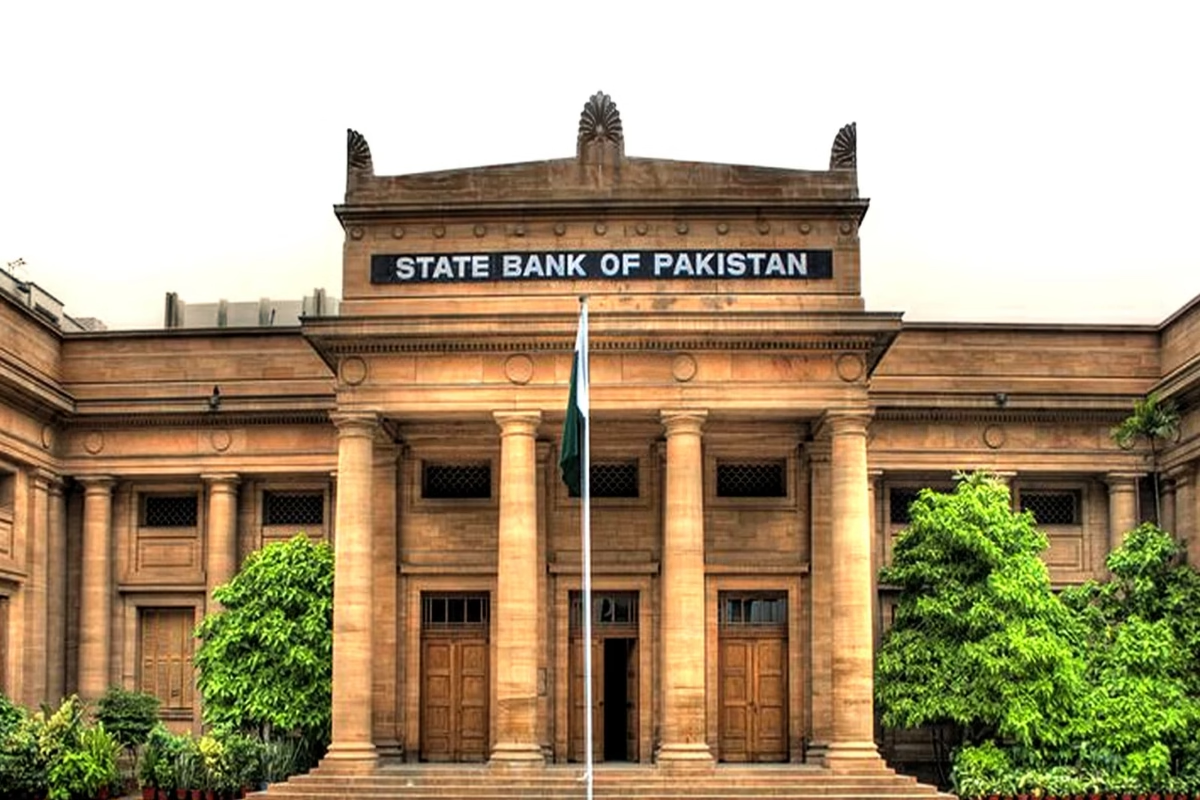
The SBP policy rate has once again become a major topic in Pakistan’s economic discussions after the central bank decided to keep interest rates unchanged. The Monetary Policy Committee (MPC) of the State Bank of Pakistan announced that the SBP policy rate will remain at 10.5%, signaling a cautious approach as the country navigates economic challenges, inflation risks, and global uncertainties.
This decision reflects the central bank’s effort to maintain stability while closely monitoring inflation trends and external economic pressures. Although inflation has eased significantly compared to previous years, several new risks have emerged that could affect Pakistan’s economic outlook.
Why the SBP Policy Rate Was Kept Unchanged
The decision to maintain the SBP policy rate at 10.5% comes after a series of aggressive interest rate cuts over the past year. Since mid-2024, the central bank has reduced borrowing costs by 1,150 basis points, bringing the rate down from the record 22% level seen in 2023.
These earlier reductions were possible because inflation started to decline from historic highs. Lower inflation gave policymakers room to support economic growth by easing monetary policy.
However, the central bank has now chosen to pause further cuts. The main reason is uncertainty in both global and domestic economic conditions. Rising oil prices, geopolitical tensions, and inflation risks have created a situation where caution is necessary.
By keeping the SBP policy rate steady, policymakers aim to balance two important goals: encouraging economic growth while preventing inflation from rising again.
Impact of Rising Oil Prices
One of the biggest challenges currently facing Pakistan’s economy is the surge in global oil prices. The increase is largely linked to tensions in the Middle East, particularly concerns about shipping disruptions through the Strait of Hormuz.
This route is one of the most important oil supply corridors in the world. Any disruption could push global energy prices higher, which would directly affect countries that rely heavily on imported fuel.
Pakistan is among those countries. Because it imports a large share of its energy needs, higher global oil prices quickly translate into higher domestic fuel costs.
Recently, the government raised petrol and diesel prices by nearly 20%. Petrol prices increased to Rs321.17 per litre, while diesel reached Rs335.86 per litre. These price hikes could contribute to inflation in the coming months, which is another reason the central bank chose not to reduce the SBP policy rate further.
Inflation Outlook for Pakistan
Inflation has been one of the biggest economic challenges for Pakistan in recent years. At one point, price increases reached multi-decade highs, putting pressure on households and businesses alike.
According to the governor of the State Bank of Pakistan, Jameel Ahmad, inflation may temporarily move above the central bank’s target range of 5% to 7%. However, the expectation is that it will gradually stabilize over time.
Keeping the SBP policy rate unchanged helps control inflation expectations. When interest rates remain relatively high, borrowing becomes more expensive, which can slow excessive spending and help stabilize prices.
This approach is particularly important at a time when external shocks, such as energy price increases, could push inflation upward again.
Economic Growth Expectations
Despite these challenges, Pakistan’s economic outlook shows some signs of improvement. The central bank expects the country’s economy to grow between 3.75% and 4.75% in fiscal year 2026.
This growth is expected to be supported by stronger domestic demand and the impact of earlier monetary easing. Lower interest rates over the past year have already begun to encourage investment and consumer spending.
Maintaining the SBP policy rate at the current level allows policymakers to observe how these earlier rate cuts affect the broader economy before making additional adjustments.
If economic activity continues to strengthen and inflation remains under control, further monetary easing could become possible in the future.
Role of the IMF Program
Pakistan’s economic policies are also influenced by its ongoing financial support program with the International Monetary Fund. The country is currently participating in a $7 billion IMF program, which aims to stabilize the economy and strengthen financial resilience.
Under this program, policymakers are encouraged to maintain a tight and data-driven monetary policy. This means decisions about the SBP policy rate must be based on economic indicators such as inflation, growth, and external financial conditions.
The IMF’s guidance emphasizes the importance of controlling inflation expectations and maintaining strong foreign exchange reserves. By keeping interest rates stable for now, the central bank signals its commitment to responsible economic management.
What This Means for Businesses and Consumers
For businesses, the unchanged SBP policy rate means borrowing costs will remain stable in the near term. Companies planning investments or expansions can expect financing conditions to stay largely the same.
Consumers, however, may continue to feel pressure from higher fuel prices and potential inflation fluctuations. While interest rates are lower than last year, they are still relatively high compared to long-term averages.
As a result, loans for homes, cars, and other major purchases may remain somewhat expensive.
The decision to keep the SBP policy rate at 10.5% reflects a cautious but balanced approach by Pakistan’s central bank. While inflation has improved significantly compared to previous years, new risks such as rising oil prices and global uncertainties require careful monitoring.
By maintaining the current rate, the State Bank of Pakistan aims to protect economic stability while supporting gradual growth. In the coming months, future policy decisions will likely depend on inflation trends, energy prices, and the overall performance of Pakistan’s economy.