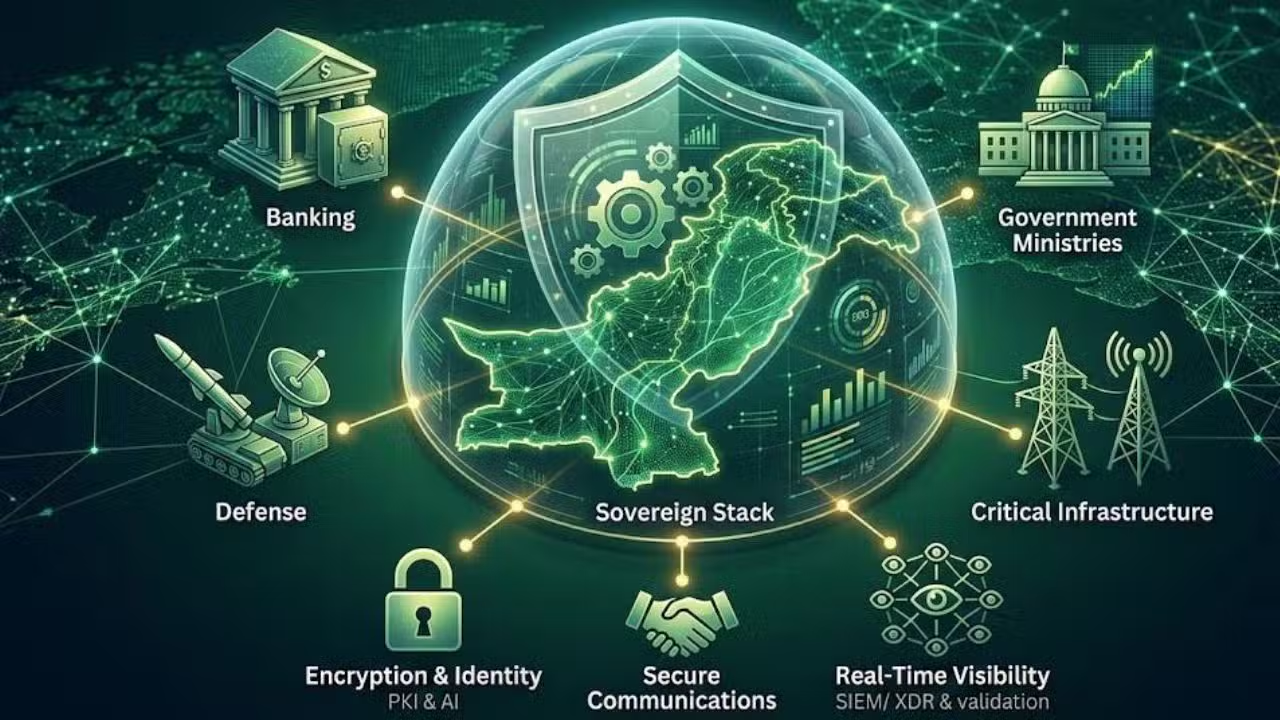
The recent high-priority advisory issued by National Cyber Emergency Response Team has reignited debate around Pakistan cybersecurity sovereignty and the urgent need to protect national digital infrastructure. The warning makes it clear that cyber threats are no longer distant possibilities; they are active, coordinated, and targeting critical sectors including banking systems, defense networks, and government ministries. As attack methods grow more sophisticated, the question is no longer whether to act but how quickly institutions can adapt.
A New Era of Coordinated Cyber Threats
According to the advisory, cyberattacks are evolving in both scale and complexity. From ransomware campaigns to supply chain infiltration and AI-powered deepfakes, adversaries are deploying multi-layered tactics to penetrate sensitive systems. These attacks are not random; they are strategic attempts to destabilize national institutions.
Banks risk operational shutdowns, defense networks face espionage threats, and government ministries must guard against data manipulation. In this environment, cybersecurity is no longer just an IT responsibility—it is a matter of national security and sovereignty.
The Hidden Risks of Digital Dependency
For years, many institutions in Pakistan have relied heavily on foreign cybersecurity tools and cloud platforms. While these solutions often offer advanced capabilities, they also introduce structural vulnerabilities that become apparent during geopolitical tension.
One major concern is the risk of geopolitical choke points. Licensing restrictions, sanctions, or diplomatic disputes could potentially disrupt access to essential cybersecurity tools. In a crisis scenario, even temporary restrictions could paralyze critical sectors.
Another challenge is the lack of transparency. Many foreign platforms operate as black boxes, limiting access to source code and underlying infrastructure. When sensitive national data flows through external systems, institutions must rely on trust rather than full visibility. This creates uncertainty around data sovereignty and control.
Delayed vulnerability disclosures also pose a threat. When global companies prioritize markets based on their own timelines, local security concerns may not receive immediate attention. In times of regional instability, even small delays in patching vulnerabilities can have significant consequences.
These realities underscore why Pakistan cybersecurity sovereignty has become more than a policy discussion—it is a strategic necessity.
Building Indigenous Cyber Capabilities
The NCERT advisory specifically highlights vulnerabilities such as SMS-based verification systems and the risks of using foreign communication platforms for sensitive internal coordination. These weaknesses reveal gaps that can be addressed through locally developed alternatives.
Pakistan has already begun investing in indigenous cybersecurity solutions. Companies like Averox have spent years building security platforms tailored to local requirements. Instead of relying on multiple international tools, unified validation systems can consolidate breach simulation, API security testing, and network scanning within a single architecture.
Locally developed SIEM and XDR solutions also provide real-time monitoring and centralized log management, enabling early detection of suspicious activity. This level of visibility is critical when defending against coordinated foreign intrusion attempts.
Encryption and identity management represent another crucial layer. AI-powered encryption tools and indigenous Public Key Infrastructure (PKI) systems offer stronger alternatives to outdated SMS-based authentication. By shifting toward locally controlled encryption standards, institutions can enhance both security and data sovereignty.
Secure communication platforms developed domestically further reduce reliance on foreign messaging and video conferencing tools. In high-risk environments, encrypted local solutions can ensure continuity even if international platforms face restrictions.
A Strategic Shift, Not Isolation
It is important to note that Pakistan cybersecurity sovereignty does not require completely abandoning global technologies. Instead, it calls for a balanced approach. Integrating indigenous solutions alongside international platforms creates redundancy and resilience.
The goal is preparedness. If foreign access were disrupted tomorrow, could banks continue transactions? Could defense systems maintain secure communications? Could government ministries operate without interruption? These are practical questions that demand immediate planning.
By investing in local research, development, and deployment, Pakistan can build layered defenses that reduce exposure to external shocks. This approach strengthens national resilience without isolating the country from global innovation.
Cybersecurity is no longer a secondary consideration in digital transformation projects. It is the foundation upon which digital governance, financial stability, and national defense depend. The NCERT advisory serves as a wake-up call, emphasizing that cyber threats are active and evolving.
Pakistan cybersecurity sovereignty is ultimately about control, continuity, and confidence. Control over critical systems, continuity of operations during crises, and confidence that national data remains protected within sovereign boundaries.
The talent and technical capability exist within the country. What remains is a coordinated commitment from regulators, telecom operators, financial institutions, and defense agencies to prioritize indigenous capacity as part of a long-term national strategy.
At this strategic crossroads, the decision is clear. Strengthening sovereign cybersecurity capabilities is no longer optional ,it is essential for safeguarding Pakistan’s digital future in an increasingly volatile global landscape.