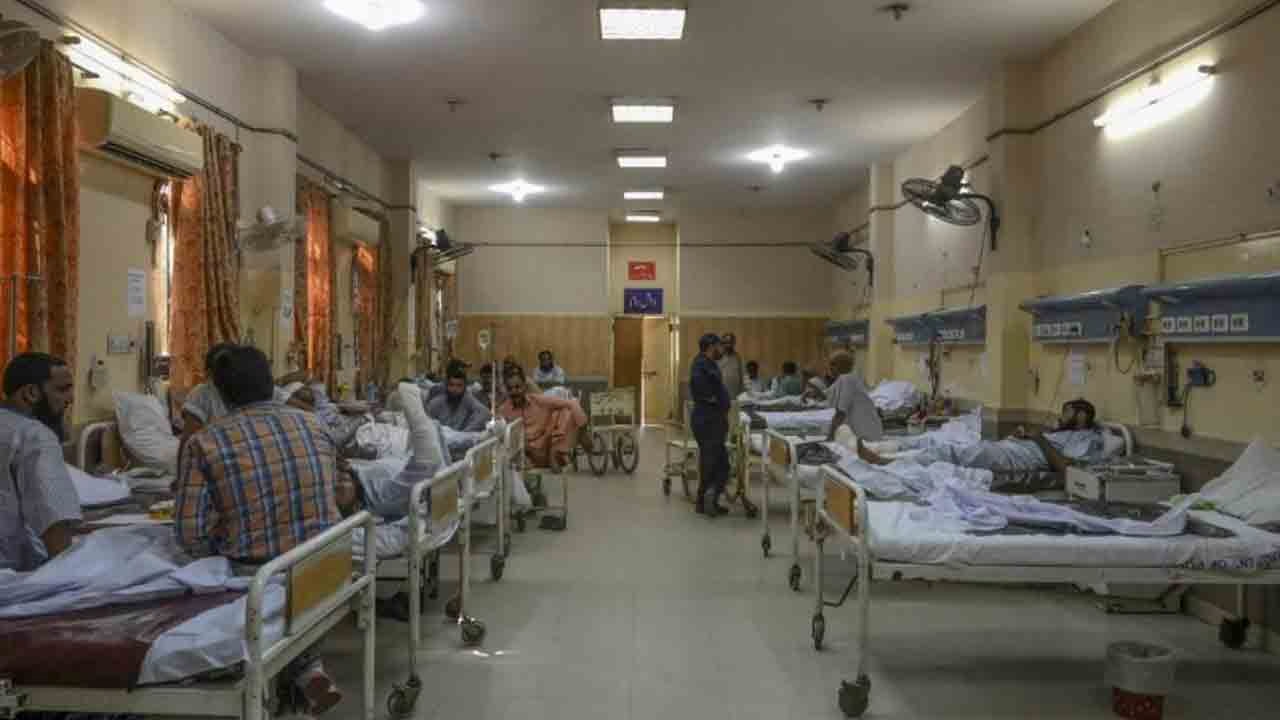
The announcement of a hospital high alert in Punjab has placed all major teaching hospitals on emergency footing due to the evolving security situation. The Specialized Healthcare and Medical Education Department has formally directed healthcare institutions to activate round-the-clock emergency systems, ensuring that medical services remain fully operational at all times. This decisive move reflects the government’s priority to safeguard public health during uncertain conditions.
24/7 Emergency Preparedness
Under the hospital high alert in Punjab, emergency departments, operation theatres (OTs), and pharmacy services have been ordered to function 24 hours a day without interruption. Hospitals must ensure the constant availability of doctors, nurses, and paramedical staff. This means that medical teams are required to stay prepared for any sudden influx of patients or critical incidents.
The directive emphasizes that no delay in treatment will be tolerated. Quick response time can be the difference between life and death, especially during emergencies linked to security threats or unforeseen incidents. By mandating continuous staffing, authorities aim to strengthen the healthcare system’s readiness.
Strengthened Security Measures
Beyond medical preparedness, security within hospital premises has also been tightened. Security personnel have been instructed to remain on full alert, while CCTV control rooms must stay active at all times. Monitoring hospital entrances, emergency wards, and sensitive areas ensures both patient and staff safety.
The hospital high alert in Punjab also requires close coordination with district administrations and local police authorities. Maintaining communication channels helps hospitals respond swiftly if the external situation escalates. These measures highlight the understanding that healthcare facilities are critical infrastructure and must be protected.
Ensuring Medical Supplies and Equipment
A significant focus of the alert is on ensuring uninterrupted medical supplies. Hospitals have been directed to maintain sufficient stocks of essential medicines, vaccines, intravenous (IV) fluids, and surgical equipment. During emergencies, supply shortages can severely hamper response efforts, so proactive inventory management is crucial.
Additionally, biomedical equipment such as CT scan, MRI, and X-ray machines must remain fully functional. Regular maintenance checks and technical staff availability are essential to avoid breakdowns during critical moments. The directive also makes standby generators mandatory to ensure uninterrupted power supply, particularly during outages. Medical gases, including oxygen, must also be readily available in adequate quantities.
Blood Bank and Ambulance Readiness
One of the key components of the hospital high alert in Punjab is the instruction to maintain sufficient blood bags for all blood groups. Hospitals are required to update and organize donor lists so that blood can be arranged quickly in case of mass casualty events. Efficient blood bank management can dramatically improve survival rates in trauma cases.
Ambulance services are another critical area of focus. All ambulances must be fully functional and ready for immediate dispatch. Hospitals are instructed to maintain direct contact with Rescue 1122 to coordinate emergency transportation and rescue operations effectively. Seamless coordination between hospitals and rescue services ensures rapid patient transfer and treatment.
Healthline 1019: A 24-Hour Helpline
As part of the broader emergency framework, Healthline 1019 has been designated as a 24-hour active helpline. Citizens can use this number to seek medical guidance, report emergencies, or obtain information during the ongoing security situation. Keeping this helpline fully operational enhances public confidence and ensures that accurate information is readily accessible.
The hospital high alert in Punjab also emphasizes strict compliance with all issued orders. Authorities have made it clear that implementation must not remain limited to paperwork. Hospital administrations are expected to actively monitor performance and ensure that every department follows the guidelines.
A Proactive Approach to Crisis Management
The current measures reflect a proactive approach rather than a reactive one. By strengthening emergency services, securing facilities, and ensuring supply readiness, the health department aims to prevent chaos during a potential crisis. Preparedness is the foundation of effective disaster management.
Hospitals play a frontline role in any emergency scenario. Whether dealing with accidents, security incidents, or natural disasters, their ability to respond efficiently can save countless lives. The hospital high alert in Punjab underscores the importance of institutional readiness in protecting communities.
The decision to enforce a hospital high alert in Punjab demonstrates the government’s commitment to public safety amid security concerns. By activating 24/7 emergency services, strengthening security protocols, ensuring equipment functionality, and coordinating with rescue agencies, healthcare authorities are working to maintain stability and preparedness.
In challenging times, a well-prepared healthcare system becomes a pillar of resilience. Through these comprehensive measures, Punjab’s teaching hospitals are positioned to handle emergencies effectively while continuing to provide essential medical care to the public.