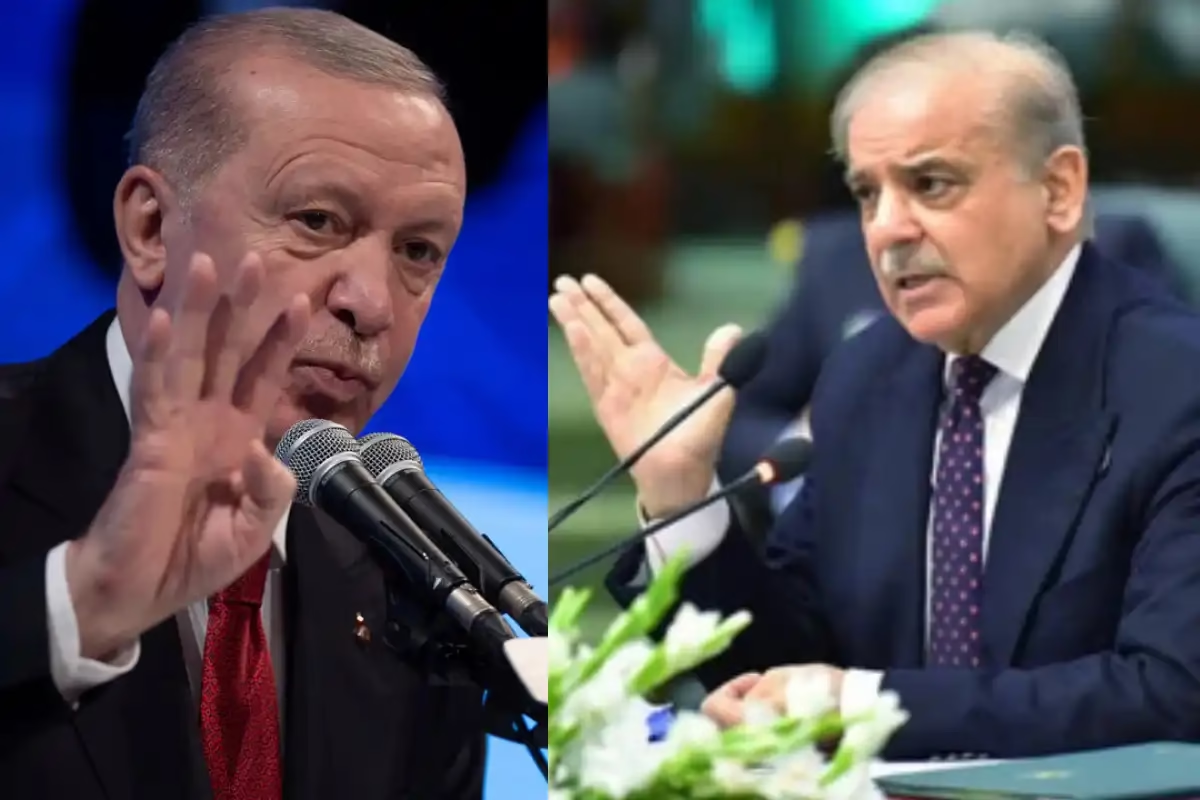
The recent Shehbaz Erdogan call on Middle East crisis marks an important diplomatic step as regional tensions continue to rise. In a significant development, Pakistan’s Prime Minister Shehbaz Sharif held a telephone conversation with Turkish President Recep Tayyip Erdogan to discuss the escalating situation in the Middle East and explore ways to promote stability.
According to official statements from the Prime Minister’s Office, the conversation focused on the urgent need for diplomatic engagement to prevent further instability. Prime Minister Sharif expressed deep concern over the rapidly evolving crisis and emphasized that immediate diplomatic interventions were essential to avoid worsening tensions.
Growing Concerns Over Regional Stability
During the Shehbaz Erdogan call on Middle East crisis, both leaders discussed the broader implications of continued unrest in the region. The Middle East has long been a focal point of geopolitical tensions, and any escalation has the potential to impact not only neighboring countries but also the global economy.
Prime Minister Sharif highlighted the urgency of coordinated diplomatic efforts. He underscored that rising tensions could have far-reaching consequences, including humanitarian challenges, economic disruptions, and security risks. The emphasis was placed on dialogue and peaceful resolution rather than confrontation.
President Erdogan echoed similar concerns, reaffirming Türkiye’s interest in regional peace and stability. Both leaders agreed that diplomacy must remain the primary tool to de-escalate the situation.
Engagement With Gulf Leaders
An important aspect of the Shehbaz Erdogan call on Middle East crisis was Prime Minister Sharif’s briefing to President Erdogan regarding his recent engagements with Gulf leaders. These diplomatic efforts were aimed at seeking a peaceful resolution and building consensus among key regional players.
By actively engaging Gulf countries, Pakistan is positioning itself as a constructive participant in efforts to ease tensions. The Prime Minister shared details of discussions focused on exploring practical solutions and encouraging dialogue among all concerned parties.
Such diplomatic outreach reflects Pakistan’s broader foreign policy approach, which emphasizes cooperation, mediation, and peaceful conflict resolution.
Commitment to Constructive Role
Both leaders reiterated their commitment to playing a constructive role in addressing the crisis. The Shehbaz Erdogan call on Middle East crisis demonstrated that Pakistan and Türkiye share common ground on the importance of restraint and patience during volatile times.
Prime Minister Sharif affirmed Pakistan’s readiness to contribute positively to regional stabilization efforts. He stressed that all parties involved in the conflict should exercise restraint to prevent further escalation. The official statement emphasized the need for patience and careful decision-making during this sensitive period.
President Erdogan also expressed Türkiye’s willingness to support diplomatic initiatives aimed at restoring calm. The shared message from both sides was clear: escalation would only deepen instability, while dialogue offers a path forward.
Broader Regional Context
The Middle East crisis comes at a time when global uncertainties are already high. Ongoing geopolitical rivalries, economic pressures, and security concerns have made the region particularly sensitive to further unrest.
The Shehbaz Erdogan call on Middle East crisis reflects the understanding that regional conflicts can quickly spill beyond borders. For countries like Pakistan and Türkiye, which maintain close ties with multiple stakeholders in the region, diplomatic engagement is both a responsibility and a strategic necessity.
Both nations have historically supported dialogue-based solutions and have often coordinated positions on major international issues. This latest conversation reinforces that alignment.
Discussion on Afghanistan
In addition to addressing the Middle East, Prime Minister Sharif also briefed President Erdogan on recent developments in Afghanistan. Pakistan continues to closely monitor the political and security situation in its neighboring country, given the direct implications for regional peace.
The inclusion of Afghanistan in the Shehbaz Erdogan call on Middle East crisis highlights the interconnected nature of regional challenges. Stability in Afghanistan remains crucial for broader South and Central Asian security, as well as for economic connectivity initiatives.
By sharing updates on Afghanistan, Pakistan demonstrated its commitment to keeping regional partners informed and engaged on critical security matters.
Diplomatic Path Forward
The Shehbaz Erdogan call on Middle East crisis underscores the importance of proactive diplomacy in times of uncertainty. Rather than waiting for events to escalate further, both leaders chose to engage directly and discuss coordinated responses.
Their conversation sends a message that dialogue remains open and that responsible leadership involves seeking peaceful solutions even amid heightened tensions. While the crisis itself may continue to evolve, diplomatic communication between influential regional actors can help reduce misunderstandings and build trust.
The Shehbaz Erdogan call on Middle East crisis represents a meaningful step in ongoing efforts to manage regional instability. By emphasizing restraint, dialogue, and constructive engagement, Prime Minister Shehbaz Sharif and President Recep Tayyip Erdogan have signaled their shared commitment to peace.
As tensions in the Middle East continue to develop, sustained diplomatic outreach and coordinated efforts will be essential. The conversation between the two leaders reflects a broader recognition that stability can only be achieved through cooperation, patience, and continuous dialogue.