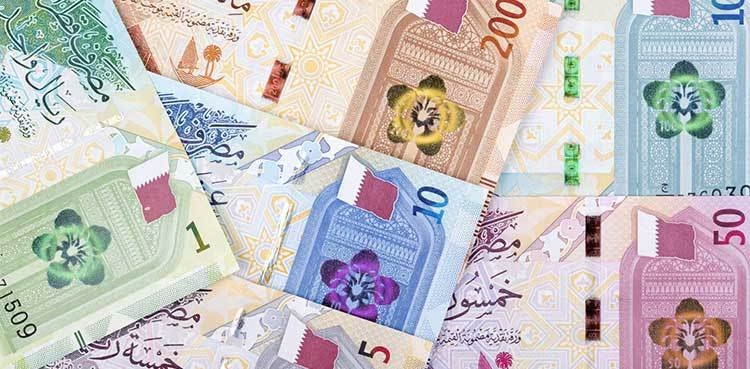
As of 5:06 PM PKT today, the Qatari Riyal (QAR) is trading at 76.73 Pakistani Rupee (PKR) — essentially unchanged from the January 31 level and staying below earlier peaks recorded in 2025.
Recent QAR-PKR exchange rates
| Date | QAR to PKR |
|---|---|
| Today | 76.73 |
| Feb 21 | 76.76 |
| Feb 14 | 76.79 |
| Jan 31 | 76.73 |
| Jan 17 | 76.88 |
| Jan 10 | 76.79 |
| Jan 3 | 76.92 |
| Dec 27 | 76.85 |
| Dec 13 | 76.96 |
| Sep 5 (2025 high) | 77.93 |
| Aug 12 | 77.88 |
| July 19 (2025 peak) | 78.26 |
| June close | 77.86 |
Over the past several weeks, the QAR-PKR pair has remained in a narrow, lower band, reflecting relative stability in both currencies.
Why the rate is steady
Qatari Riyal fundamentals
- The QAR is pegged to the U.S. dollar at 3.64 QAR = 1 USD, helping limit volatility.
- Qatar’s strong energy export economy, particularly liquefied natural gas (LNG), supports the currency’s stability.
Pakistani Rupee dynamics
- The State Bank of Pakistan manages the Rupee on a floating basis, influenced by:
- Inflation pressures
- Political developments
- Foreign reserve levels
- Trade and remittance flows
Recent economic policy measures and external support have helped the PKR hold ground against the stronger Gulf currencies.
What it means for expatriates and families
For the large Pakistani community in Qatar (estimated 125,000+ expatriates), the current rate has meaningful effects on remittances:
- 1,000 QAR ≈ 76,730 PKR today.
- That’s 660 PKR less than if the same QAR amount were sent at the June 2025 mid-year rate (≈77,390 PKR).
This gap matters for families relying on remitted income to cover:
- Education costs
- Healthcare
- Household expenses
- Rent and utilities
Lower remittance value puts pressure on living standards back home.
On the flip side, for Pakistanis earning in PKR and spending in QAR (e.g., on travel or imports), the relatively contained range helps with affordability.
Outlook — range expectations
Analysts generally expect the QAR-PKR pair to remain in a contained trading range in the near term, barring:
- Major shifts in global energy markets
- Significant policy changes in Pakistan
- Broad swings in USD exchange rates or external shocks
For expatriates, traders, and remittance planners, the current rate remains a key reference point for financial decisions.