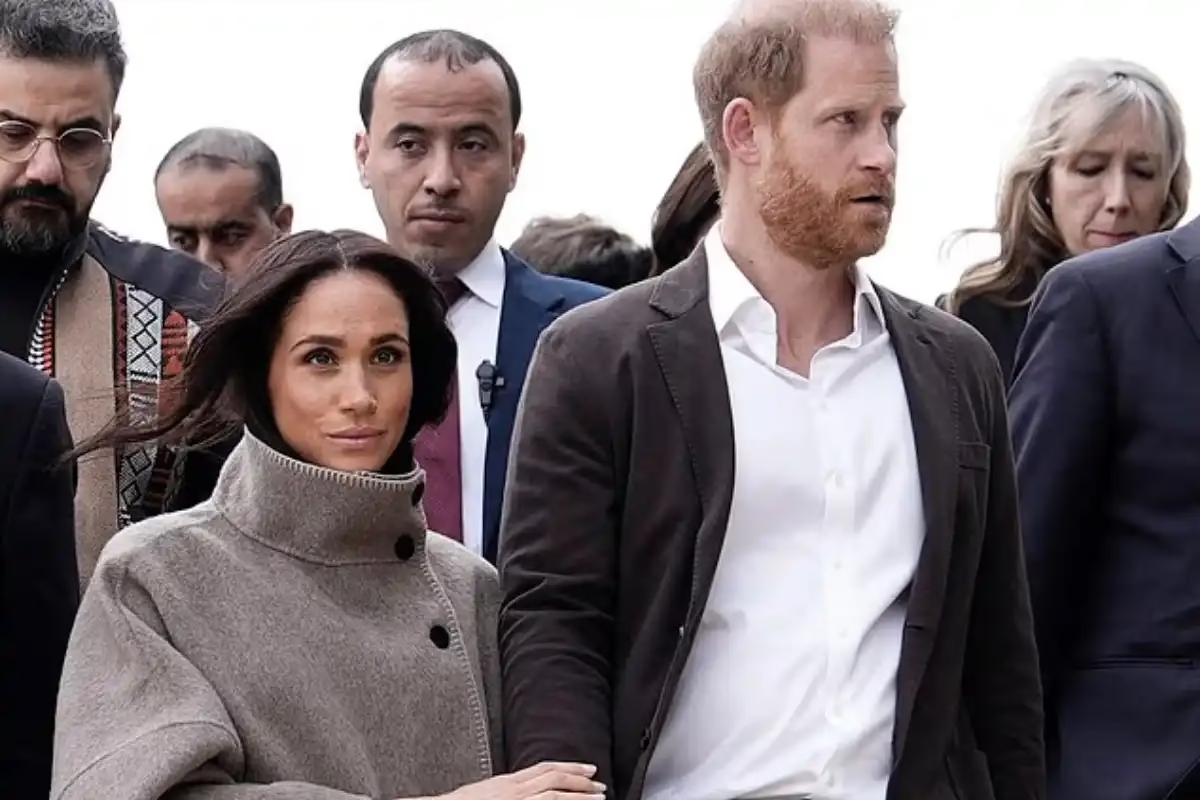
The recent Prince Harry Meghan Jordan tour snub has drawn global attention after reports claimed that the Duke and Duchess of Sussex were not formally received by senior members of Jordan’s royal family during their visit to Amman. While the trip was intended to highlight humanitarian work and social initiatives, headlines quickly shifted toward what some insiders described as a noticeable royal omission.
Prince Harry and Meghan Markle traveled to Jordan as part of their ongoing charitable engagements. Their visit included meetings with local organizations and projects focused on community development and rehabilitation services. However, according to media reports, there was no official meeting scheduled between the Sussexes and senior members of the Jordanian royal family during their stay.
This alleged Prince Harry Meghan Jordan tour snub raised eyebrows because of the historically strong ties between the British and Jordanian monarchies. Abdullah II of Jordan is known to share close diplomatic and personal connections with the British Royal Family, particularly with King Charles III. King Abdullah and Queen Rania of Jordan were among the distinguished guests at King Charles’s coronation. Queen Rania has also engaged in discussions with Queen Camilla on issues related to women’s empowerment and social development.
Additionally, Jordan’s Crown Prince, Crown Prince Hussein of Jordan, has reportedly maintained friendly relations with Prince William over the years. Given these established ties, observers expected at least a symbolic meeting during the Sussexes’ visit.
Instead, the Duke and Duchess met Princess Basma bint Talal, an aunt of King Abdullah, during a visit to a project run by the Jordanian Hashemite Fund for Human Development. While the meeting was cordial and aligned with the humanitarian purpose of the trip, it did not involve the highest-ranking royals in Jordan, fueling speculation about the Prince Harry Meghan Jordan tour snub narrative.
Reports suggest that scheduling conflicts may have played a role. King Abdullah was hosting Prabowo Subianto in Amman during the same period. Diplomatic engagements at that level often require extensive preparation and attention, potentially limiting opportunities for additional royal meetings.
Despite the controversy, Harry and Meghan continued their itinerary, focusing on charitable initiatives. They visited the National Centre for Rehabilitation of Addicts, where they met patients and learned about support services offered at the facility. The visit reflected the couple’s ongoing interest in mental health and community well-being, issues they have consistently championed in their public work.
The Prince Harry Meghan Jordan tour snub discussion also highlights the complex dynamics surrounding the Sussexes’ role within the broader royal landscape. Since stepping back from their duties as senior working royals in 2020, Harry and Meghan have carved out an independent path centered on philanthropy and advocacy. However, their relationship with royal institutions—both in the UK and internationally—remains a subject of public fascination.
Some commentators argue that the absence of a formal meeting in Jordan could signal diplomatic caution, while others believe it was simply a matter of timing. Royal schedules are often tightly coordinated, particularly when heads of state are involved. Without official confirmation of intent, it is difficult to determine whether the Prince Harry Meghan Jordan tour snub was deliberate or circumstantial.
It is also worth noting that humanitarian tours are often evaluated based on their impact rather than ceremonial meetings. The Sussexes’ engagement with local development projects and rehabilitation services aligns with their stated mission of supporting vulnerable communities. In that sense, the visit fulfilled its core objective, even if it lacked high-profile royal photo opportunities.
Media coverage, however, tends to amplify symbolic gestures. The absence of a meeting with senior Jordanian royals became the dominant storyline, overshadowing the charitable aspects of the trip. This pattern reflects how modern royal narratives are shaped not only by official actions but also by public perception.
The Prince Harry Meghan Jordan tour snub has sparked debate about protocol, diplomacy, and the evolving roles of global royals. While reports emphasize the lack of a formal reception by King Abdullah and Queen Rania, the couple’s humanitarian engagements in Jordan remained central to their visit. Whether viewed as a scheduling coincidence or a subtle diplomatic signal, the episode underscores the continued global interest in the Duke and Duchess of Sussex and their international engagements.