The call for an Afghanistan Pakistan dialogue has once again come into focus after recent deadly clashes along the border. Afghanistan’s government stated on Friday that it wants tensions with neighboring Pakistan to be resolved through talks rather than violence, signaling a desire to prevent further escalation between the two countries.
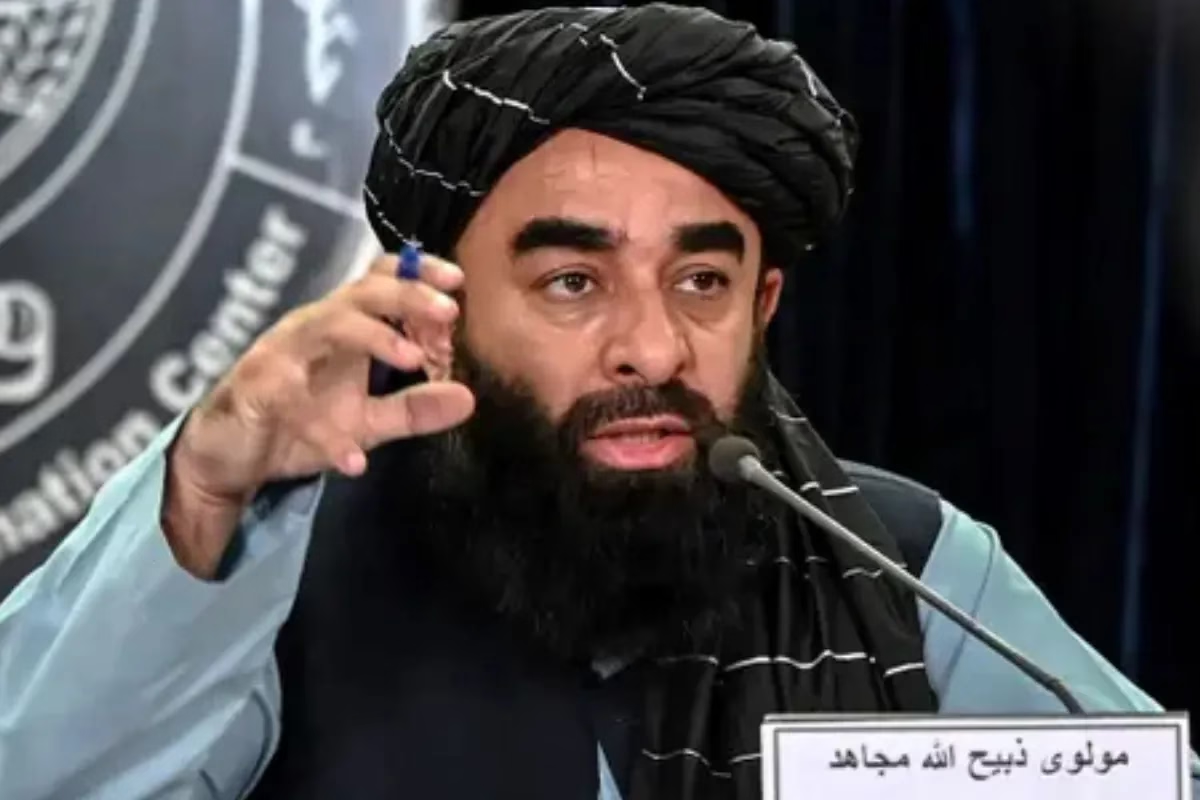
At a recent press conference, Taliban government spokesman Zabihullah Mujahid emphasized that Afghanistan prefers a peaceful path forward. He clearly stated that the country has repeatedly supported negotiations and still hopes the issue can be settled through dialogue. His remarks come at a time when border tensions have increased, raising concerns about regional stability.
The renewed push for an Afghanistan Pakistan dialogue highlights the fragile nature of relations between the two neighbors. Both countries share a long and sensitive border, commonly known as the Durand Line, which has historically been a source of disputes. Cross-border incidents, accusations of militant activity, and security concerns have frequently strained diplomatic ties.
In recent weeks, clashes reportedly led to casualties on both sides, further deepening mistrust. Such incidents not only cause human loss but also fuel political tensions. In this context, Afghanistan’s public call for talks can be seen as an attempt to de-escalate the situation and prevent a broader conflict.
For years, relations between Kabul and Islamabad have fluctuated between cooperation and confrontation. Pakistan has often raised concerns about militant groups operating from Afghan territory, while Afghanistan has expressed frustration over border policies and military actions. These longstanding issues make the Afghanistan Pakistan dialogue both necessary and complex.
Dialogue, however, remains the most practical option for two neighboring countries that share deep historical, cultural, and economic ties. Trade routes, cross-border families, and regional security dynamics mean that prolonged hostility would harm both nations. A diplomatic approach offers a chance to address grievances, clarify misunderstandings, and rebuild trust.
Zabihullah Mujahid’s statement that Afghanistan still wants a peaceful solution reflects an understanding of these realities. In modern geopolitics, sustained conflict rarely benefits either side, especially in a region already facing economic challenges and humanitarian concerns. Stability is crucial not only for Afghanistan and Pakistan but also for the broader South Asian region.
An effective Afghanistan Pakistan dialogue would likely need to focus on several key areas. Border management is one of the most urgent issues. Clear communication channels between military and border authorities could help prevent accidental clashes. Intelligence-sharing mechanisms might also reduce mutual suspicions regarding militant movements.
Another important dimension is political communication. High-level meetings between officials from both sides could create space for constructive engagement. Confidence-building measures, such as reopening trade crossings or easing travel restrictions for civilians, may also contribute to easing tensions.
The international community is closely watching developments. Neighboring countries and global powers understand that instability between Afghanistan and Pakistan can have ripple effects. Refugee flows, economic disruptions, and security concerns can extend beyond national borders. Therefore, a successful Afghanistan Pakistan dialogue could contribute to wider regional peace.
It is also important to consider the domestic pressures faced by both governments. Public opinion, security concerns, and political narratives often shape foreign policy decisions. Leaders on both sides must balance national interests with the need to avoid escalation. This balancing act makes dialogue challenging but even more essential.
History shows that conflicts rooted in mistrust and security fears cannot be solved overnight. However, consistent diplomatic engagement can gradually reduce tensions. Even small agreements can lay the groundwork for more comprehensive solutions in the future. The willingness to talk, as expressed by Afghanistan’s spokesman, is an important first step.
Ultimately, peace between Afghanistan and Pakistan depends on sustained effort and mutual respect. Dialogue does not mean ignoring serious concerns; rather, it provides a structured platform to address them responsibly. By choosing negotiation over confrontation, both nations have the opportunity to prioritize stability and development over prolonged hostility.
The renewed call for an Afghanistan Pakistan dialogue comes at a critical moment. With recent clashes raising alarm, the emphasis on peaceful discussion offers hope for de-escalation. While challenges remain significant, open communication and diplomatic engagement remain the most viable path toward lasting peace between the two neighboring countries.