The debate around Pakistan response to India Israel defence ties has intensified after Islamabad expressed concern over expanding military cooperation between New Delhi and Tel Aviv. During a weekly press briefing, Pakistan’s Foreign Office (FO) said it was fully aware of the growing defence relationship between India and Israel, including systems and platforms that could potentially be used against Pakistan.
FO spokesperson Tahir Andrabi stated that Pakistan remains alert to any threats posed to its sovereignty, territorial integrity, and regional peace. His remarks came in response to questions about recent agreements announced during Indian Prime Minister Narendra Modi’s visit to Israel.
Islamabad’s Concerns
According to the Foreign Office, Pakistan is closely monitoring defence cooperation between India and Israel. Officials emphasized that the country is “cognisant” of the implications such partnerships may have for regional security.
The Pakistan response to India Israel defence ties reflects longstanding strategic sensitivities. Israel has been a significant supplier of advanced defence systems to India, including surveillance technologies, missile systems, and unmanned aerial vehicles. Pakistani officials argue that these capabilities could alter the regional security balance if not managed carefully.
At the same time, Islamabad reiterated its confidence in its military preparedness, stating that it possesses robust defensive and deterrent capabilities against any potential aggression.
What India and Israel Agreed Upon
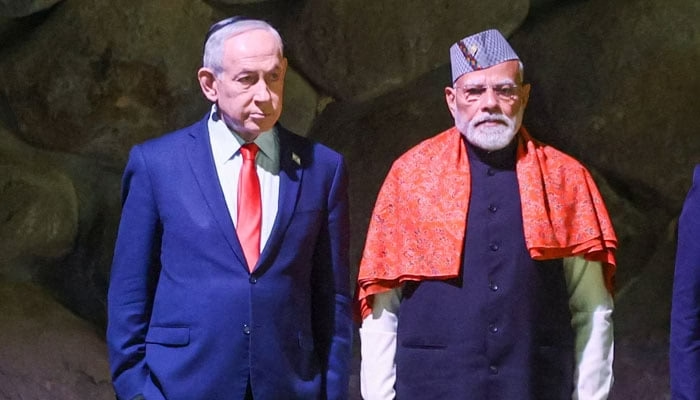
Prime Minister Modi’s recent two-day visit to Israel focused heavily on strengthening strategic cooperation. Both countries pledged to expand joint development, production, and technology transfer in defence sectors.
One of the notable areas of cooperation includes “horizon scanning,” a strategic approach aimed at enhancing foresight, risk assessment, and long-term technology planning. Indian officials stated that joint research, capacity building, and AI-driven tools would help strengthen strategic planning.
In addition to defence collaboration, the two nations discussed advancing trade relations, possibly through a future free trade agreement. Israel also announced plans to allow 50,000 additional Indian workers into the country over the next five years, particularly in manufacturing sectors.
These developments have prompted the latest Pakistan response to India Israel defence ties, as Islamabad evaluates how expanded cooperation could influence regional dynamics.
A Broader Strategic Context
India and Israel have steadily deepened ties since the 1990s, with defence remaining a cornerstone of their partnership. Over the years, high-level visits and joint initiatives have strengthened their relationship across technology, agriculture, space, and civil nuclear energy.
During the visit, Modi highlighted collaboration in diverse fields, including space research and energy cooperation. Israeli Prime Minister Benjamin Netanyahu described the relationship as more than just a partnership, calling Modi “more than a friend, a brother.”
From Pakistan’s perspective, however, such close alignment between India and Israel raises strategic concerns. The Pakistan response to India Israel defence ties signals Islamabad’s intention to remain vigilant while maintaining its own defence readiness.
Domestic and International Reactions
Modi’s visit has also sparked debate within India. Some political figures questioned whether the prime minister would address humanitarian concerns in Gaza during his engagements in Israel. While Modi expressed support for peace and regional stability, he did not directly criticize Israeli actions during his speech to lawmakers.
Internationally, the visit occurred amid heightened tensions in the Middle East, including diplomatic strains involving Iran and discussions around regional security. These broader developments add another layer of complexity to South Asian geopolitics.
Against this backdrop, the Pakistan response to India Israel defence ties appears as part of a larger pattern of strategic recalibration in the region. Countries are reassessing alliances and strengthening partnerships based on evolving security needs.
Pakistan’s Stance on Security
Islamabad has consistently maintained that it seeks peace and stability in the region. However, officials stress that peace must be supported by credible deterrence. During the briefing, the FO spokesperson reaffirmed that Pakistan’s armed forces are fully capable of defending national interests.
The Pakistan response to India Israel defence ties therefore combines diplomatic caution with military assurance. By acknowledging the developments publicly, Islamabad signals awareness while emphasizing its preparedness.
The Road Ahead
As India and Israel continue expanding cooperation, regional observers will closely watch how these partnerships shape strategic balances. Defence agreements often have long-term implications, particularly when they involve technology transfer and joint production.
For Pakistan, maintaining diplomatic engagement while safeguarding national security remains a key priority. The Pakistan response to India Israel defence ties suggests that Islamabad will continue monitoring developments and adjusting its policies accordingly.
The growing defence relationship between India and Israel has prompted a clear reaction from Pakistan’s Foreign Office. While India views its partnership with Israel as a strategic and technological opportunity, Pakistan sees potential security implications that require vigilance.
The Pakistan response to India Israel defence ties underscores the delicate balance of power in South Asia and the broader Middle East. As regional alliances evolve, dialogue, transparency, and responsible statecraft will remain essential to maintaining stability and avoiding unnecessary escalation.