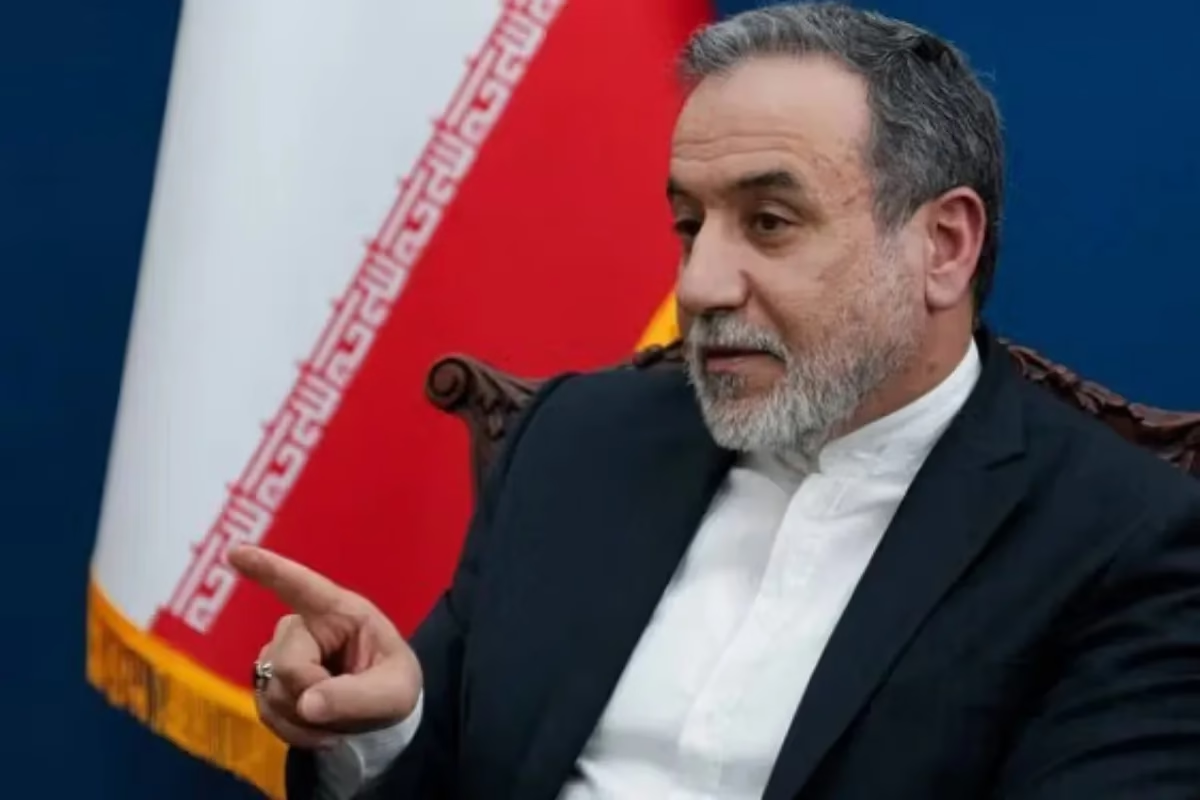
The growing debate around Iran criticizes India Israel ties has intensified after Iran’s foreign minister publicly expressed concern over New Delhi’s deepening relationship with Tel Aviv. In a recent statement, Abbas Araqchi described India’s strengthening engagement with Israel as extremely regrettable,adding that Tehran does not see it as appropriate to maintain close relations with what he referred to as a genocidal regime.
His remarks have added another layer to the already complex diplomatic landscape in the Middle East and South Asia, where geopolitical alliances are constantly evolving.
Iran’s Position on Gaza
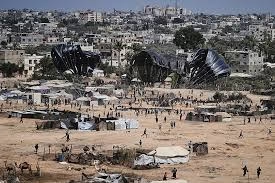
While addressing the media, Abbas Araqchi highlighted the situation in Gaza, describing it as devastating and catastrophic. He claimed that Israel’s military campaign had destroyed much of the Gaza Strip and cited heavy casualties. Tehran has consistently positioned itself as a vocal supporter of Palestinian rights, often urging international actors to advocate for Palestinian self-determination.
In this context, Iran criticizes India Israel ties not only as a diplomatic disagreement but as part of a broader moral and political stance. Araqchi expressed hope that Indian Prime Minister Narendra Modi would use his global influence to speak up for Palestinian rights.
Iran’s messaging aligns with its long-standing opposition to Israeli policies in the region. Tehran has frequently called on Muslim-majority nations and global powers to take stronger positions on the Palestinian issue.
India’s Strategic Relationship with Israel
India’s relationship with Israel has expanded significantly over the past decade. Cooperation spans defense, technology, agriculture, cybersecurity, and intelligence sharing. Israel has become one of India’s key defense suppliers, and high-level visits between leaders of both nations have strengthened diplomatic ties.
When Iran criticizes India Israel ties, it underscores a sensitive balancing act for New Delhi. India has historically maintained friendly relations with Iran, particularly in areas such as energy and regional connectivity projects. However, strategic interests and security considerations have also drawn India closer to Israel.
This dual-track diplomacy reflects India’s broader foreign policy approach—engaging with multiple partners while attempting to maintain autonomy in its international relations.
The “Israeli Model” Debate
Reports from Al Jazeera have suggested that India may be adopting aspects of what is described as an “Israeli model” in its security and administrative policies. These reports argue that certain counterterrorism and surveillance practices appear to mirror strategies used by Israel.
Such claims add fuel to the discussion as Iran criticizes India Israel ties, framing the issue not just as bilateral cooperation but as an ideological shift. However, Indian officials have consistently maintained that their policies are designed to address domestic security concerns and are rooted in national interests rather than foreign imitation.
The debate over whether India is adopting external models reflects wider global conversations about security, governance, and minority rights.
Diplomatic Implications
The fact that Iran criticizes India Israel ties publicly may influence diplomatic interactions in the coming months. Iran and India share economic interests, including trade and infrastructure development projects like the Chabahar Port. Tensions over Israel-related policies could complicate these collaborations if not carefully managed.
At the same time, India is likely to continue pursuing a pragmatic foreign policy, engaging with multiple stakeholders based on strategic calculations. New Delhi often emphasizes that its international partnerships are independent and not directed against any third country.
For Tehran, vocal criticism may serve both domestic and regional audiences, reinforcing its image as a defender of Palestinian rights and a critic of Israeli actions.
A Broader Geopolitical Context
The Middle East remains a region of shifting alliances. Countries across Asia are reassessing their diplomatic and economic partnerships in light of security concerns, energy needs, and technological development. When Iran criticizes India Israel ties, it reflects not only bilateral tension but also broader geopolitical realignments.
India’s global profile has grown significantly in recent years, increasing its influence in international forums. Iran’s appeal to Prime Minister Modi to speak out for Palestinian self-determination highlights the expectation that major emerging powers should play a more active diplomatic role.
The phrase Iran criticizes India Israel ties captures a complex diplomatic moment shaped by regional conflict, strategic interests, and differing political perspectives. Iran’s strong remarks signal deep concern over Gaza and opposition to Israel’s policies, while India continues to balance its partnerships based on national priorities.
As global attention remains fixed on developments in the Middle East, the evolving relationship between India, Israel, and Iran will likely remain under scrutiny. Whether these tensions lead to policy adjustments or simply reflect routine diplomatic disagreement remains to be seen. What is clear, however, is that regional conflicts increasingly influence relationships far beyond their immediate borders.