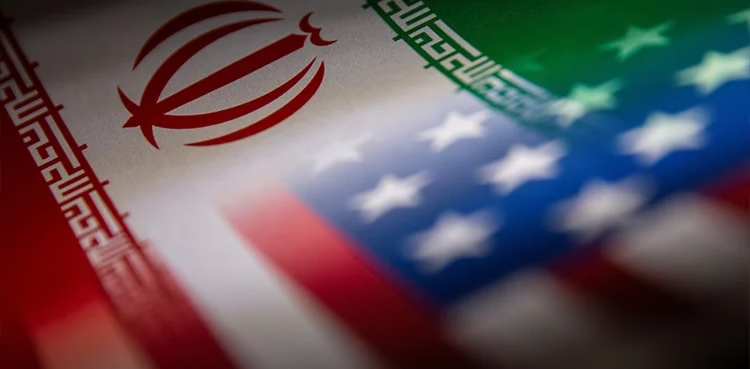

Iran and the United States are holding a fresh round of indirect talks in Geneva on Thursday, seeking to resolve their long-running nuclear dispute and prevent potential new US military strikes amid a significant American troop buildup in the Middle East.
The negotiations bring together Iran’s Foreign Minister Abbas Araqchi and US representatives, including Special Envoy Steve Witkoff, with mediation by Oman’s Foreign Minister Badr Albusaidi.
Diplomacy vs. military pressure
US President Donald Trump has said he prefers a diplomatic resolution but warned he would not allow Tehran to acquire a nuclear weapon. In recent remarks, Trump outlined the possibility of military action if talks fail.
Vice President JD Vance reinforced that position, stating that preventing Iran from obtaining a nuclear weapon remains a key objective.
The US has significantly increased its military presence in the region, marking one of its largest deployments since the 2003 Iraq invasion. The buildup has heightened fears of broader regional conflict, especially after past strikes on Iranian nuclear facilities. Tehran has warned of severe retaliation if attacked again.
Sticking points
At the heart of the dispute is Iran’s nuclear enrichment program. Washington and its allies argue that uranium enrichment could pave the way for nuclear weapons. Tehran insists its nuclear program is strictly for peaceful purposes.
Araqchi has said Iran seeks a “fair and swift” agreement but will not relinquish its right to peaceful nuclear technology.
Reports suggest Tehran may be offering fresh concessions in exchange for sanctions relief and formal recognition of its right to enrich uranium. However, major disagreements persist over the scope and sequencing of lifting US sanctions.
Global stakes
The talks have implications beyond diplomacy. Oil prices edged higher as markets assessed whether negotiations could prevent supply disruptions. Sources indicated Saudi Arabia is reviewing contingency plans to increase production if conflict disrupts regional exports.
Meanwhile, Rafael Grossi, head of the International Atomic Energy Agency, is also expected in Geneva for discussions with both sides, reflecting the technical and verification dimensions of any potential deal.
Pressure at home
Inside Iran, Supreme Leader Ayatollah Ali Khamenei faces mounting economic pressure as sanctions strain the economy and public unrest simmers.
Despite sharp divisions, both sides acknowledge that diplomacy remains the preferred path. Whether the Geneva talks can bridge deep mistrust and conflicting demands may determine if the standoff de-escalates — or moves closer to confrontation.