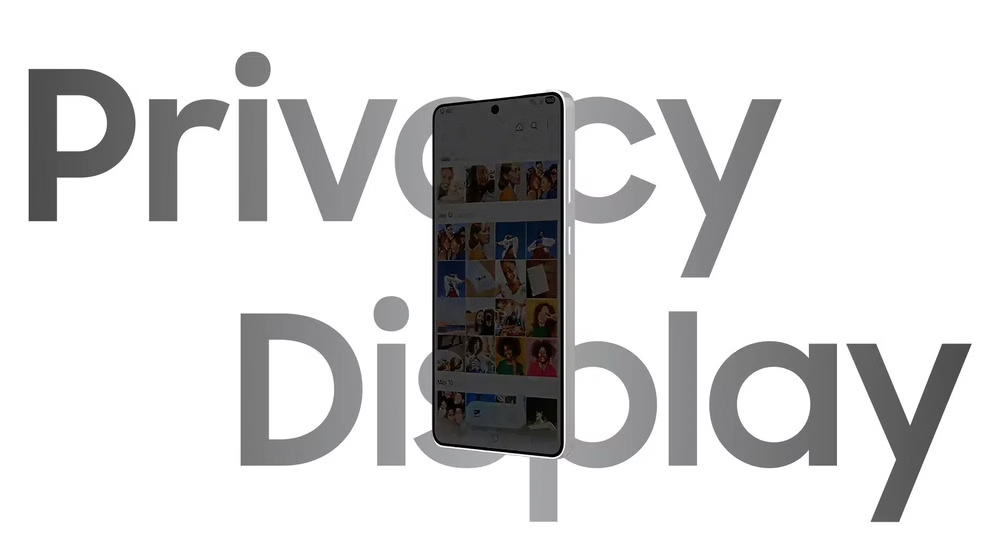
The upcoming Galaxy S26 Ultra Privacy Display feature is shaping up to be one of the most interesting smartphone innovations of the year. According to recent leaks, Samsung is preparing to introduce a hardware-based privacy screen on the Samsung Galaxy S26 Ultra, designed to limit screen visibility from side angles. If accurate, this could mark a major step forward in protecting user data in public spaces.
What Is the Galaxy S26 Ultra Privacy Display?
The Galaxy S26 Ultra Privacy Display is expected to be a built-in feature integrated directly into the AMOLED panel. Unlike traditional privacy screen protectors or software filters that reduce brightness or alter colors, this technology reportedly works at the hardware level. It controls how light is emitted from the display, ensuring that content remains visible to the user while appearing dark or obscured from side angles.
This approach is significant because it eliminates the need for external accessories that can reduce screen clarity or touch sensitivity. A hardware-level solution promises a cleaner design and better overall performance.
Why Privacy Displays Matter
Smartphone screens are larger and brighter than ever, making them easy to view—even from a distance. While that improves media consumption and productivity, it also increases the risk of “shoulder surfing,” where someone nearby can glance at private information such as messages, passwords, or banking apps.
With the Galaxy S26 Ultra Privacy Display, Samsung appears to be addressing this growing concern. In public places like airports, offices, cafes, or public transport, this feature could offer peace of mind without compromising user experience.
As smartphones increasingly store sensitive personal and professional data, hardware-based privacy could become just as important as fingerprint sensors or facial recognition.
Chinese Brands Testing Similar Technology
Interestingly, Samsung may not be alone for long. According to well-known tipster Digital Chat Station, several Chinese smartphone manufacturers are reportedly testing similar built-in privacy display panels for their upcoming flagship models.
Brands such as Xiaomi, vivo, Oppo, OnePlus, and Realme are rumored to be evaluating anti-peeping display panels. While no official confirmations have been made, reports suggest that some of these companies could introduce the feature in flagship devices launching around September or October.
If these reports are accurate, the Galaxy S26 Ultra Privacy Display might simply be the first step in what could become an industry-wide trend.
How Hardware Privacy Screens Work
Unlike software-based privacy modes, hardware privacy screens modify the way light travels from the display panel. AMOLED screens consist of individual pixels that emit their own light. By adjusting the direction or diffusion of that light, manufacturers can reduce visibility from off-axis viewing angles.
This technique may involve specialized layers within the display stack that narrow the viewing cone. When viewed straight on, the screen remains bright and sharp. However, from the side, it appears dim or unreadable.
The main advantage of this method is that it maintains high image quality for the primary user. There’s no need to sacrifice brightness or resolution just to improve privacy.
Potential Impact on the Premium Market
If the Galaxy S26 Ultra Privacy Display performs as expected, it could redefine what users expect from flagship smartphones. Premium buyers often look for cutting-edge features that combine performance with practicality. A built-in privacy system aligns well with growing concerns about digital security.
Moreover, as regulatory and workplace data protection standards become stricter, hardware-level privacy features could appeal to business users. Companies that issue smartphones to employees may prioritize devices offering enhanced screen confidentiality.
Should Chinese manufacturers successfully adopt similar technology in their upcoming devices, hardware privacy screens may quickly evolve from a niche feature into a competitive necessity.
Will It Affect Display Quality?
One of the biggest questions surrounding the Galaxy S26 Ultra Privacy Display is whether it will affect brightness, color accuracy, or viewing experience. Early leaks suggest that Samsung has worked to ensure minimal compromise. Given the company’s long-standing expertise in AMOLED technology, expectations are high.
However, until the device is officially unveiled and independently tested, it remains unclear how seamless the experience will be.
The Galaxy S26 Ultra Privacy Display could represent a turning point in smartphone design. By embedding privacy directly into the screen hardware, Samsung may be setting a new benchmark for user protection. If competitors follow through with similar implementations later in the year, privacy-focused displays could become standard in premium smartphones.
As launch dates approach, more details are likely to emerge about performance, availability, and real-world functionality. For now, the Galaxy S26 Ultra Privacy Display stands out as one of the most promising innovations expected in the next generation of flagship devices.