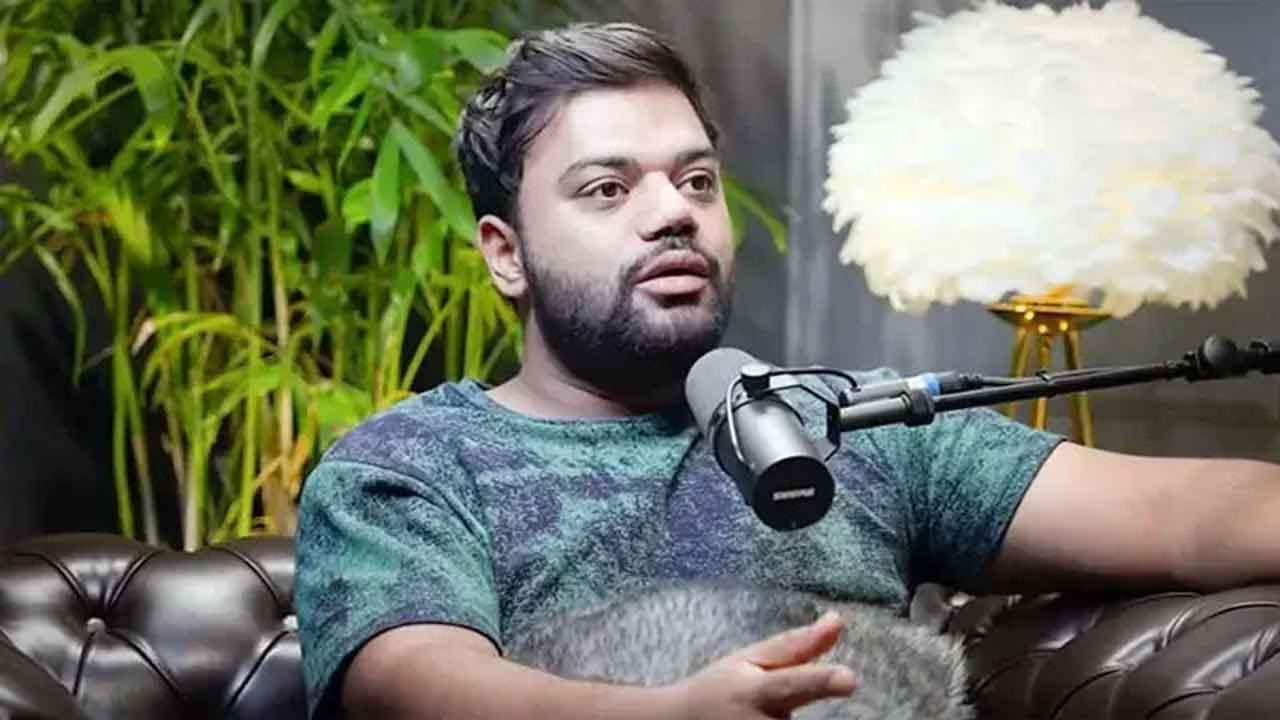
The latest development in the Ducky Bhai court case has brought relief to one of Pakistan’s most prominent digital creators. A judicial magistrate restored his previously frozen bank accounts and permitted him to continue uploading videos on his YouTube channel, with certain legal conditions attached.
The case was heard by Judicial Magistrate Naeem Wattoo, where the accused, Saad Ur Rehman — widely known as Ducky Bhai — appeared alongside his wife Aroob Jatoi and his legal team. The courtroom proceedings marked an important moment in the ongoing legal matter that has drawn public attention in recent weeks.
Court Grants Conditional Relief
During the hearing, the court ordered the restoration of Ducky Bhai’s frozen bank accounts, allowing him access to his financial resources. Additionally, he was granted permission to resume uploading content on his YouTube channel.
However, this relief came with a clear condition: he must not discuss or comment on the case that is currently pending before the court. The judge emphasized that any content related to the ongoing proceedings would not be allowed.
This decision reflects a balance between protecting the legal process and safeguarding the individual’s professional rights. The Ducky Bhai court case highlights how courts may impose restrictions to prevent public commentary from influencing judicial proceedings.
NCIA’s Objections to YouTube Videos
Another key aspect of the hearing involved objections raised by the National Cyber Investigation Agency (NCIA). According to the court, the NCIA had expressed concerns over 27 videos uploaded on Ducky Bhai’s YouTube channel.
Despite these objections, the court ruled that the videos would not be deleted at this stage. This decision indicates that while authorities may question certain content, removal is not automatic and requires legal justification.
The Ducky Bhai court case thus brings attention to the evolving relationship between digital creators and regulatory authorities. With millions of followers and significant online influence, content creators today operate in a space where legal and digital boundaries often intersect.
Summoning of Witnesses
The court also summoned NCIA witnesses for the next hearing, signaling that the case is far from over. Proceedings have been adjourned until March 11, when further arguments and evidence are expected to be presented.
This step suggests that the judicial process is moving forward methodically. By calling witnesses, the court aims to thoroughly examine the allegations and objections before reaching any final conclusions.
For now, the Ducky Bhai court case remains under active consideration, and all parties are expected to comply with court directives until a final decision is issued.
A Milestone Amid Legal Proceedings
Interestingly, after the hearing concluded, Ducky Bhai’s lawyers presented him with a commemorative shield on the court premises to celebrate his achievement of reaching ten million followers on YouTube.
This moment stood in sharp contrast to the seriousness of the legal proceedings. It highlighted the dual reality faced by many modern influencers — navigating professional success while simultaneously addressing legal challenges.
Reaching ten million subscribers is a significant milestone for any content creator in Pakistan. It reflects not only popularity but also years of consistent engagement with audiences. The Ducky Bhai court case, however, reminds us that online fame does not exempt individuals from legal scrutiny.
The Broader Context
The situation also raises broader questions about digital freedom and accountability. As social media platforms continue to grow, influencers hold substantial sway over public opinion. With that influence comes responsibility.
Courts increasingly face cases involving online content, whether related to defamation, cybercrime, or regulatory compliance. The Ducky Bhai court case serves as an example of how the judicial system is adapting to the digital age.
By allowing him to continue uploading videos while restricting commentary on the ongoing case, the court appears to be acknowledging both freedom of expression and the need for judicial integrity.
Public Reaction and Media Attention
Given Ducky Bhai’s large following, the case has attracted significant media coverage and public discussion. Supporters view the restoration of his accounts as a positive step, while critics stress the importance of due process.
Such cases often generate strong opinions online, but the legal process requires patience and evidence-based decisions. The next hearing will likely provide more clarity regarding the objections raised by the NCIA and the future direction of the proceedings.
As the next hearing approaches, attention will remain focused on how the judicial system handles digital content disputes. The outcome could set an important precedent for content creators and regulators alike in Pakistan’s rapidly evolving digital landscape.
The recent developments in the Ducky Bhai court case mark an important phase in the ongoing legal battle. With his bank accounts restored and permission granted to continue YouTube uploads albeit with restrictions the court has provided conditional relief while ensuring that the case proceeds fairly.