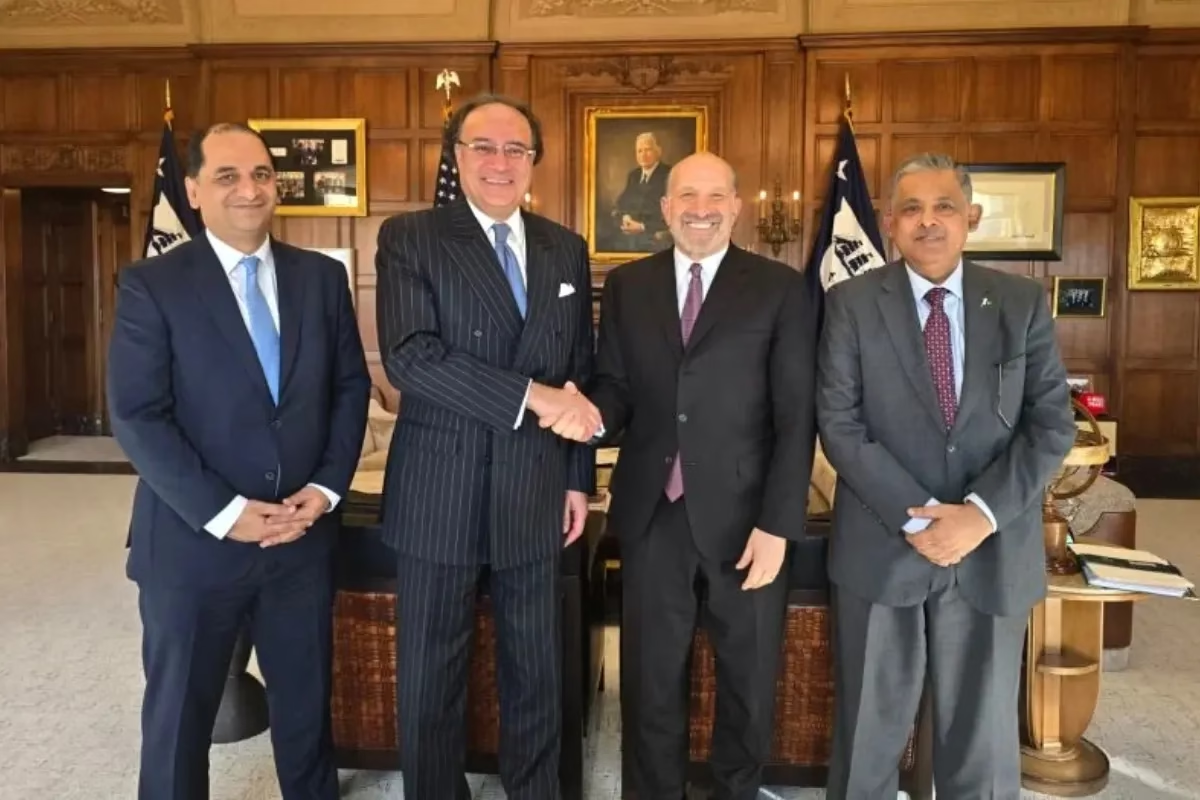
The recent Pakistan US economic cooperation talks in Washington mark an important step toward strengthening trade and investment ties between the two countries. A high-level Pakistani delegation, led by Finance and Revenue Minister Muhammad Aurangzeb, met with U.S. Commerce Secretary Howard W. Lutnick at the United States Department of Commerce in Washington, D.C. The meeting focused on expanding collaboration in key economic sectors and creating new opportunities for businesses on both sides.
The delegation included Pakistan’s Secretary of Commerce, Ambassador to the United States, and senior trade and economic officials. The discussions reflected a shared interest in deepening bilateral engagement at a time when global economic partnerships are becoming increasingly important.
Focus on Trade and Investment
A major theme of the meeting was enhancing trade flows and attracting investment. Both sides explored practical ways to reduce barriers, encourage private sector collaboration, and improve market access. The United States remains one of Pakistan’s largest trading partners, and expanding exports to the American market continues to be a priority for Islamabad.
The talks also highlighted the United States’ interest in investing in Pakistan’s growing sectors, particularly information and communication technology (ICT), mining, and energy. These industries offer significant potential due to Pakistan’s young workforce, natural resources, and expanding digital landscape.
By promoting Pakistan US economic cooperation, policymakers aim to create a more predictable and business-friendly environment that encourages long-term partnerships.
Investment in ICT, Mining, and Energy
Pakistan’s ICT sector has witnessed rapid growth in recent years, driven by freelancers, startups, and software exports. Increased U.S. investment could accelerate this progress by bringing advanced technologies, venture capital, and global market access.
The mining sector was another key area of discussion. Pakistan possesses vast untapped mineral resources, including copper and gold reserves. International expertise and financial backing could help unlock these resources, contributing to exports and job creation.
Energy collaboration also remains central to Pakistan US economic cooperation. Reliable and sustainable energy is essential for industrial growth. Cooperation in renewable energy projects, grid modernization, and energy efficiency initiatives could strengthen Pakistan’s infrastructure while supporting global climate goals.
US-Pakistan Trade and Investment Forum 2026
During the meeting, Minister Aurangzeb appreciated the efforts of the U.S. Chamber of Commerce for organizing the upcoming US-Pakistan Trade and Investment Forum scheduled for March 31, 2026. The forum is expected to bring together leading companies from both nations along with senior government representatives.
Such events play a vital role in translating diplomatic dialogue into practical business agreements. They provide a platform for networking, policy discussions, and signing memorandums of understanding. The Finance Minister expressed hope that the office of the U.S. Commerce Secretary would actively participate in the forum, further strengthening Pakistan US economic cooperation.
By facilitating direct interaction between investors and policymakers, the forum aims to identify new ventures and address challenges faced by businesses operating across borders.
Strengthening Long-Term Economic Ties
Both countries reaffirmed their commitment to continue working on major investment projects in the coming months. Sustained engagement is essential for building trust and ensuring that agreements move beyond announcements into implementation.
For Pakistan, attracting foreign direct investment is critical for stabilizing the economy, increasing foreign exchange reserves, and generating employment. For the United States, Pakistan represents a large consumer market with strategic geographic importance and growing digital capacity.
Expanding Pakistan US economic cooperation can also enhance supply chain connectivity, particularly in technology and manufacturing sectors. As global trade patterns evolve, diversified partnerships reduce dependency on single markets and improve resilience.
A Broader Strategic Context
Economic ties between Pakistan and the United States have historically fluctuated depending on geopolitical dynamics. However, trade and investment provide a stable foundation that benefits both sides regardless of political changes.
The recent meeting signals a pragmatic approach centered on mutual economic interests. By focusing on business opportunities rather than political differences, both governments appear committed to building a forward-looking partnership.
Increased cooperation in high-growth sectors like ICT and renewable energy aligns with global economic trends. It also offers opportunities for knowledge transfer, innovation, and skills development in Pakistan.
The success of Pakistan US economic cooperation will depend on consistent follow-up, transparent policies, and active participation from the private sector. While high-level meetings set the direction, real progress occurs when businesses invest, create jobs, and expand operations.
The upcoming Trade and Investment Forum in 2026 will be an important milestone. If supported by both governments, it could pave the way for new agreements and strategic partnerships.
The Washington meeting reflects renewed momentum in bilateral economic relations. With shared interests in trade expansion, technology growth, and energy development, Pakistan and the United States have significant potential to strengthen their economic partnership. Continued dialogue and concrete actions in the months ahead will determine how effectively this cooperation translates into lasting economic benefits for both nations.