

Chinese researchers have developed a new organic lithium-ion battery that is safer, more flexible, and capable of operating in extreme temperatures — a breakthrough that could reshape energy storage technology.
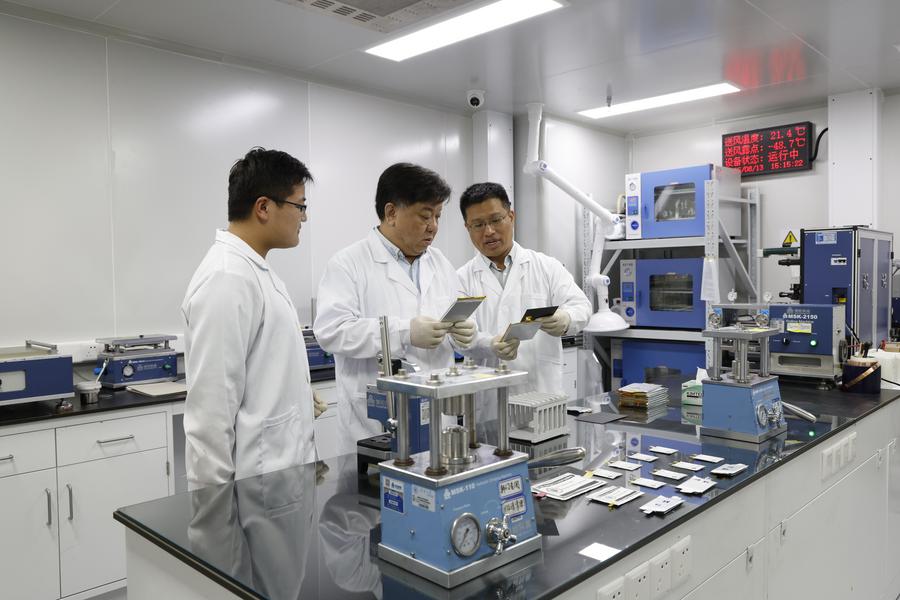
The study, published Thursday in Nature, was led by Professor Xu Yunhua at Tianjin University in collaboration with South China University of Technology.
Moving beyond cobalt and nickel
Most commercial lithium-ion batteries rely on inorganic cathode materials such as cobalt and nickel. These materials face challenges including:
- Resource scarcity
- Environmental concerns
- Structural rigidity
- Performance degradation in extreme conditions
To address these issues, the team engineered a novel organic cathode material that is abundant and environmentally friendly while maintaining strong electrochemical performance.
Strong performance and fast charging
In pouch-cell testing, the organic battery achieved an energy density exceeding 250 watt-hours per kilogram, outperforming conventional lithium iron phosphate (LFP) batteries.
The design also demonstrated:
- High electronic conductivity
- Fast charging capability
- Stable power output
Professor Xu said the technology matches commercial energy densities while offering improved safety and operational flexibility.
Extreme durability and safety
Beyond performance, the battery showed exceptional resilience:
- Operates from –70°C to 80°C
- Maintains full capacity after compression tests
- Passed puncture tests without triggering thermal runaway or fire
These safety improvements address one of the most persistent concerns in lithium-ion technology — overheating and combustion under stress.
Future applications
The researchers believe the innovation could unlock new possibilities in:
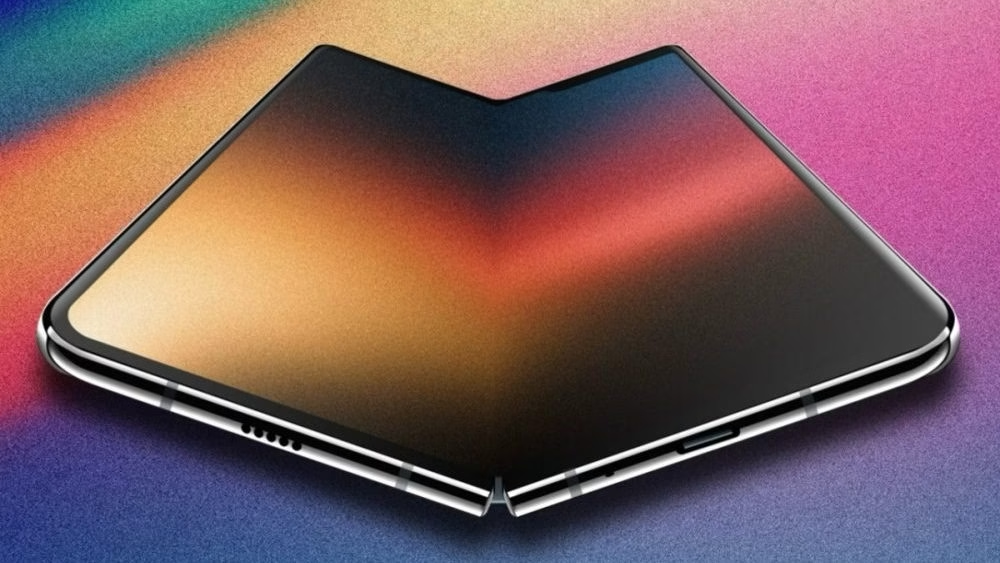
- Flexible electronics
- Wearable devices
- Harsh-environment energy systems
The team is now focused on scaling production and establishing a pilot manufacturing line to move the technology toward industrial use.
If successfully commercialized, the organic lithium-ion battery could reduce reliance on scarce metals while delivering safer, more adaptable energy storage solutions for next-generation devices.