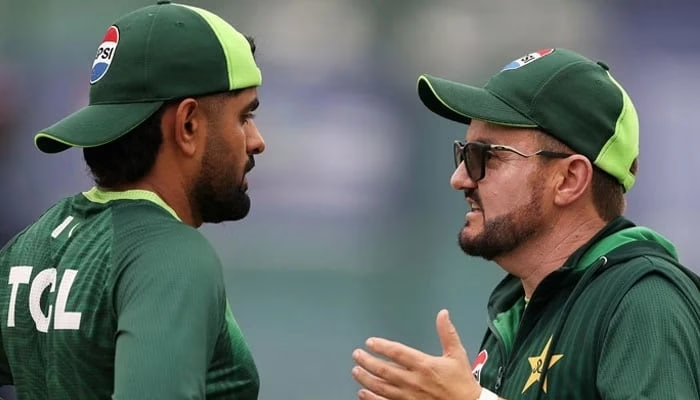
Pakistan head coach Mike Hesson has clarified the decision to move Babar Azam down the batting order during Pakistan’s final group-stage match of the ICC Men’s T20 World Cup against Namibia.
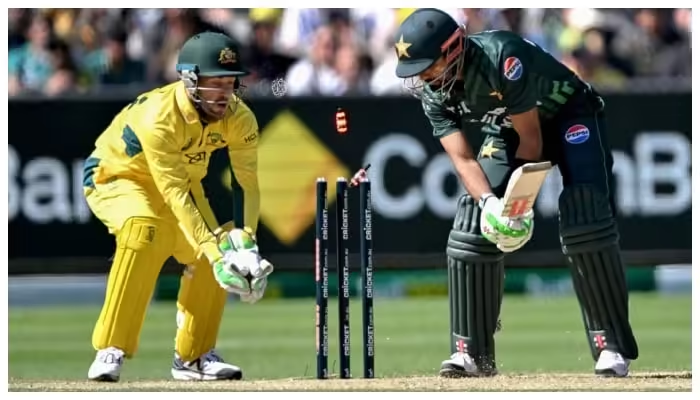
Babar, who had been batting at number four since Pakistan’s recent home series against Australia, did not get a chance to bat in the crucial fixture. Instead, emerging batter Khawaja Nafay and all-rounder Shadab Khan were promoted ahead of him in the batting lineup.
Pakistan posted a commanding total of 199-3 in the must-win encounter and went on to defeat Namibia by 102 runs, securing qualification for the Super Eights stage of the tournament.
The 2009 champions are now set to face New Zealand in Colombo on Saturday in their opening match of the second round.
Speaking to reporters after Pakistan’s final practice session on Friday was washed out by rain, Hesson explained that the team’s match situation influenced the decision to hold Babar back. At 107-2 in 12.1 overs, with opener Sahibzada Farhan well-set at the crease, the management believed a different batting approach was needed for the final overs.
“The other day, we got to the 12th over mark. And at that point, Babar Azam is not the best person to come in; we’ve got plenty of other options who can perform that role towards the end,” Hesson said.
He further noted that Babar’s strike rate in the powerplay during the ongoing World Cup had been below 100, which did not align with the aggressive role required during the latter stages of an innings.
Pakistan had previously made a similar decision during last year’s Asia Cup, temporarily leaving Babar out of the T20 setup for tactical reasons. Despite a modest performance in the Big Bash League, the star batter was later recalled to fulfil a specific role in the squad following the Asia Cup.
“We brought Babar back in for a specific role post the Asia Cup,” Hesson said, adding that the batter himself understands the team’s tactical requirements.
“Babar is actually the first to acknowledge that. He knows that he’s got a certain set of skills that the team requires, and there are certain times where other players can perform that role more efficiently,” he explained.
Hesson also defended the decision to drop pace spearhead Shaheen Shah Afridi after he conceded 101 runs in three matches, including 31 runs in two overs against India.
In his place, fast bowler Salman Mirza was brought into the playing XI and delivered an impressive performance with the ball.
“To be fair, he was probably really unlucky not to be playing the second and third games,” Hesson remarked.
Looking ahead to the upcoming clash, Hesson acknowledged the challenge posed by New Zealand, noting their recent experience of playing in subcontinental conditions.
“New Zealand have played a huge amount in the subcontinent in recent times, so we have to play at our best,” he added.