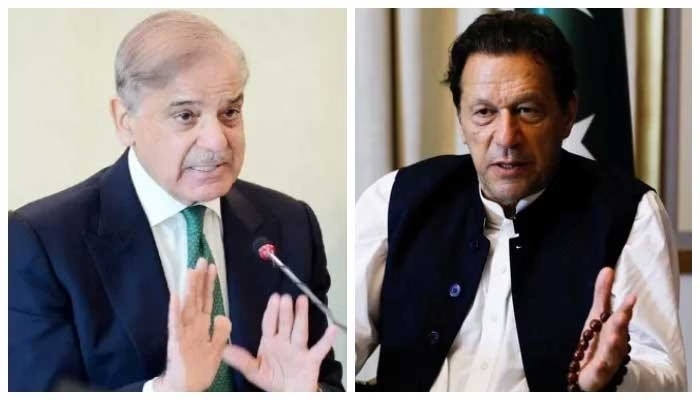
The Supreme Court of Pakistan on Friday restrained a trial court from continuing proceedings in a defamation case filed by Prime Minister Shehbaz Sharif against the founding chairman of Pakistan Tehreek-e-Insaf, Imran Khan.
The lawsuit was initiated after Imran Khan publicly alleged that Shehbaz Sharif had offered him Rs10 billion in exchange for withdrawing the case related to the Panama Papers. According to the prime minister, the allegation was made during a television programme aired on April 26, 2017, and was entirely baseless as well as defamatory.
PM Shehbaz maintained that despite being served a legal notice in May 2017 demanding an apology, the PTI founder failed to issue any public retraction or clarification. Consequently, he approached the court seeking Rs10 billion in damages for harm caused to his personal and political reputation.
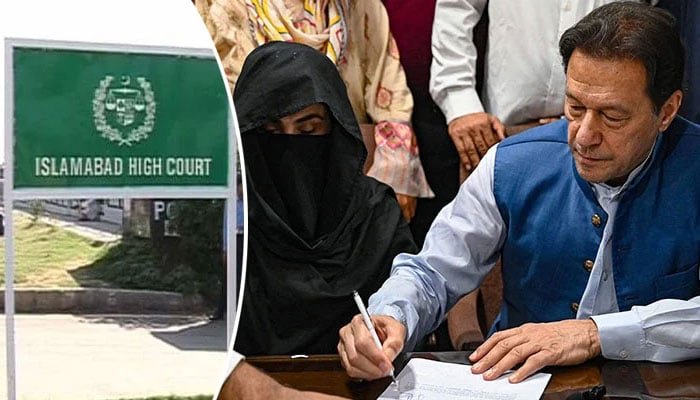
A three-member bench of the apex court, headed by Justice Ayesha Malik, issued the stay order while hearing a petition filed by the incarcerated former premier. In his plea, Imran Khan had requested the court to suspend the trial court proceedings in the defamation case.
During the hearing, the Supreme Court also issued a notice to Prime Minister Shehbaz Sharif, directing him to submit a response. The bench observed that no legal representative had appeared on behalf of the respondent during the proceedings and noted that the matter would be scheduled for an early hearing.
Before the issuance of the stay order, the trial court had struck off Imran Khan’s right to defence in the case due to procedural reasons. This development had paved the way for the proceedings to continue without his formal rebuttal.
In an earlier hearing held on May 17 last year, the prime minister appeared before the trial court via video link, where he was cross-examined by counsel representing the PTI founder. During his testimony, Shehbaz reiterated that the allegation of offering a Rs10 billion bribe constituted serious defamation and had inflicted substantial damage to his public image.
He argued that the televised remarks had a far-reaching impact, claiming they harmed his reputation more significantly than the distribution of “millions of pamphlets” could have done.
The prime minister further stated that he was unaware whether Imran Khan had subsequently denied or clarified the allegation in any later television interview. Although his name may not have been directly mentioned in one particular conversation referenced by the defence, Shehbaz insisted that the broader context of the remarks unmistakably pointed towards him.
He also informed the court that he had no knowledge of any written or printed material personally circulated by the PTI founder containing the allegation. However, he emphasised that the public broadcast of such claims on national television amounted to a serious attack on his credibility and integrity.
The Supreme Court’s intervention has temporarily halted the trial court’s proceedings, pending further review of the legal questions raised in Imran Khan’s petition. The case is expected to be taken up again following the submission of responses by the concerned parties.