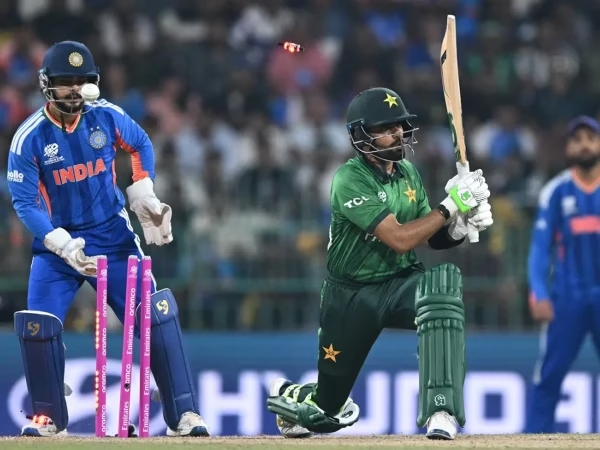
The Babar Azam Strike Rate Debate has once again taken center stage during the ongoing ICC T20 World Cup 2026, as fans and analysts question whether Pakistan’s star batter is adapting his game to modern T20 demands. Despite being one of the most technically gifted players in world cricket, Babar Azam has come under scrutiny for maintaining a relatively low strike rate in the shortest format of the game.
Over the years, Babar has built a reputation as a consistent run-scorer, but the Babar Azam Strike Rate Debate highlights a growing concern about his ability to accelerate when the team needs quick runs. Statistics reveal that among players who have scored at least 500 runs in T20 World Cup history, his strike rate of 111.81 is among the lowest. Interestingly, this figure is equal to that of former Pakistan captain Mohammad Hafeez, making the conversation even more relevant in today’s fast-paced T20 era.
During recent practice sessions ahead of crucial matches in the ICC T20 World Cup, glimpses of aggressive intent from Babar were noticeable. The ongoing Babar Azam Strike Rate Debate gained momentum after he was seen confidently pulling short deliveries and executing uppercuts against fast bowlers like Naseem Shah and Salman Mirza in the nets.
Moreover, Babar also appeared comfortable using his feet against spinners, including Shadab Khan and Abrar Ahmed. These moments suggested a shift in mindset, indicating that he might be working on enhancing his scoring rate. However, the Babar Azam Strike Rate Debate continues because this aggressive approach seen in practice has not consistently translated into match performances.
Observers have pointed out that while Babar shows intent in net sessions, he often reverts to a more cautious style during actual games. This contrast between practice and match situations has fueled the Babar Azam Strike Rate Debate, raising questions about whether psychological pressure or game strategy is limiting his natural stroke play.
At one point during the training session, Babar mistimed a shot off a leg cutter from Naseem Shah and visibly showed frustration. Such moments reflect the internal struggle that often accompanies attempts to modify one’s batting approach. The Babar Azam Strike Rate Debate is not just about numbers but also about adapting to evolving expectations in international cricket.
Pakistan’s leadership, including captain Salman Ali Agha and head coach Mike Hesson, have expressed confidence in Babar’s experience and match-winning potential. Their support suggests that the team management views him as an integral part of the batting lineup despite ongoing criticism.
Supporters argue that Babar’s role as an anchor often requires him to stabilize innings rather than play high-risk shots. Yet, critics believe that modern T20 cricket demands a more aggressive approach even from top-order batters. This ongoing difference in opinion keeps the Babar Azam Strike Rate Debate alive among cricket enthusiasts.
In a format where power-hitting and quick scoring are essential, maintaining a balance between consistency and aggression is challenging. Babar’s ability to evolve his batting style could determine Pakistan’s success in the ICC T20 World Cup. The outcome of this Babar Azam Strike Rate Debate will largely depend on how effectively he translates practice-session aggression into match-winning performances.
Experience, technique, and adaptability must work together for any player to thrive in T20 cricket. As Pakistan progresses through the tournament, all eyes will remain on Babar to see whether he can silence critics and reshape the narrative surrounding the Babar Azam Strike Rate Debate with impactful innings on the field.