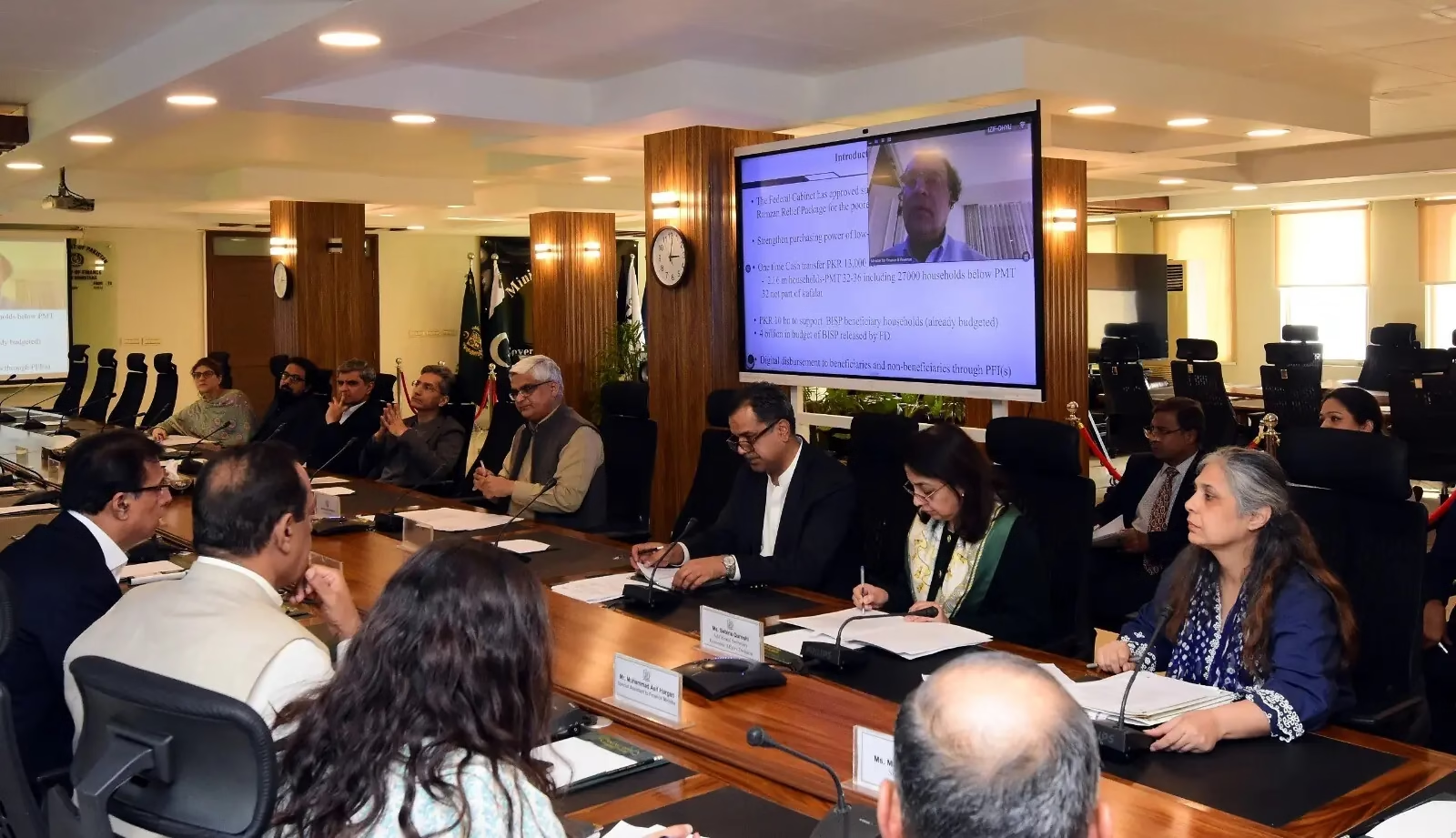
The PM Ramzan Relief Package 2026 has officially been approved by the Economic Coordination Committee, marking a significant step by the government to provide financial assistance to low-income families during the holy month of Ramadan. With rising inflation and increased household expenses during Ramadan, this initiative is expected to offer timely support to vulnerable segments of society across Pakistan.
According to the statement issued by the Finance Division, the committee has approved the immediate release of Rs19 billion under the PM Ramzan Relief Package 2026. These funds were already allocated in the current fiscal year’s budget and will now be disbursed to ensure that eligible families receive assistance without delay.
The PM Ramzan Relief Package 2026 is aimed at providing targeted financial support to deserving households so they can manage essential expenses during Ramadan. As the cost of daily necessities tends to rise during this period, the relief package has been designed to ease the financial burden on families who struggle to meet their basic needs.
Initially, the Ministry of Poverty Alleviation and Social Safety had requested Rs25 billion for the PM Ramzan Relief Package 2026. However, the Finance Division confirmed that Rs19 billion had already been earmarked for this purpose. The committee agreed that any additional funding requirements would be reviewed later, depending on fiscal space and evolving needs.
In addition to approving the main relief amount, the ECC also granted in-principle approval for operational expenses of up to Rs1 billion related to the PM Ramzan Relief Package 2026. These operational costs include payments to partner financial institutions, outreach efforts, and communication campaigns that will help ensure that the assistance reaches the right beneficiaries in a transparent manner.
One of the key objectives of the PM Ramzan Relief Package 2026 is to maintain transparency in the selection of beneficiaries. To achieve this, the government plans to use data from the National Socio-Economic Registry (NSER). This database helps identify low-income households based on verified socio-economic indicators, ensuring that only deserving families receive financial aid.
Through the PM Ramzan Relief Package 2026, eligible households will receive one-time cash assistance directly through formal banking systems and digital payment channels. This approach not only reduces the chances of corruption or mismanagement but also allows beneficiaries to access funds safely and efficiently.
Another important aspect of the PM Ramzan Relief Package 2026 is its focus on fiscal responsibility. While the government aims to provide quick financial relief, it has also emphasized the need to manage expenditures in line with Pakistan’s overall financial commitments. Officials have assured that any unutilized funds from the package will be surrendered according to established financial procedures.
The ECC highlighted the importance of balancing prompt relief distribution with transparency and accountability in operational spending. By maintaining strict oversight of the PM Ramzan Relief Package 2026, authorities hope to ensure that public funds are used effectively and reach the people who need them the most.
Ramadan is a time when families come together for Sehr and Iftar, but it can also bring financial challenges for those living on limited incomes. The PM Ramzan Relief Package 2026 seeks to address these challenges by offering dignified support that enables families to meet their daily needs during the sacred month.
The approval of the PM Ramzan Relief Package 2026 reflects the government’s commitment to social welfare and economic stability. By combining targeted assistance with transparent implementation, the initiative is expected to provide meaningful relief to thousands of deserving households during Ramadan while maintaining financial discipline at the national level.